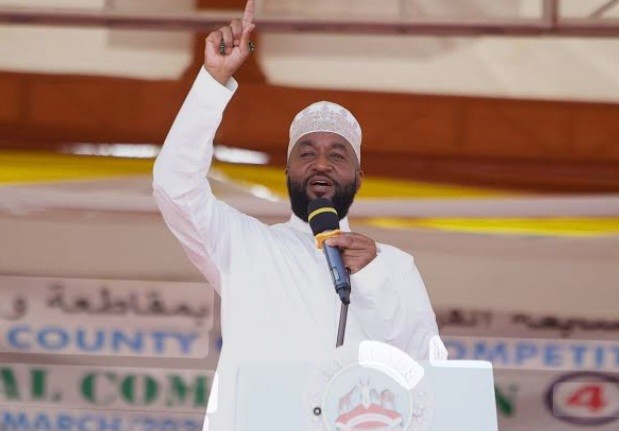
Mining Cabinet Secretary Hassan Ali Joho has announced the successful bidders for three major mineral development projects in Kenya, following the conclusion of a competitive tendering process targeting the country's strategic mineral deposits.
In a statement issued on Thursday, November 19, 2026, Joho said the government had completed the evaluation of bids for several mineral deposits, with successful firms now set to proceed to the next stage before applying for prospecting licences.
The projects cover niobium, rare earth elements, chromite and copper deposits in Kwale, Samburu and Tharaka Nithi counties.
For the Mrima Hill Niobium, Rare Earth Elements and Other Minerals Project in Kwale County, the government selected M/s Frontier Minerals Consortium as the successful bidder.
The consortium brings together Frontier Minerals LLC, Bunker Hill Mining Corp, ReElement Technologies and American Resources Corporation.
In Samburu County, M/s Fangda Special Steel Technology Co. Ltd and Sinohydro Corporation Joint Venture emerged as the successful bidders for the Kang'ura Chromite Development Project.
The same joint venture was also selected for the Kamacabi Copper Development Project in Tharaka Nithi County.
However, the government did not award tenders for two other projects after the evaluation process failed to produce qualifying bids.
These include the Lali Hills Manganese Project in Tana River County and the Kiritiri Coltan Project in Embu County.
Joho said the two projects would be handled separately in accordance with the law.
The tendering process began in March 2026 when the government published an open Request for Expression of Interest (REOI) through the Kenya Gazette, The East African newspaper, MyGov and the State Department for Mining website.
In July, shortlisted companies received detailed Requests for Proposals (RFPs), followed by a mandatory pre-bid conference in August where participants received further clarifications on the requirements.
The bids were officially opened on October 21, 2026, before undergoing a three-stage evaluation process.
The first stage involved preliminary and mandatory requirements, including legal standing, tax compliance and ethical and anti-corruption declarations.
The second stage focused on technical capacity, where bidders were assessed on geological expertise, plans for local mineral processing, employment opportunities for Kenyans, environmental restoration and protection of biodiversity and cultural heritage.
Companies were required to attain a minimum technical score of 80 per cent to proceed to the financial evaluation stage.
The final assessment examined the financial strength of bidders, including audited financial records, funded exploration investment plans and their financial commitments to the State.
Despite announcing the successful bidders, Joho clarified that receiving a tender award does not automatically grant a company permission to begin prospecting or mining activities.
He explained that the successful firms must first engage host communities, landowners, county leadership and other stakeholders before proceeding with applications for prospecting licences.
The companies will also be required to obtain all necessary consents, with the CS emphasising that no prospecting activities should take place without formal approval and acceptance from affected communities.
After completing the community engagement process, the successful bidders will be required to submit formal applications through the Online Mining Cadastre (OMC), attaching the necessary consent documents and fulfilling other statutory requirements, including payment of applicable fees.
The applications will then be forwarded to the Mineral Rights Board (MRB) for independent scrutiny and recommendations.
Only after receiving the board's recommendation will the Cabinet Secretary grant the respective Prospecting Licences.
Joho said the government deliberately chose to vet potential investors before beginning community engagement to ensure residents understand the companies seeking to operate in their areas.
He noted that the approach would allow communities to assess the investors' track records and financial capacity, particularly their ability to support environmental protection, cultural heritage preservation, employment and community development.
The government maintained that the competitive tendering process was designed to ensure the country's mineral resources benefit Kenyans while attracting investors with the technical and financial capacity to develop the deposits responsibly.
Joho further reaffirmed the government's commitment to ensuring that mineral development is undertaken transparently, sustainably and equitably.
He said the process would prioritise community consent, environmental protection, local value addition and statutory royalty sharing.
The Cabinet Secretary also called on the successful bidders to approach host communities with humility, transparency and respect as preparations for stakeholder engagement begin.
He urged residents and local leaders in Kwale, Samburu and Tharaka Nithi counties to participate actively in the upcoming consultations to ensure their interests are considered before any prospecting activities commence.