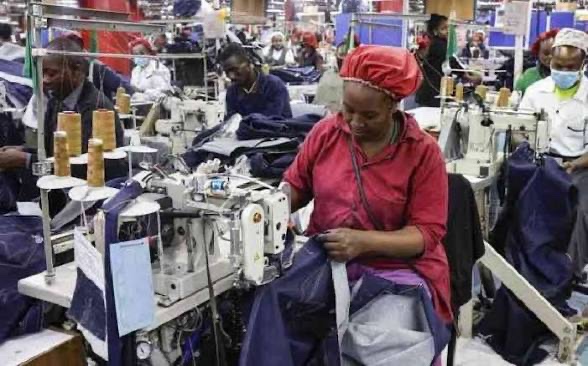
The government of Kenya is targeting to increase the share of goods manufactured locally and consumed in the country from 30 per cent to 50 per cent. This initiative aims to accelerate industrial growth, create jobs, and reduce reliance on imported products.
Principal Secretary for Industry and Trade Juma Mukhwana emphasized that Kenya must shift from exporting raw materials to manufacturing finished products. This transition is crucial for increasing value addition, strengthening domestic industries, and retaining more economic value locally.
Mukhwana noted that nearly 70 per cent of goods consumed in Kenya are imported, highlighting a significant opportunity to expand domestic production and create jobs across the manufacturing and related sectors.
Increasing local manufacturing would enable Kenyan businesses to serve a larger share of the domestic market while potentially creating opportunities for workers, suppliers, and small enterprises linked to industrial production.
The government’s target reflects efforts to strengthen the role of manufacturing in economic development. Processing raw materials into finished goods can enhance the value of local resources, create demand for supporting services, and broaden opportunities for businesses across supply chains.
Reducing dependence on imported goods could also provide domestic manufacturers with greater opportunities to expand production, provided they can meet market requirements on quality, price, and reliability.
Mukhwana also highlighted Kenya’s contribution to supplies under the African Continental Free Trade Area (AfCFTA), which stands at 16 per cent. He stated that the country aims to build on this position to expand opportunities for local manufacturers.
The continental trade framework offers businesses the prospect of reaching customers beyond Kenya’s borders, potentially allowing manufacturers to grow beyond the domestic market. However, expanding exports will depend on the competitiveness of local products and the ability of firms to meet demand across regional markets.
The government’s 50 per cent target will require a significant increase in domestic production, given the current reliance on imported goods. Progress will depend on manufacturers’ ability to expand capacity and compete effectively with foreign suppliers.
This push places local value addition, industrial expansion, and employment creation at the center of Kenya’s manufacturing ambitions, as policymakers seek to strengthen domestic industries and increase the contribution of locally made products to the economy.