Kenya has launched a public search for a trading name for crude oil from the South Lokichar Basin in Turkana County as the country prepares to begin commercial production and enter the international oil market. The Ministry of Energy and Petroleum announced the exercise on October 23, giving the public until October 29 to submit proposals.
The government intends to use the selected name to market Kenyan crude to international buyers and distinguish it from grades produced in other oil-producing countries. A recognisable trading name can help traders, refiners and buyers identify the origin and characteristics of a crude grade when assessing quality and price.
Kenyan crude is described as light sweet oil, a classification generally associated with relatively low sulphur content and characteristics that can make refining easier than some heavier, higher-sulphur grades. However, the commercial value of a particular crude also depends on its detailed composition, handling requirements, transport costs and prevailing market conditions.
The Ministry said the name should be distinctly Kenyan, easy to pronounce and remember, and suitable for trademark registration both locally and internationally. The government has invited members of the public, institutions and other stakeholders to contribute to the naming process.
Commercial production is scheduled to begin on December 1, 2026, according to the ministry’s announcement. Gulf Energy, which holds licences to produce crude in blocks T6 and T7 in South Lokichar, plans to begin drilling on November 1.
The company has outlined an initial production target of 20,000 barrels per day during the first phase of the project, covering 2026 to 2032. A later phase, planned from 2033, targets an increase to 50,000 barrels per day.
Kenya previously exported small quantities of Turkana crude for testing between 2019 and 2020. The country has since faced technical and infrastructure challenges in moving from exploration and trial shipments to sustained commercial production.
One challenge is the crude’s high wax content, which requires specialised handling and heating during transportation to prevent it from solidifying. The need to maintain suitable temperatures can increase logistical costs, particularly when moving oil over long distances by road or through pipelines.
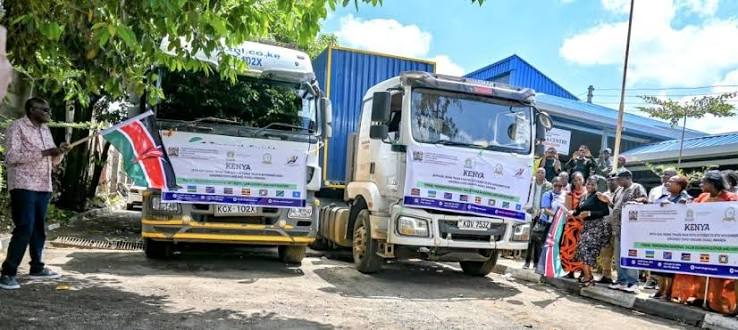
The initial export plan involves transporting crude by truck to Mombasa for shipment overseas. This arrangement will allow production to begin without waiting for a dedicated pipeline, although transport costs will remain an important factor in the project’s economics.
International oil markets already use established grades such as Murban from the United Arab Emirates, West Texas Intermediate from the United States and Brent, a major benchmark associated with North Sea production. A distinct Kenyan trading name would help establish the country’s own commercial identity.
The naming exercise is one step in preparations for oil sales, rather than confirmation that all production and export challenges have been resolved. The project’s eventual contribution to public revenue, employment and local business opportunities will depend on production levels, operating costs, market demand and how benefits are shared with communities in Turkana.