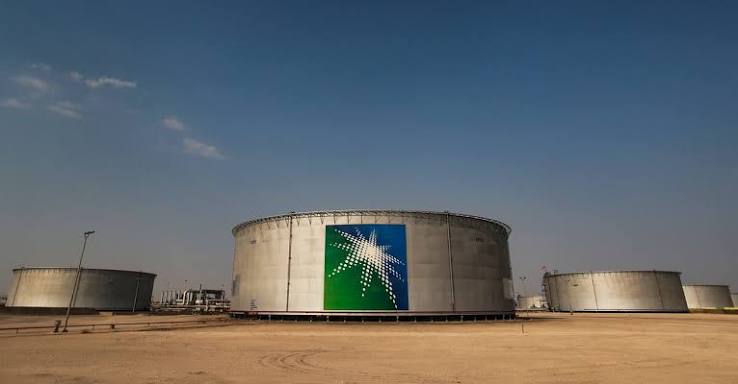
Saudi Arabia’s state-owned oil company, Saudi Aramco, plans to begin storing crude oil in Singapore in the second half of 2027 under a proposed agreement designed to strengthen supply-chain resilience and protect energy supplies against disruptions in the Middle East.
The arrangement was announced on October 26, 2026, by the energy ministries of Saudi Arabia and Singapore during Singapore International Energy Week. The two countries said the initiative would support Singapore’s energy security while strengthening Saudi Arabia’s ability to supply customers across Southeast Asia.
Under the proposal, Saudi crude oil will be stored at the Jurong Rock Caverns, an underground storage facility beneath Jurong Island. Singapore’s Energy Market Authority and JTC Corporation exchanged a memorandum of understanding with Saudi Aramco to establish the framework for the arrangement.
Singapore’s Energy Minister Tan See Leng said the agreement would help improve the country’s preparedness for supply disruptions. Saudi Energy Minister Prince Abdulaziz bin Salman said placing crude closer to major Asian markets would improve the flexibility and resilience of the kingdom’s supply network.
The agreement comes after the conflict involving the United States, Israel and Iran disrupted energy shipments through the Strait of Hormuz, a critical passage connecting major Middle Eastern oil producers to international markets. The disruptions prompted Asian countries to draw down inventories and increased concerns about the availability of crude supplies.
Before the conflict, Asia sourced approximately two-thirds of its oil imports from the Middle East, making the region particularly exposed to interruptions affecting Gulf shipping routes. Additional storage closer to major trading and refining centres could help reduce the time required to access supplies during emergencies.
The Jurong Rock Caverns facility is located approximately 150 metres underground and has the capacity to store about 1.47 million cubic metres, equivalent to roughly nine million barrels of liquid hydrocarbons. However, the governments have not disclosed how much of that capacity will be allocated to Saudi crude under the proposed agreement.
The financial terms of the arrangement have also not been announced. Singapore’s authorities said negotiations would continue, with the two governments coordinating implementation through the relevant agencies and companies.
The initiative builds on Saudi Aramco’s existing crude-storage partnerships in Asia. The company already stores oil in Japan and South Korea, where the arrangements provide host governments with priority access to supplies during unexpected shortages.
Singapore is a major international oil-trading and refining centre, making it a strategic location for storing crude destined for Asian buyers. The proposed arrangement could improve Saudi Arabia’s ability to respond to changing demand and supply disruptions while reinforcing Singapore’s role in regional energy logistics.
For energy markets, the agreement highlights how governments and producers are reassessing storage and distribution strategies amid geopolitical uncertainty. Although the arrangement is not expected to begin operating until the second half of 2027, its implementation could provide an additional buffer against future interruptions to oil shipments across Southeast Asia.