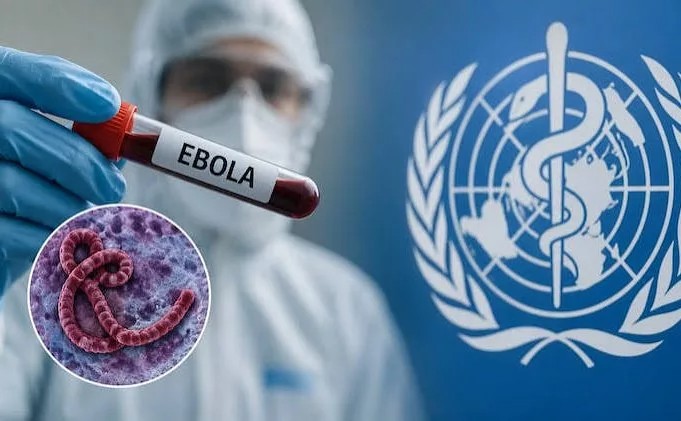
Kenya has confirmed four new cases of Ebola, bringing the total number of confirmed infections to seven, including the first patient who died, as health authorities intensify efforts to contain the outbreak.
In a press release dated October 17, 2026, the Ministry of Health said all four new patients had tested positive for the Bundibugyo virus disease after developing fever while in quarantine.
The patients were immediately isolated, and samples collected from them tested positive at both the National Virology Reference Laboratory and the Kenya Medical Research Institute (KEMRI) laboratory.
New Ebola cases confirmed in Kenya
The ministry said the patients were receiving supportive care from trained healthcare workers, with the second and third patients reported to be stable and responding well to treatment.
The latest cases include a close male relative of the deceased index patient and three healthcare workers who attended to the first patient during his hospital stay.
The male relative had been in quarantine since October 6, 2026, while the three healthcare workers — two men and one woman aged 29, 35 and 32, respectively — had been quarantined since October 9 after managing the index case at the hospital between October 3 and 4.
According to the ministry, early detection while the four patients were in quarantine has helped limit the risk of further transmission to their families and the wider community.
The government has sought to reassure Kenyans that the risk to the general public remains low, saying there is currently no evidence of community transmission.
Government reassures public on safety
The ministry reported that 128 of the 130 identified contacts, representing 98.5 per cent, had been traced and placed in quarantine.
The figure is above the global contact-tracing benchmark of 85 per cent cited by the ministry as necessary to help break the chain of transmission.
Efforts are ongoing to trace the two remaining contacts, while health officials continue monitoring individuals in quarantine for the full 21-day period.
The ministry cautioned that additional cases could still emerge among quarantined contacts before the monitoring period ends, but said anyone developing symptoms would be detected and treated promptly.
Ongoing monitoring and support efforts
Authorities are also closely monitoring four family members of the deceased patient and healthcare workers who treated him during his hospitalisation.
Those in quarantine continue to receive mental health and psychosocial support from dedicated medical teams.
The Ministry of Health said it would continue providing updates on the patients' progress as surveillance, contact tracing and other containment measures continue.