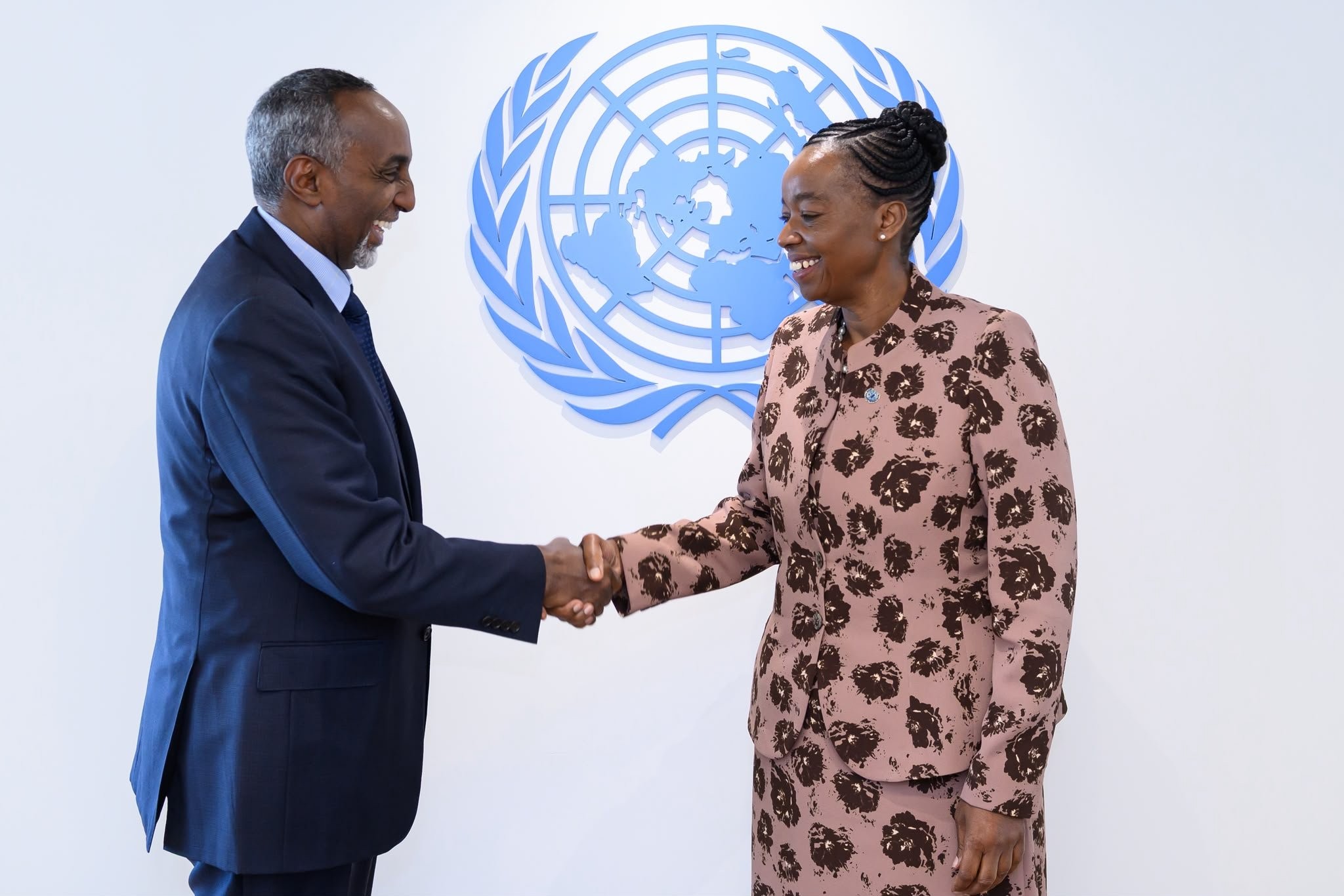
The Ethics and Anti-Corruption Commission (EACC) is seeking stronger regional cooperation with the United Nations Office on Drugs and Crime (UNODC) to enhance the fight against corruption and transnational economic crime across Eastern Africa.
EACC Chief Executive Officer Abdi Mohamud held high-level talks with UNODC Executive Director Monica Juma on October 16, 2026, at the United Nations Office in Vienna, Austria, where the two discussed strategies to strengthen law enforcement capacity, improve the use of forensic technology and streamline mutual legal assistance.
The discussions centred on addressing the increasingly cross-border nature of corruption and economic crime, which often requires coordinated investigations and cooperation among law enforcement agencies in different jurisdictions.
Mohamud underscored the importance of sustained technical cooperation and joint capacity-building initiatives in strengthening the commission’s institutional capacity to investigate and prosecute corruption-related offences.
He acknowledged UNODC’s continued support to EACC through the Programme for Legal Empowerment and Aid Delivery in Kenya (PLEAD) and the UNODC Africa Hub, based in Nairobi.
The partnership has provided a platform for cooperation aimed at strengthening justice institutions and improving the capacity of agencies involved in tackling corruption and other economic crimes.
During the meeting, Mohamud also briefed Juma on the establishment of the Africa Anti-Corruption Studies and Research Centre (CEREAC) in Nairobi, seeking UNODC’s support for its work.
The centre is expected to contribute to anti-corruption research, policy development and capacity building, providing a platform for generating knowledge and strengthening responses to corruption across the continent.
The EACC chief executive highlighted the importance of leveraging UNODC’s international expertise and anti-corruption tools to improve national and regional approaches to investigating corruption, tracing illicit assets and facilitating cooperation in complex cases.
Effective mutual legal assistance remains particularly important in investigations involving suspected proceeds of corruption transferred across borders, where access to financial records, evidence and other investigative information may require collaboration between countries.
The engagement also provided an opportunity for the two institutions to explore additional areas of cooperation, including technical support and initiatives to strengthen the effectiveness of anti-corruption institutions.
The EACC has maintained that strategic partnerships are essential in advancing accountability, protecting public resources and upholding the rule of law.
The meeting comes amid broader efforts by anti-corruption agencies and international organisations to strengthen cooperation against financial crimes that exploit differences in national laws and enforcement systems.
Through continued engagement with UNODC, the commission hopes to reinforce its investigative capacity and contribute to a more coordinated regional response to corruption and transnational economic crime.