Law Society of Kenya (LSK) President Charles Kanjama has criticised a High Court order stopping the release of individual performance data for judges and magistrates, saying the report had already been widely circulated among lawyers.
Kanjama said advocates had received the State of the Judiciary and Administration of Justice Report (SOJAR) and were already examining its contents by the time the court issued the order on Thursday, November 19, 2026.
“The order stopping dissemination has been issued in vain, after the horse has bolted. Courts should not act in vain,” Kanjama said in a statement posted on X.
He welcomed the Judicial Service Commission (JSC) and the Judiciary’s move to publish the detailed report, describing it as a positive step towards accountability among judicial officers.
“We commend the JSC and Kenya Judiciary for the positive step towards accountability by officers within the Judiciary, through publishing a detailed SOJAR Report,” he said, adding that efforts to curtail judicial accountability should fail in the interest of Kenya and the rule of law.
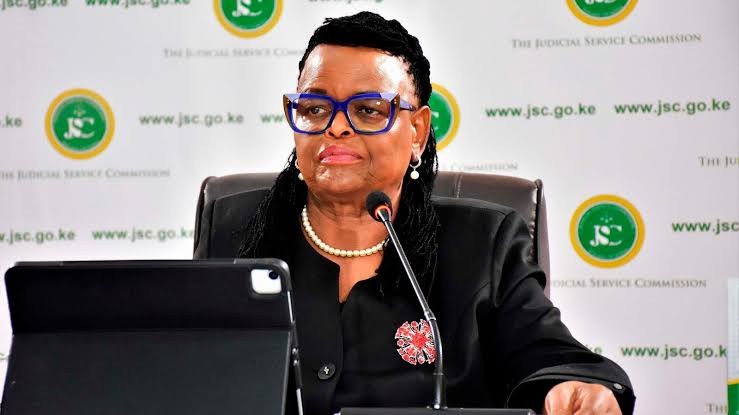
His remarks followed orders issued by Justice David Mburu, who barred the JSC and Chief Justice Martha Koome from releasing individual performance data of judges and judicial officers as an addendum, appendix or in any other form in the SOJAR report.
The orders were issued after Nairobi resident Duncan Kariuki filed a petition challenging the planned publication. The judge certified the application as urgent, saying publication of the data before the dispute was heard could render the petition and application academic.
Kariuki argues that the publication lacks an adequate regulatory or policy framework and could expose judicial officers to ridicule, cyber harassment and doxxing. He also questions whether the figures have been sufficiently verified and contextualised, warning that differences in workload, case complexity and court resources could produce misleading comparisons.
The petitioner maintains that he is not opposed to judicial performance accountability but wants clear procedures to guide the publication and interpretation of the information.
Lawyer Omwanza Ombati also weighed in on the dispute, saying the JSC had passed a resolution to publish individual performance reports for judges and magistrates as part of its accountability mechanism.
Ombati said the SOJAR report had been published through the Judiciary’s website and X account, as well as the JSC’s social media account. He urged Kenyans and advocates to examine the document, particularly from page 207.
Justice Mburu directed the respondents and interested parties to file their responses within seven days of service. The matter is scheduled for mention on December 1, 2026, for further directions.