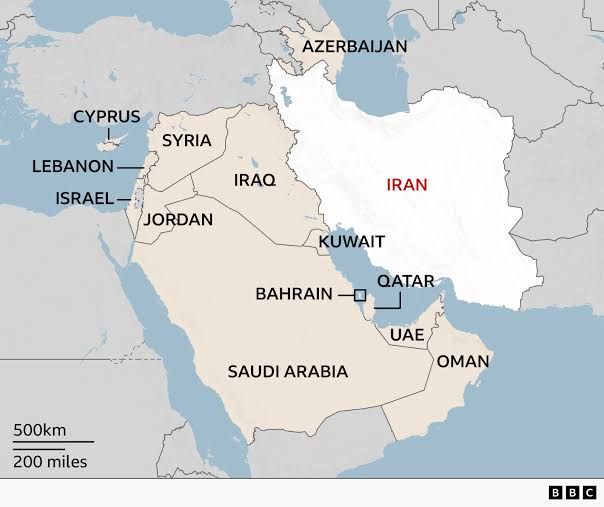
Iranian President Masoud Pezeshkian has called on Middle Eastern countries to assume responsibility for their own security, emphasizing that the region does not require the United States to act as a regional policeman. Pezeshkian delivered these remarks on Saturday during the BRICS summit held in India, a gathering that brings together the world's major emerging economies. His comments come at a time of escalating tensions between Iran and the United States, highlighting the ongoing geopolitical friction in the region.
During a meeting with Malaysian Prime Minister Anwar Ibrahim, Pezeshkian underscored the importance of regional cooperation in maintaining security and territorial integrity. "We do not need a regional policeman. The territorial integrity and security of the region can only be guaranteed by its main players and the countries that comprise it," he stated. This assertion reflects Iran's long-standing position that regional nations are best equipped to handle their security challenges without external interference.
The backdrop to Pezeshkian's remarks is the enduring conflict between Iran and the United States, which has seen tensions flare over various issues, including Iran's nuclear program and its influence in the Middle East. A critical flashpoint in this conflict is the Strait of Hormuz, a narrow waterway that connects the Persian Gulf to the Gulf of Oman and the Arabian Sea. This strait is a vital artery for global energy shipments, with a significant portion of the world's oil passing through it. Any disruption in this strategic waterway could have far-reaching implications for global energy markets and trade.
Iran has consistently advocated for regional countries to take the lead in security efforts, arguing that reliance on foreign powers undermines regional sovereignty. Despite these calls, the United States maintains a substantial military presence in the Middle East, with bases and troops stationed in several countries. The US continues to engage actively in regional security matters, often citing the need to protect its interests and those of its allies.
As the situation unfolds, attention will remain focused on developments surrounding the Strait of Hormuz and the broader conflict between Iran and the United States. The international community will be watching closely to see how these dynamics play out and what impact they may have on regional stability and global energy supplies. Pezeshkian's remarks at the BRICS summit serve as a reminder of the complex interplay of regional and international interests in the Middle East.