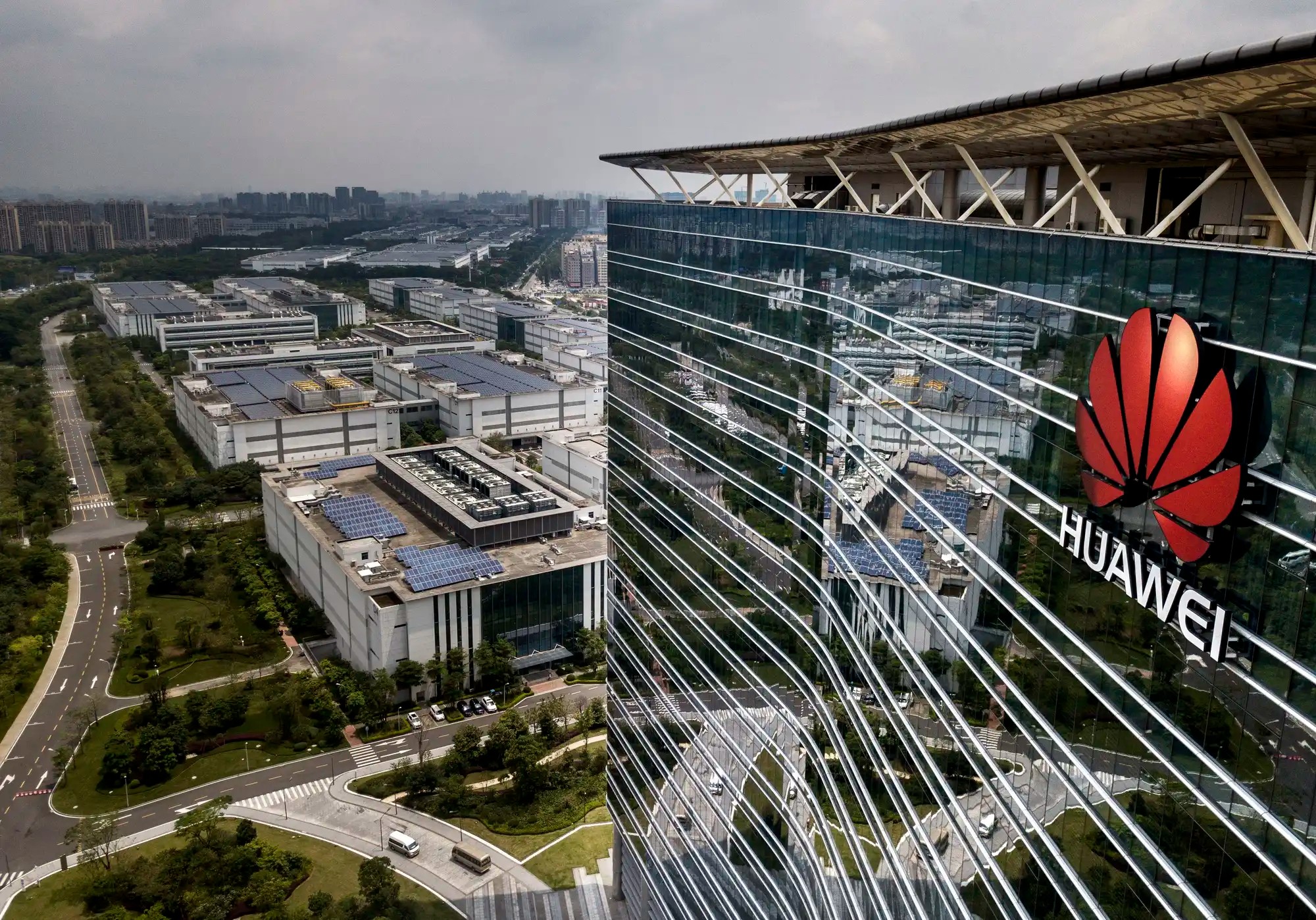
Chinese technology giant Huawei has been found guilty of conspiracy to steal trade secrets and bank fraud in a landmark criminal case in the United States. However, the company escaped conviction on a broader racketeering charge that prosecutors had sought to use to establish that it operated as a criminal enterprise.
The verdict was delivered by a jury at a federal court in Brooklyn, New York, following a two-month trial in which prosecutors accused Huawei of engaging in fraud, deception and intellectual property theft to strengthen its position in the global telecommunications industry.
Jurors found Huawei guilty on 10 of the 12 counts brought against the company and its subsidiaries. The convictions included conspiracy to violate US sanctions, as well as charges related to bank fraud and the theft of trade secrets.
However, the jury declined to find the company guilty of the overarching racketeering conspiracy charge, which required prosecutors to prove that Huawei operated as a criminal enterprise under US law.
The case, which was first announced by federal prosecutors in 2019, centred on allegations that Huawei had repeatedly misrepresented its business dealings with Iran to financial institutions and unlawfully obtained technology belonging to rival companies.
During closing arguments, Assistant US Attorney Meredith Arfa told the jury that Huawei had spent two decades pursuing business expansion through alleged deception and theft.
Prosecutors maintained that the company misled banks about its operations in Iran while using stolen trade secrets to gain an unfair advantage over competitors.
US Attorney General Todd Blanche welcomed the convictions, saying the verdict demonstrated that companies engaging in criminal activities would be held accountable.
However, Huawei's defence team maintained that the prosecution had unfairly portrayed the company as a criminal organisation, arguing that its international success was the result of innovation, investment and hard work.
Defence lawyer Brian Heberlig said the company was particularly satisfied with the jury's decision to reject the racketeering charge, describing it as a significant overreach by prosecutors.
He argued that the allegation sought to portray Huawei as an organisation whose corporate culture and policies were built around criminal activity, a claim the jury ultimately declined to uphold.
In a statement following the verdict, Huawei said the acquittal on the racketeering charge confirmed that the allegations lacked a factual basis. The company also pledged to pursue all necessary legal avenues to protect its rights and interests.
The legal battle has been closely watched internationally because of Huawei's position as one of China's largest technology companies and its longstanding disputes with US authorities.
The company's troubles in the United States intensified in 2018 following the arrest of its senior executive, Meng Wanzhou, in Canada at the request of American authorities.
Meng, who also served as Huawei's chief financial officer, was detained for nearly three years before reaching an agreement with US prosecutors that allowed her to return to China in 2021.
Following the latest verdict, Huawei faces a sentencing hearing scheduled for September 2027.
Heberlig indicated that the defence would make extensive submissions seeking the lowest possible sentence before pursuing an appeal against the convictions.
He maintained that Huawei believed it deserved to be acquitted on all charges and would continue challenging the outcome through the American judicial system.
The verdict marks a significant development in the prolonged legal confrontation between Huawei and US authorities, although the company's rejection of the allegations and its expected appeal suggest that the dispute is far from over.