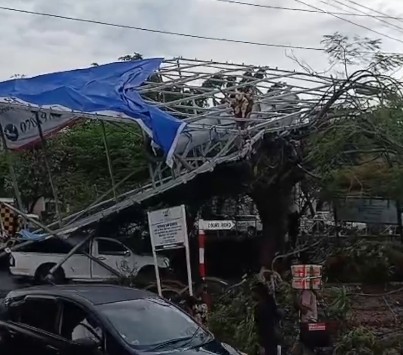
Property of unknown value was destroyed in Kisumu on Thursday evening after heavy rains accompanied by strong winds swept through the lakeside city, toppling billboards, trees and sections of walls.
The storm, which lasted approximately 20 minutes, disrupted business activities in the Central Business District (CBD), forcing traders and pedestrians to seek shelter as the weather intensified.
A billboard collapsed near Tivoli Centre, damaging parked vehicles, while other structures and objects were brought down by the powerful winds.
Tree branches also fell onto power lines, raising concerns over possible disruptions, as sections of walls collapsed in different areas. The incident highlighted the risks posed by sudden and intense weather changes, particularly in busy commercial areas where traders, motorists and pedestrians are exposed to falling debris and damaged structures.
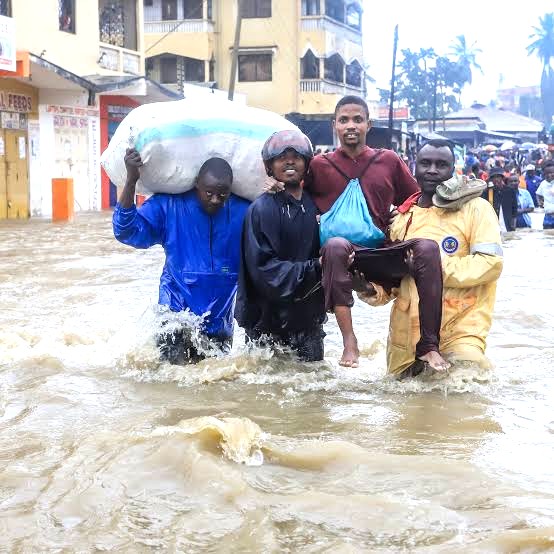
Traders who had taken shelter along building corridors were forced to find alternative places as the storm intensified, with the heavy downpour and strong winds creating difficult conditions within the city centre.
The incident comes as Kenya prepares for the short rains season, which is expected to begin this month, with rainfall forecasts pointing to wet conditions in various parts of the country.
The El Niño phenomenon has also been cited as a potential factor that could influence rainfall intensity and duration. However, its impact will depend on prevailing weather patterns and official meteorological forecasts.
The destruction in Kisumu underscores the potential impact of severe weather on businesses, infrastructure and transport, particularly in urban centres with high pedestrian and vehicular traffic.
Residents, traders and motorists are advised to remain alert during heavy rainfall and strong winds, avoid standing beneath trees or near billboards, and keep away from visibly unstable structures. Authorities are also expected to assess any damage to public infrastructure and determine whether fallen branches or damaged structures pose further risks.