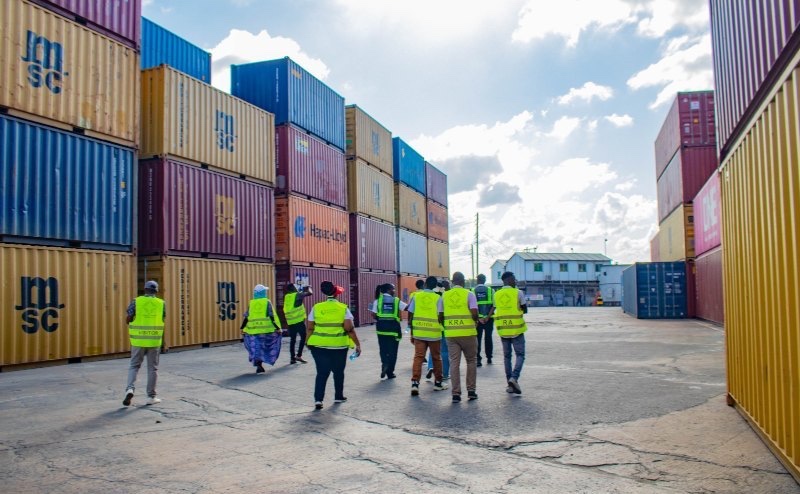
The government has raised concern over the growing impact of illicit trade in Kenya, estimating that the illegal business costs the country about KSh826 billion every year.
The figure is contained in a new report launched by the State Department for Trade in Mombasa on November 18, 2026.
The National Assessment of Illicit Trade in Kenya: Trends, Effects and Strategic Responses Report examines the scale of illicit trade and its economic and social impact on the country.
According to the report, the estimated KSh826 billion loss is equivalent to about 9.3 per cent of Kenya’s Gross Domestic Product (GDP).
The assessment also identifies weaknesses in enforcement and coordination among institutions dealing with illicit trade.
The government says illicit trade poses a major threat to Kenya’s economic transformation and industrialisation plans.
It also undermines fair competition, reduces government revenue and puts legitimate businesses at a disadvantage.
Consumers are also exposed to risks through the circulation of counterfeit, adulterated and substandard products.
The report further raises concern over the diversion of controlled medicines and the reuse of packaging materials, which can expose consumers to serious health and safety risks.
Other forms of illicit activity highlighted in the assessment include illegal financial flows, money laundering, trafficking in wildlife trophies and natural resources, human trafficking and labour exploitation.
To tackle the problem, the government has proposed a national strategic framework based on seven key areas.
These include stronger national governance and coordination between government agencies, better collection and sharing of data, and improved intelligence on illicit trade.
The framework also calls for risk-based enforcement, stronger market surveillance and greater use of technology to improve the tracking of products across supply chains.
The government also plans to strengthen legal enforcement and disrupt financial networks supporting illicit trade.
Sector-specific regulatory reforms and stronger cooperation between the government, private sector, communities and international partners have also been proposed.
The State Department for Trade said successful implementation of the framework would be critical in turning the report’s recommendations into practical action.
The measures are expected to strengthen consumer protection, protect legitimate businesses and improve government revenue.
The government says a coordinated approach involving regulatory agencies, revenue authorities, security agencies, standards organisations, the private sector and other stakeholders will be necessary to effectively fight illicit trade.
The report ultimately seeks to establish a sustained national response to illicit trade and protect Kenya’s economic interests while promoting a fair and transparent business environment.