The ongoing El Niño weather phenomenon is expected to strengthen further before reaching its peak in December, with the World Meteorological Organization (WMO) warning of major shifts in temperatures and rainfall patterns globally.
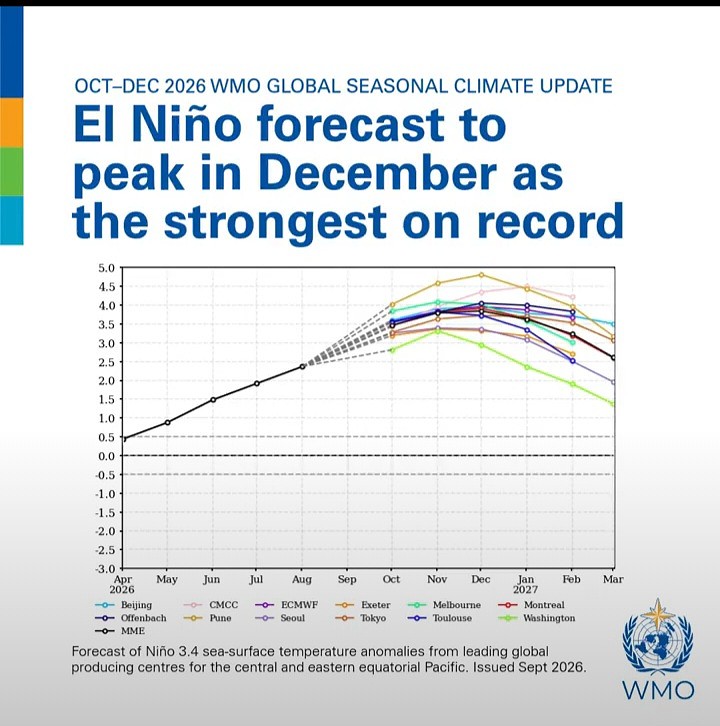
In its latest climate update, the WMO said sea-surface temperatures in the central and eastern tropical Pacific are expected to reach record levels between October and December 2026.
The organisation said the event could become one of the strongest El Niño episodes recorded since 1950.
The Niño 3.4 index, which is used to monitor sea-surface temperatures in the central and eastern tropical Pacific, rose from 1.6 degrees Celsius above normal in June to 2.5 degrees above normal in August.
The WMO now forecasts the three-month average to reach about 3.7 degrees above normal between October and December, with the highest levels expected around December.
This would be above the previous record of 2.6 degrees recorded between November 2015 and January 2016.
El Niño is a natural climate pattern caused by unusually warm waters in the central and eastern Pacific Ocean. It can affect weather far beyond the Pacific by changing normal patterns of rainfall and temperature.
The strengthening event is expected to bring above-average temperatures across much of the world, while also increasing the chances of heavy rainfall and flooding in some areas and drought in others.
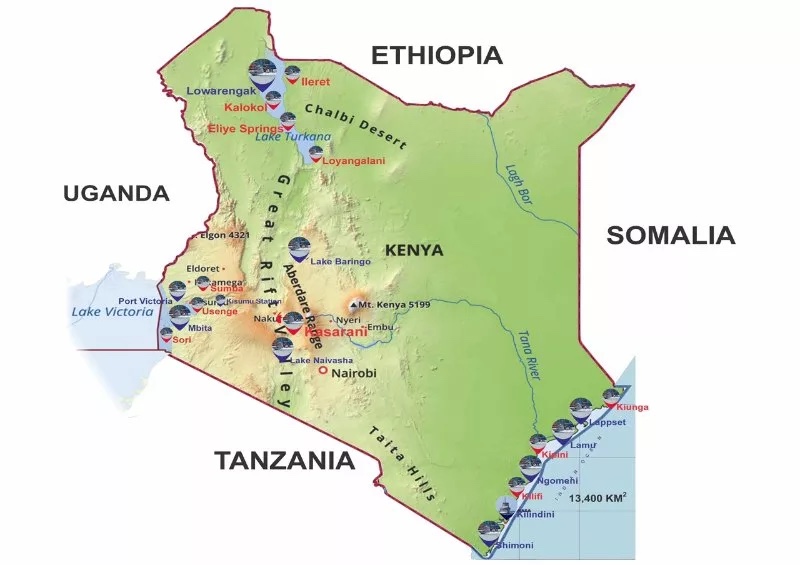
The latest warning comes as Kenya prepares for the October-December (OND) rainfall season, which has already been forecast to receive above-average rainfall in many parts of the country.
Kenya Meteorological Department forecasts show enhanced rainfall across much of the country, with 43 counties listed as likely to receive above-average rainfall.
The department has also warned of prolonged wet spells and occasional storms during the season.
Kenya has been stepping up preparations for the expected weather conditions, including strengthening early-warning systems and coordination between government agencies.
The Kenya Meteorological Department has previously cautioned that the current El Niño should not automatically be compared with the 1997-1998 event, noting that other climate factors, including the Indian Ocean Dipole, influence how the phenomenon affects Kenya.
The WMO said the current El Niño is likely to persist through February 2027, meaning its effects could continue into next year.
The agency is urging countries to use the latest forecasts to strengthen preparedness as the event develops.