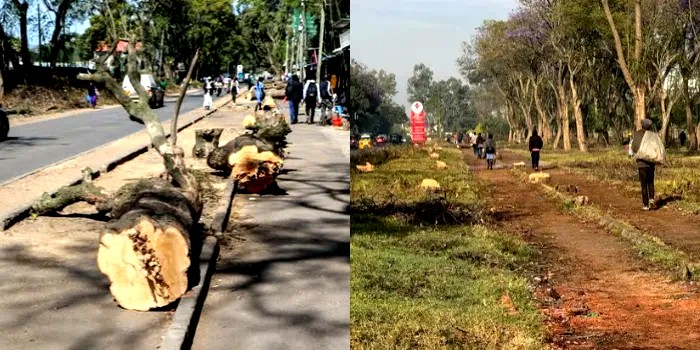
The Architectural Association of Kenya (AAK) has called for an immediate halt to tree felling across the country, warning that the continued destruction of forests and urban green spaces threatens public health, biodiversity and Kenya’s climate resilience.
In a statement issued on Friday, October 16, 2026, AAK expressed concern over what it described as persistent and widespread destruction of the natural environment, citing the removal of trees to pave the way for infrastructure expansion, development projects and demand for timber and land.
The Association said trees had been felled along major transport corridors in Nairobi, including Uhuru Highway, Mombasa Road during the construction of the Nairobi Expressway, State House Road, Kenyatta Avenue and Valley Road.
In Nakuru, AAK raised concern over the felling of mature trees along Oginga Odinga Avenue, warning that the destruction was stripping the city of an important feature of its urban landscape.
It also questioned the cutting of trees along the Mau Summit–Rironi Highway, calling for greater scrutiny of how infrastructure projects are planned and implemented, particularly whether adequate environmental safeguards are in place.
Beyond urban centres, the association highlighted reported logging in ecologically sensitive areas, including the Aberdare ecosystem, Kapthemutwa Forest, Saboti Forest, Karura Forest and Imenti Forest.
AAK said forests play a critical role in regulating water flows, reducing surface runoff and preventing floods.
They also absorb carbon dioxide, help improve air quality, preserve biodiversity and provide habitats for wildlife.
The association warned that the loss of tree cover could worsen the effects of climate change, increase urban temperatures and undermine the quality of life in communities that depend on healthy ecosystems.
It further noted that the destruction of natural habitats contradicted Kenya’s environmental commitments, including the government’s 15 billion tree-growing programme, which aims to restore 10.6 million hectares of degraded landscapes and increase national tree cover to 30 per cent by 2032.
Kenya’s climate commitments also target a 32 per cent reduction in greenhouse gas emissions by 2030, goals that AAK said would be difficult to achieve if the destruction of forests and other ecosystems continued.
While acknowledging that infrastructure development, housing delivery and economic growth were essential to the country’s progress, the association insisted that development should not come at the expense of the environment.
AAK called on national and county governments, the Kenya Forest Service, the National Environment Management Authority (NEMA) and other relevant agencies to take urgent action to protect trees and natural habitats.
Among its recommendations, the association urged authorities to investigate reported cases of ecological destruction and hold those responsible accountable. It also called for tree preservation to become a mandatory consideration in infrastructure planning and development approvals.
The Association further proposed mandatory tree inventories before construction begins, credible restoration programmes prioritising indigenous species, and the involvement of experts in identifying trees that can be transplanted instead of cut down.
It also urged authorities to strengthen public reporting and accountability by involving communities in decisions affecting their environmental assets, while ensuring neighbourhoods have adequate public green spaces to improve urban tree cover and air circulation.
AAK President George A. Ndege said the association remained committed to promoting development that respects ecological limits and serves the public interest.
The Association warned that continued environmental destruction would have far-reaching consequences for present and future generations, stressing that protecting nature was essential to safeguarding human survival.