Director of Public Prosecutions Renson Ingonga has called for stronger international cooperation to dismantle criminal networks involved in wildlife trafficking, warning that the illegal trade has evolved into an increasingly sophisticated form of transnational organised crime.
Ingonga said wildlife trafficking thrives on interconnected criminal activities and networks that operate across national borders, making coordinated investigations, intelligence sharing and effective prosecution essential in tackling the trade.
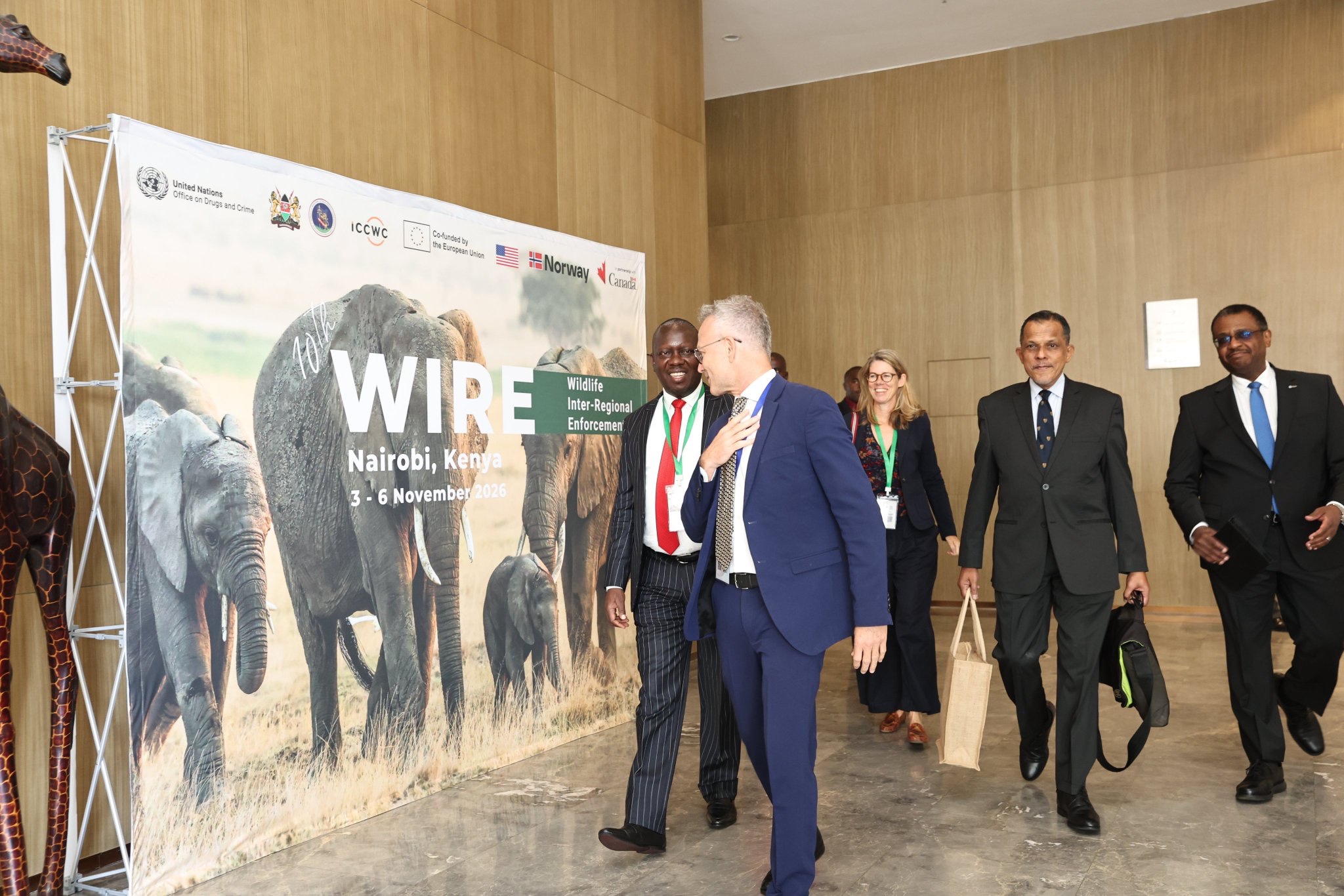
He spoke on Tuesday, November 3, 2026, in Nairobi when he officially opened the 10th Wildlife Inter-regional Enforcement Conference at Argyle Hotel.
The three-day conference, convened by the United Nations Office on Drugs and Crime (UNODC) in partnership with the Office of the Director of Public Prosecutions (ODPP), has brought together investigators, prosecutors, customs officers and wildlife enforcement authorities from different countries.
Among those attending is Sri Lanka’s Attorney General, Parinda Ranasinghe, alongside investigators, prosecutors, customs officers and wildlife authorities from across the world, as participating countries seek to strengthen international partnerships and improve enforcement against wildlife-related offences.
Ingonga reaffirmed the ODPP’s commitment to prosecuting wildlife crime and other offences against the environment, emphasising that the fight requires cooperation between countries and agencies responsible for protecting wildlife.
He cautioned against measuring the impact of wildlife crime solely through the volume of illegal animal products recovered during enforcement operations.
According to the DPP, the consequences extend beyond the confiscated products to the destruction of wildlife populations, disruption of ecosystems and loss of natural resources that communities depend on.
He also highlighted the criminal enterprises that benefit financially from the destruction and illegal exploitation of wildlife, pointing to the need to target the networks behind the trade rather than concentrating only on individual seizures.
The scale of the problem is reflected in findings from UNODC’s 2024 World Wildlife Crime Report, which documented more than 140,000 wildlife seizure records across 162 countries and territories between 2015 and 2021.
The seizures involved approximately 4,000 plant and animal species, including about 3,250 listed under the Convention on International Trade in Endangered Species of Wild Fauna and Flora (CITES).
The report also recorded 13 million seized items, demonstrating the diversity and geographical reach of illegal wildlife trade.
UNODC has previously identified the Wildlife Inter-Regional Enforcement (WIRE) initiative as an important platform for strengthening cooperation between African and Asian countries in investigating wildlife offences committed by transnational criminal networks.
The initiative provides opportunities for law enforcement authorities, customs officials and prosecutors to exchange information, share intelligence and build direct working relationships across jurisdictions.
The Nairobi conference comes as authorities continue to face the challenge of disrupting trafficking operations that extend beyond individual countries and involve different stages of the illegal trade.
For Kenya, hosting the meeting provides an opportunity to strengthen its engagement with international enforcement agencies and prosecution authorities in addressing crimes that threaten wildlife and the environment.
The discussions are expected to reinforce international collaboration and strengthen enforcement efforts against wildlife trafficking and other environmental offences.