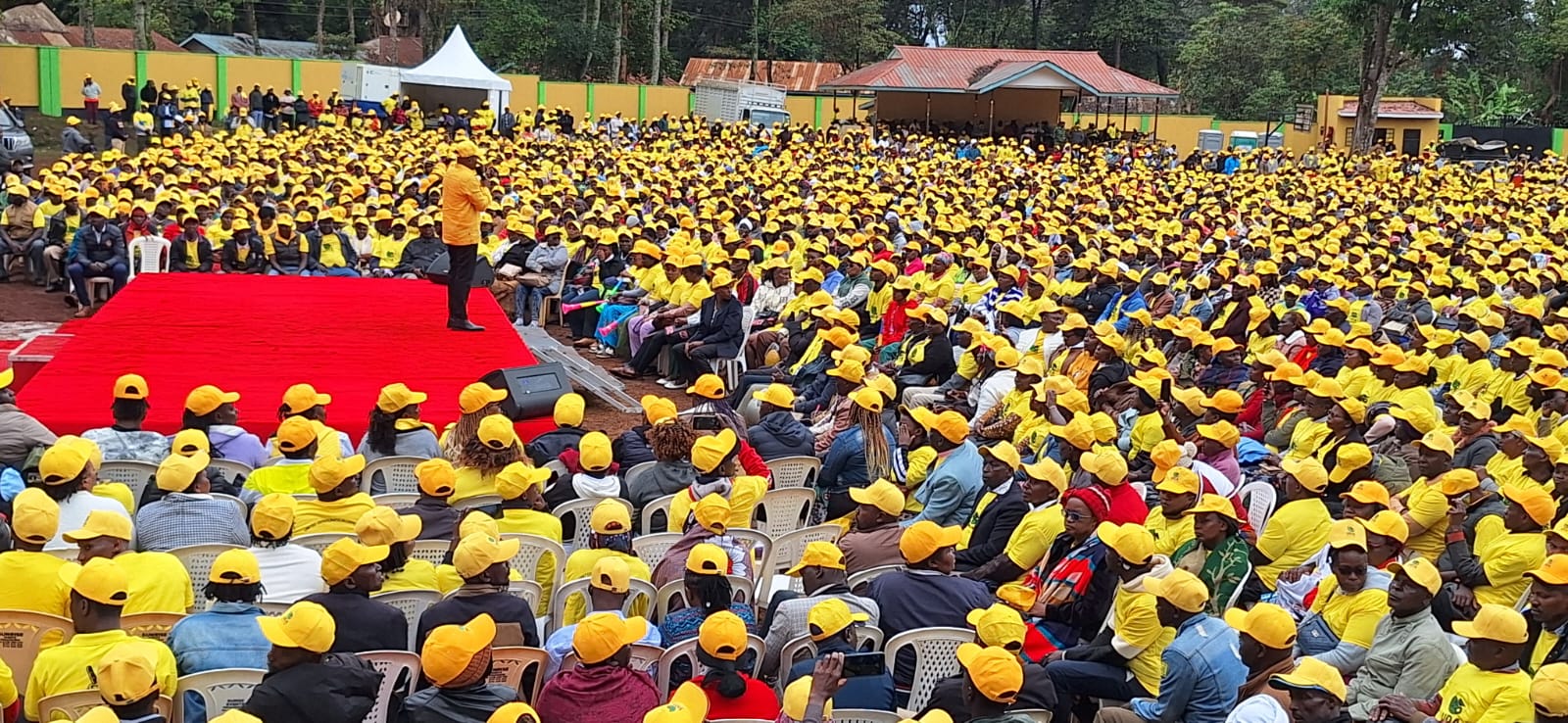
Deputy President Kithure Kindiki urged political tolerance after tension at Nembure Stadium in Embu County disrupted a meeting of United Democratic Alliance (UDA) grassroots leaders.
Kindiki called for political restraint and tolerance, urging supporters not to disrupt rallies or interfere with the political activities of rival groups. The incident occurred as he addressed UDA grassroots leaders at the stadium, where security officers confronted a group reportedly hurling stones inside the venue, leading to a brief disruption.
Teargas smoke spread across parts of the stadium, forcing some audience members to seek safety. Security personnel and drivers moved vehicles to a more secure section of the venue as the situation unfolded.
Despite the disruption, Kindiki appealed for calm and urged his supporters not to retaliate by interfering with meetings organized by political opponents. He emphasized that political competition should be conducted peacefully, allowing leaders to present their policies and programmes to the electorate without intimidation or violence.
Kindiki criticized the use of personal attacks and name-calling in political engagements, advocating for a focus on issues affecting the public. He took a swipe at former Deputy President Rigathi Gachagua, accusing political leaders of engaging in persistent attacks instead of promoting issue-based politics.
He further condemned the use of young people to disrupt political gatherings, warning leaders against turning youths into instruments of political confrontation. Kindiki's call came during a period of heightened political activity in Embu County and the wider Mt Kenya region.
Nembure Stadium has hosted several political gatherings in recent weeks, including a meeting of Mt Kenya East elders on August 15 and a grassroots leaders' meeting addressed by the Deputy President on August 28. At the August 28 gathering, Kindiki challenged opposition leaders to account for their development record and defended the Kenya Kwanza administration's performance in areas including agriculture, education, roads, and healthcare.
However, the latest tension at the venue brought the focus back to the conduct of political meetings and the responsibility of leaders to prevent their supporters from engaging in confrontation. Political rallies are expected to increase as leaders continue grassroots mobilization across the country.
Kindiki's remarks place renewed emphasis on the need for political tolerance, particularly as rival groups seek support through public meetings and rallies. His warning against involving young people in political confrontations highlights concerns about the role supporters can play when political competition turns hostile.
Kindiki maintained that disagreements between political leaders should not deny others the right to organize meetings or campaign for support. He stated that the contest for political leadership should be based on policies and programmes rather than intimidation, violence, or disruption.