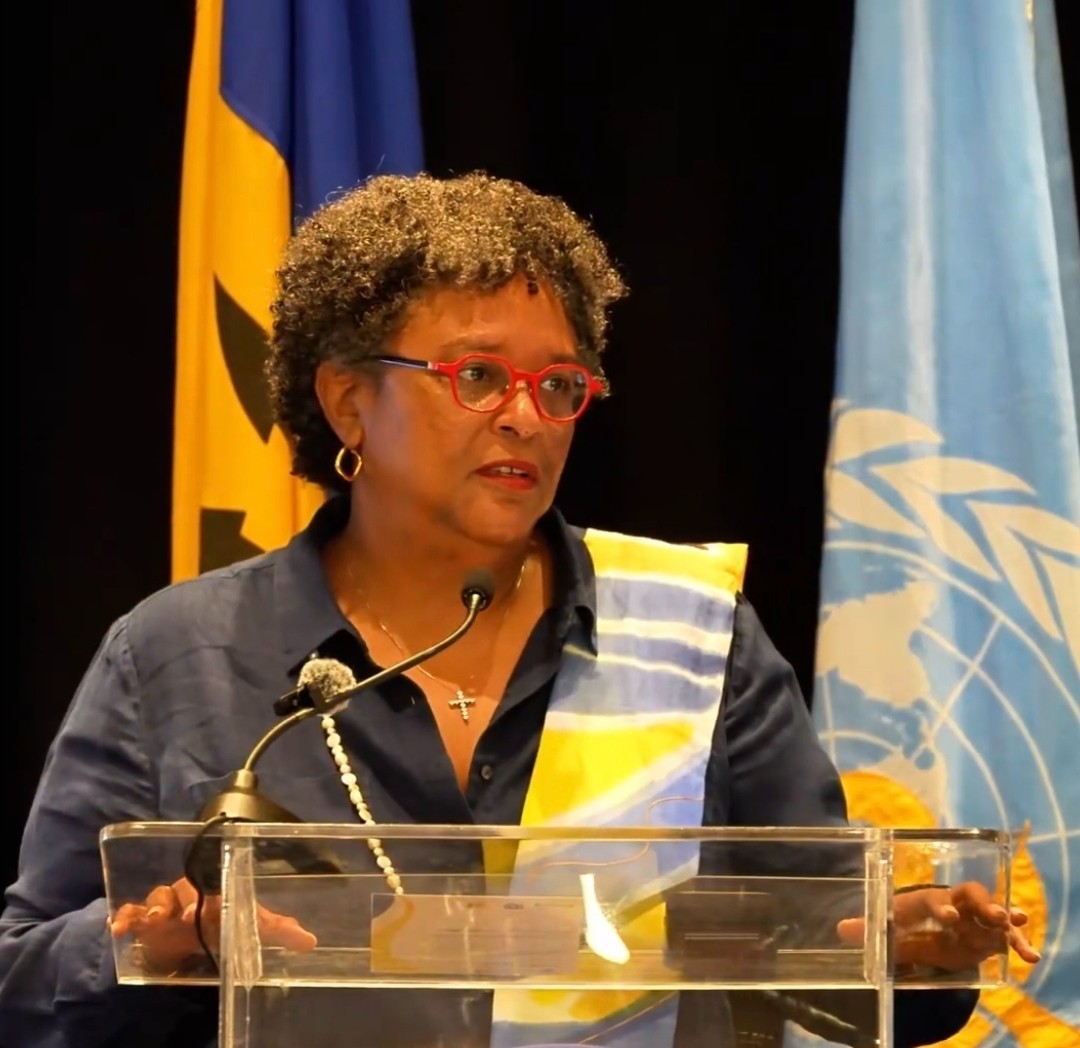
Barbados Prime Minister Mia Amor Mottley has welcomed the United Kingdom's acknowledgement of the brutality of the transatlantic slave trade and an offer by UK Prime Minister Andy Burnham to engage in structured dialogue, including discussions on a formal apology.
In a statement issued by the Prime Minister's Office, Mottley said Barbados was prepared to participate in the proposed discussions in good faith as a member of the Caribbean Community (CARICOM), describing the move as an important step towards addressing the historical injustices of slavery.
She also acknowledged former UK Prime Minister Sir Keir Starmer for joining other Commonwealth leaders in 2024 to agree that the time had come for meaningful conversations on reparatory justice.
Mottley said the decision taken in Samoa had opened the way for the current engagement, adding that Barbados had a particular historical connection to the issue.
She recalled that in 1661, under English colonial authority, Barbados became the site of the first comprehensive slave code in the English-speaking world. The law classified African men, women and children as non-human property and became a model for similar legislation across the region and beyond.
According to Mottley, the system was established through legislation and enforced by the colonial state, leaving a historical legacy that continues to inform calls for reparatory justice.
However, she acknowledged that countries involved in the discussions may hold different positions on some aspects of reparations, insisting that disagreements should not prevent progress in areas where common ground exists.
She said Barbados would continue to speak openly and respectfully about its differences with the United Kingdom, particularly on reparations, while pursuing cooperation in other areas.
Mottley identified efforts to address Afrophobia and anti-Black discrimination, increased investment in health and education, development partnerships targeting systemic poverty and institutionalised inequality, and fairer debt arrangements for vulnerable countries as areas where progress could be achieved.
She said the CARICOM Ten Point Plan remained an important guide for the discussions and the wider pursuit of reparatory justice.
The Barbadian leader urged countries to build on areas of agreement even as they continued to address outstanding differences, including through engagement involving CARICOM, the African Union and the United Kingdom.
She also thanked Burnham and his Foreign Secretary, Ed Miliband, for what she described as breaking new ground by recognising the importance and moral responsibility of moving discussions to the next stage.
Mottley said the process would require sustained engagement, noting that countries could not reach their intended destination without taking the first steps.
The transatlantic slave trade involved the forced transportation of millions of Africans across the Atlantic over several centuries, with many subjected to enslavement, violence and exploitation in the Americas and the Caribbean.
Calls for reparatory justice have included demands for formal apologies, compensation, debt relief, investment in affected communities and measures to address the enduring social and economic consequences of slavery and colonialism.