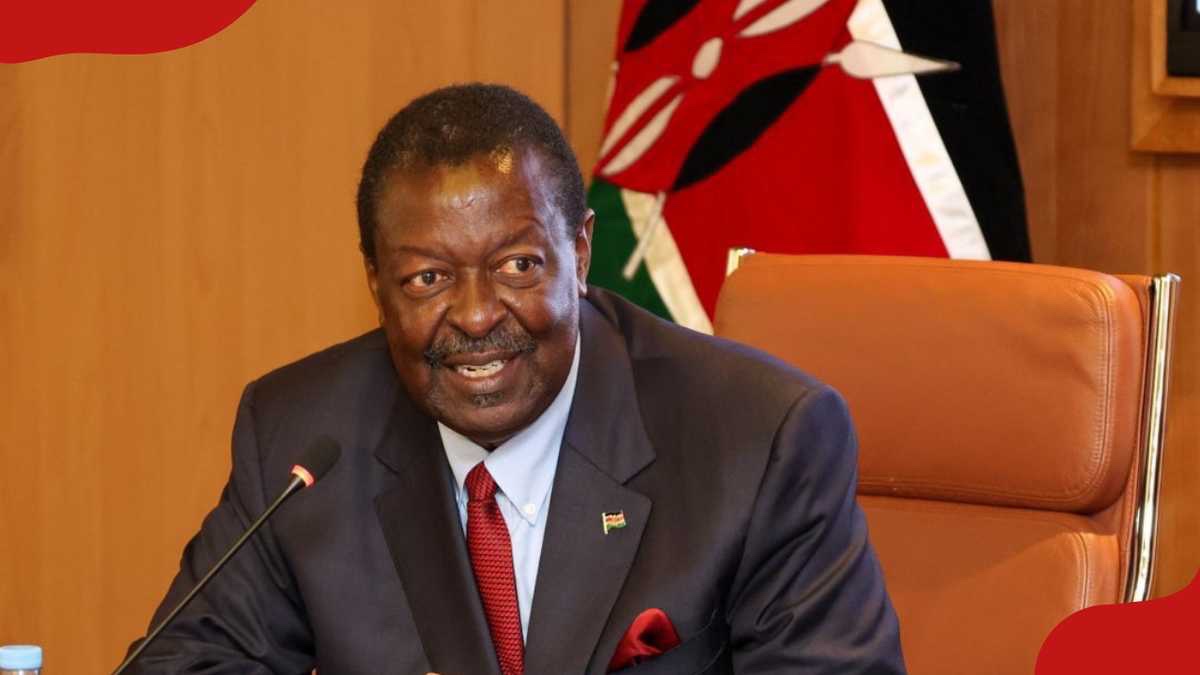
Prime Cabinet Secretary Musalia Mudavadi has disclosed that 354 Kenyans remain unaccounted for after travelling to Russia and becoming involved in the war against Ukraine, with the government relying on diplomatic efforts to establish their whereabouts and secure their return.
Mudavadi appeared before a joint sitting of the Senate committees on Labour and Social Welfare and National Security, Defence and Foreign Relations on Thursday, October 8, as senators examined the recruitment of Kenyans into foreign military service.
He said the government has so far repatriated 62 Kenyans but does not currently have a dedicated budget allocation to finance the return of those still trapped in the conflict.
Mudavadi said Kenya was instead pursuing diplomatic channels with both Russia and Ukraine, including seeking the inclusion of Kenyans in prisoner exchanges between the two countries.
He explained that the government refers to the 354 cases as “missing in action” because it has not established whether the affected Kenyans are alive or dead.
Mudavadi said the government could not declare them dead without confirmation of their fate or recovery of their remains.
The search has also been complicated by the circumstances under which some Kenyans travelled to Russia. According to Mudavadi, some left the country without informing their families, while others did not notify the Kenyan government before travelling.
Despite those circumstances, he said Kenya remains responsible for trying to locate its citizens and assisting them to return home.
The latest government figure comes amid continuing discrepancies over the number of Kenyans who have been recruited into Russia’s military operations. Earlier in the year, the government reported hundreds of cases, while families appearing before Senate committees have presented a much higher figure of people they believe have been affected.
The families have reported cases involving Kenyans who are missing, killed, injured, detained or believed to have been taken to the front lines after travelling to Russia on the promise of civilian employment.
Mudavadi told senators that Kenya does not have the military capacity to enter the Russia-Ukraine war zone and conduct rescue operations. As a result, diplomatic engagement with Moscow and Kyiv remains the government’s main avenue for securing the release of affected Kenyans.
He said Kenya was engaging both sides to ensure that Kenyan nationals held in connection with the conflict are considered whenever Russia and Ukraine undertake prisoner exchanges.
Mudavadi also acknowledged that Kenyan law prohibits citizens from enlisting in the armed forces of a foreign government without the consent of the President. Section 58 of the Penal Code provides for that restriction.
However, he said the government’s immediate focus was on bringing the affected Kenyans home rather than pursuing the legal aspect of their enlistment.
“Our mission is to bring those Kenyans back home, and we hope that we will bring more alive than dead,” Mudavadi said.
The government is now expected to continue diplomatic engagements with Russia and Ukraine while the Senate examines how Kenyans were recruited, the circumstances surrounding their deployment and measures needed to prevent further recruitment into foreign conflicts.