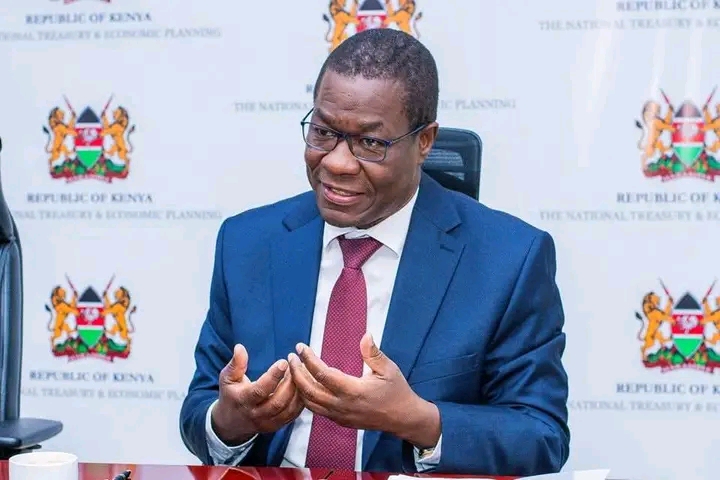
Energy and Petroleum Cabinet Secretary James Opiyo Wandayi has defended Kenya’s Government-to-Government (G-to-G) petroleum importation arrangement, saying the deal was introduced to address a severe shortage of US dollars that had threatened fuel supplies and the wider economy.
In a statement issued on September 20, 2026, Wandayi said the arrangement was a well-intentioned intervention aimed at cushioning the country from the effects of the foreign exchange liquidity crisis that had gripped the economy in 2022.
He said that when President William Ruto’s administration assumed office on September 13, 2022, Kenya was facing serious challenges in securing refined petroleum products, with some retail stations operating with minimal or no stocks.
At the time, all imports of refined petroleum products were required to be paid for in US dollars within five days of cargo receipt. Wandayi said the petroleum import bill stood at about US$500 million, representing approximately 35 per cent of the country’s total import bill.
He said the acute shortage of dollars forced oil marketing companies to source the currency from multiple banks, creating additional demand and contributing to rapid depreciation of the Kenya shilling against the US dollar.
According to Wandayi, oil marketers were also forced to take expensive foreign exchange swaps to meet their import obligations, a situation he said had become unsustainable.
He said consultations between the government, banks and oil marketing companies revealed that the country was approaching a critical point and required an urgent intervention to prevent a broader economic crisis.
On March 10, 2023, the government entered into Master Framework Agreements with Aramco Trading Fujairah FZE, ADNOC Global Trading Ltd and Emirates National Oil Company (ENOC) for the supply of refined petroleum products on extended 180-day credit terms.
Wandayi said the arrangement was designed to ease pressure on the foreign exchange market by reducing the immediate demand for US dollars and allowing Kenya to accumulate additional foreign exchange reserves.
He said the government targeted an increase of about US$500 million per month in foreign exchange reserves as demand for dollars eased under the extended credit arrangement.
The framework also sought to revive the interbank foreign exchange market and reduce speculative activity that had contributed to volatility in the currency market.
Wandayi said the international oil companies were required to work with licensed Kenyan oil marketing companies for local logistics. He said the suppliers initially selected Gulf Energy Limited, Galana Energies Limited and Oryx Energies Kenya Limited as their local counterparties, before later adding One Petroleum Limited, Asharami Synergy Limited and BE Energy Limited.
The CS also defended the cost of petroleum imports under the arrangement, saying the freight and premium charges had been renegotiated downwards as international market conditions changed.
He said the initial negotiated premium was US$97.50 per metric tonne for Super Petrol, US$118 for diesel and US$114.25 for Jet A-1.
In September 2023, the premiums were renegotiated to US$90 per metric tonne for Super Petrol, US$88 for diesel and US$111.75 for Jet A-1.
A further renegotiation in March 2025 reduced the premiums to US$84 for Super Petrol, US$78 for diesel and US$97 for Jet A-1.
Wandayi said the negotiated premiums had remained fixed even during periods of heightened international market volatility, arguing that the arrangement had helped provide Kenya with greater security of petroleum supply.
Under the G-to-G framework, petroleum imports for the Kenyan market are paid for in Kenya shillings and backed by 180-day letters of credit. Wandayi said the participating banks had expanded from KCB Bank to include MCB, I&M Bank, DTB, Stanbic, UBA and Equity Bank.
He said the arrangement had helped preserve and build Kenya’s foreign exchange reserves while supporting stability in the Kenya shilling against the US dollar.
Wandayi further described the G-to-G framework as a local response to a local economic challenge that had also strengthened Kenya’s position as a regional logistics hub.
He said the government would continue working with trading partners and regional stakeholders to strengthen the Northern Corridor as a key route for the distribution of refined petroleum products to East Africa and the wider Great Lakes region.
The statement comes amid renewed public scrutiny of the G-to-G petroleum importation framework, with the government maintaining that the arrangement was introduced primarily to safeguard fuel supplies and ease pressure on Kenya’s foreign exchange reserves.