The promulgation of the Constitution of Kenya in 2010 was a landmark moment for the nation, aimed at addressing local issues through the establishment of devolved governments. These governments were intended to engage in public participation, listen to local concerns, and prioritize solutions to community-specific problems. However, despite these noble objectives, some areas still grapple with perennial challenges. A case in point is the Leiture estate in Mombasa, where residents face significant difficulties whenever it rains.
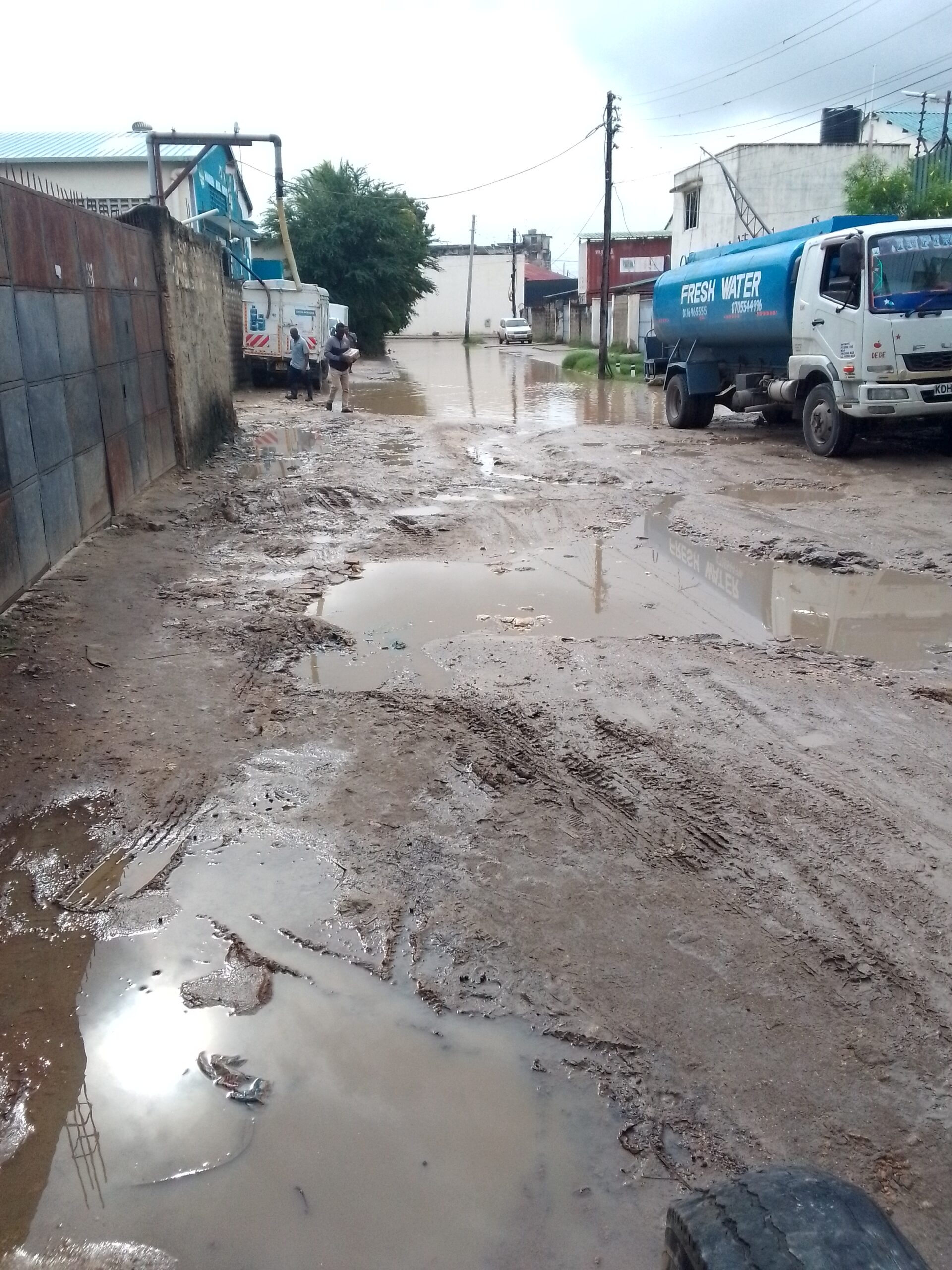
During the rainy season, a particular street in Leiture estate becomes virtually impassable, as residents are forced to wade through water that reaches foot depth. This situation persists until the water naturally evaporates or drains away, a process that can take several days. At the far end of this street lies a drainage manhole, which has been blocked and filled with soil for an indeterminate period. The neglect of this drainage system exacerbates the flooding issue, leaving residents frustrated and inconvenienced.
Leiture estate is not only a residential area but also hosts several godowns that store goods vital to the economy of both the county and the country. These businesses contribute significantly to the local and national economy through taxes paid to the county government and the Kenya Revenue Authority (KRA). Additionally, water boozers operate in the area, purchasing and distributing water to the residents of Mombasa, a city known for its water scarcity. Despite these economic contributions, the infrastructure remains neglected, raising questions about the priorities of local authorities.
The plight of the residents is further compounded by the apparent disconnect between the needs of the community and the actions of their elected leaders. While residents of high-rise residential buildings in the area endure the inconvenience of flooded streets, it seems that some officials are more comfortable in their offices, removed from the daily struggles of their constituents. This raises questions about the living conditions of the local Member of County Assembly (MCA) and their awareness of the situation.
Addressing the drainage issue on this street would not be an insurmountable task. In fact, it is estimated that unblocking the drainage and raising the street level could be accomplished within a week. Yet, the question remains: for how long will Kenyans continue to suffer from such preventable issues, especially in a country that boasts one of the highest levels of political representation in the world?