The United States and Kenyan law enforcement agencies are pursuing suspects linked to an international student aid fraud scheme involving more than $750,000 (KSh97.47 million) in cryptocurrency.
The investigation, dubbed Operation Ghostbusters, is part of a wider crackdown on fraudsters accused of stealing American identities to obtain federal student aid and divert the money through financial accounts, including those allegedly linked to overseas actors.
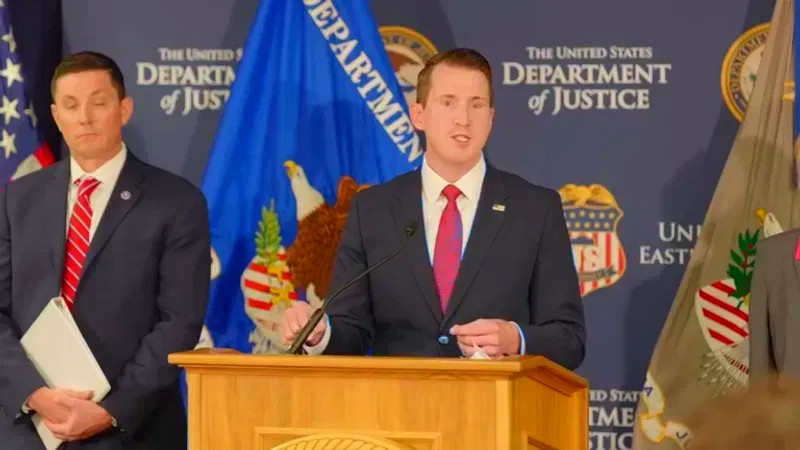
The U.S. Department of Justice says it is working with Kenya’s Directorate of Criminal Investigations (DCI), Asset Recovery Agency (ARA) and Office of the Director of Public Prosecutions (ODPP) to pursue suspects believed to be operating outside the United States, recover stolen public funds and bring those responsible to justice.
The cryptocurrency angle forms part of the operation’s broader focus on tracing proceeds of cyber-enabled fraud, with investigators receiving technical assistance in cryptocurrency and dark-web investigations.
The Justice Department says the wider suspected student aid fraud has been ongoing since at least 2021, with estimated losses exceeding $200 million (KSh25.99 billion).
The scheme allegedly involves fraudsters using stolen personal information belonging to Americans to submit fraudulent applications for Federal Student Aid through the Free Application for Federal Student Aid (FAFSA) system.
The applications create so-called “ghost students” who appear to qualify for financial assistance but never attend the colleges or universities for which the funds are awarded. Refunds are allegedly diverted to bank and other financial accounts opened using identities different from those of the actual applicants.
Investigators say some suspects use sophisticated techniques, including artificial intelligence, to make fictitious students appear to participate in classes and complete coursework, allowing the fraudulent applications to evade detection.
The investigation was opened by the FBI’s Richmond Field Office following a referral from the U.S. Department of Education’s Office of Inspector General. It has since expanded to more than 40 open cases across 26 FBI field offices and over 20 U.S. Attorneys’ Offices.
The Justice Department says international cooperation includes support from its International Computer Hacking and Intellectual Property programme, which provides technical assistance to foreign law enforcement officers, prosecutors and judicial partners.
A programme attorney adviser based in Dar es Salaam, Tanzania, and a U.S. Department of Justice resident legal adviser in Nairobi are among those supporting the cooperation. The initiative receives funding from the U.S. Department of State’s Bureau of International Narcotics and Law Enforcement Affairs.
Other participating agencies include the FBI, U.S. Customs and Border Protection, the Department of Education and several Justice Department divisions involved in fraud enforcement, international affairs and financial investigations.