
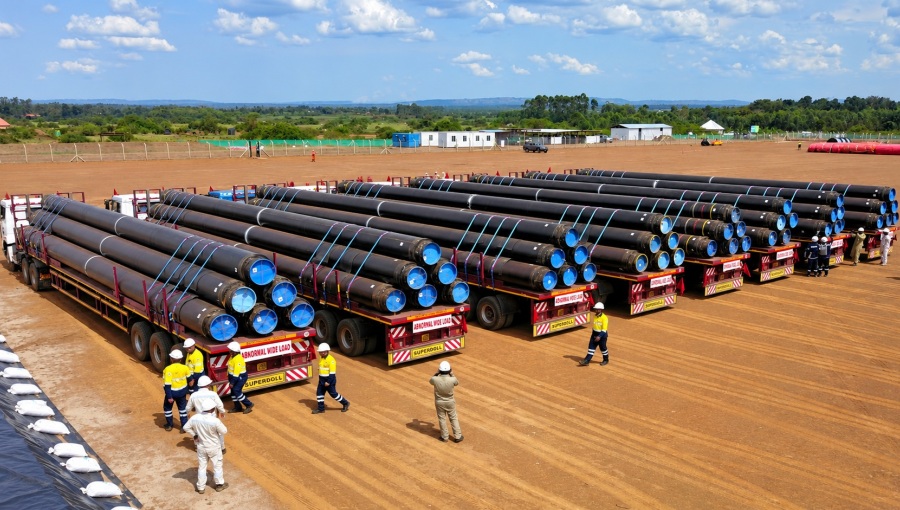
Uganda's ambitious $5.6 billion East African Crude Oil Pipeline (EACOP) is nearing completion, promising to establish a significant crude-export route through Tanzania. This development marks a pivotal moment for Uganda as it seeks to tap into international oil markets. However, concerns linger regarding the project's financing, fuel security, and the broader economic impact on the East African region.
The EACOP, once operational, will facilitate the transportation of Ugandan crude oil to the port of Tanga in Tanzania, providing Uganda with its first direct access to global oil markets. This infrastructure project is expected to boost Uganda's oil production capabilities and potentially transform its economy. Despite these prospects, the project's financial sustainability remains a topic of debate among experts.
Questions about the pipeline's financing have been raised, as securing adequate funding has been a challenge. Additionally, the project's implications for regional fuel security are yet to be fully understood. While the pipeline could enhance energy security by increasing oil availability, it also poses risks related to environmental concerns and the volatility of global oil prices.
Moreover, the anticipated economic benefits for the broader East African region are still uncertain. While Uganda stands to gain significantly, the extent to which neighboring countries will benefit is unclear. The pipeline's success will largely depend on regional cooperation and the ability to address potential economic and environmental challenges.
As the EACOP project nears its final stages, stakeholders are closely monitoring its progress and potential impact. The completion of the pipeline is expected to occur soon, but its long-term effects on the region's economy and energy landscape remain to be seen.