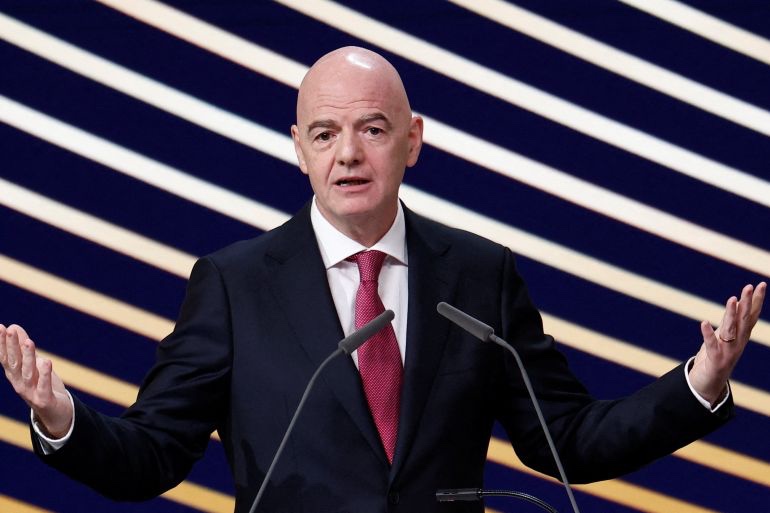
UEFA has given FIFA until November 2, 2026, to release documents relating to President Gianni Infantino’s abandoned $4.2 billion investment proposal and answer 42 questions concerning the organisation’s governance, intensifying a dispute over transparency and decision-making in world football.
The European football governing body issued the deadline after its representatives expressed dissatisfaction with Infantino’s explanations at a FIFA Council meeting last week. UEFA says key questions remain unanswered and that the requested documents have not been provided.
At the centre of the dispute is FIFA Forward Enterprise (FFE), a proposal introduced in July to bring private investment into FIFA’s commercial rights business. The plan envisaged raising $4.2 billion from investors for a stake in a business valued at approximately $20 billion.
The proposal faced strong opposition from European football officials and was subsequently withdrawn.
UEFA has questioned how the plan was developed, how its proposed valuation was determined and why FIFA’s governing council was not appropriately involved in the decision-making process.
The 42 questions submitted by UEFA cover several areas beyond the abandoned investment proposal.
They include Infantino’s personal remuneration package, payments to singer Marc Anthony, the handling of disciplinary proceedings involving United States striker Folarin Balogun and FIFA’s business and political relationships involving US President Donald Trump and his family.
UEFA is also seeking clarification on the operational independence of FIFA’s judicial, electoral and ethics committees, raising broader concerns about the organisation’s internal oversight and accountability.
In a formal letter signed by UEFA General Secretary Theodore Theodoridis on behalf of European members of the FIFA Council, the officials said Infantino’s apology and subsequent explanations had failed to address their principal concerns.
The letter argued that withdrawing the proposal, acknowledging mistakes and announcing possible governance reforms did not explain how the decisions had been made or why the FIFA Council had not been involved at the appropriate stage.
UEFA has also pursued legal avenues in the United States to obtain evidence relating to the abandoned plan. It has asked US federal courts to authorise subpoenas seeking documents and sworn testimony from FIFA-related entities and parties connected to the proposed investment.
The applications form part of UEFA’s efforts to gather evidence for potential legal proceedings in Switzerland. The requests should not be confused with subpoenas already authorised by the courts.
FIFA’s lawyers have accused UEFA of harassing Infantino, adding a legal dimension to an increasingly public disagreement between the two governing bodies.
The dispute has centred on whether FIFA followed appropriate governance procedures when developing the investment proposal and whether its leadership has provided sufficient information to its member organisations.
The November 2 deadline also comes ahead of the next FIFA presidential election, scheduled for March 18, 2027. UEFA wants the outstanding questions addressed before the election process advances, arguing that the issues cannot simply be deferred to a later FIFA Council meeting.
FIFA’s response to the deadline could have implications beyond the abandoned investment proposal, with the dispute placing renewed scrutiny on financial transparency, institutional independence and the accountability of football’s global leadership.