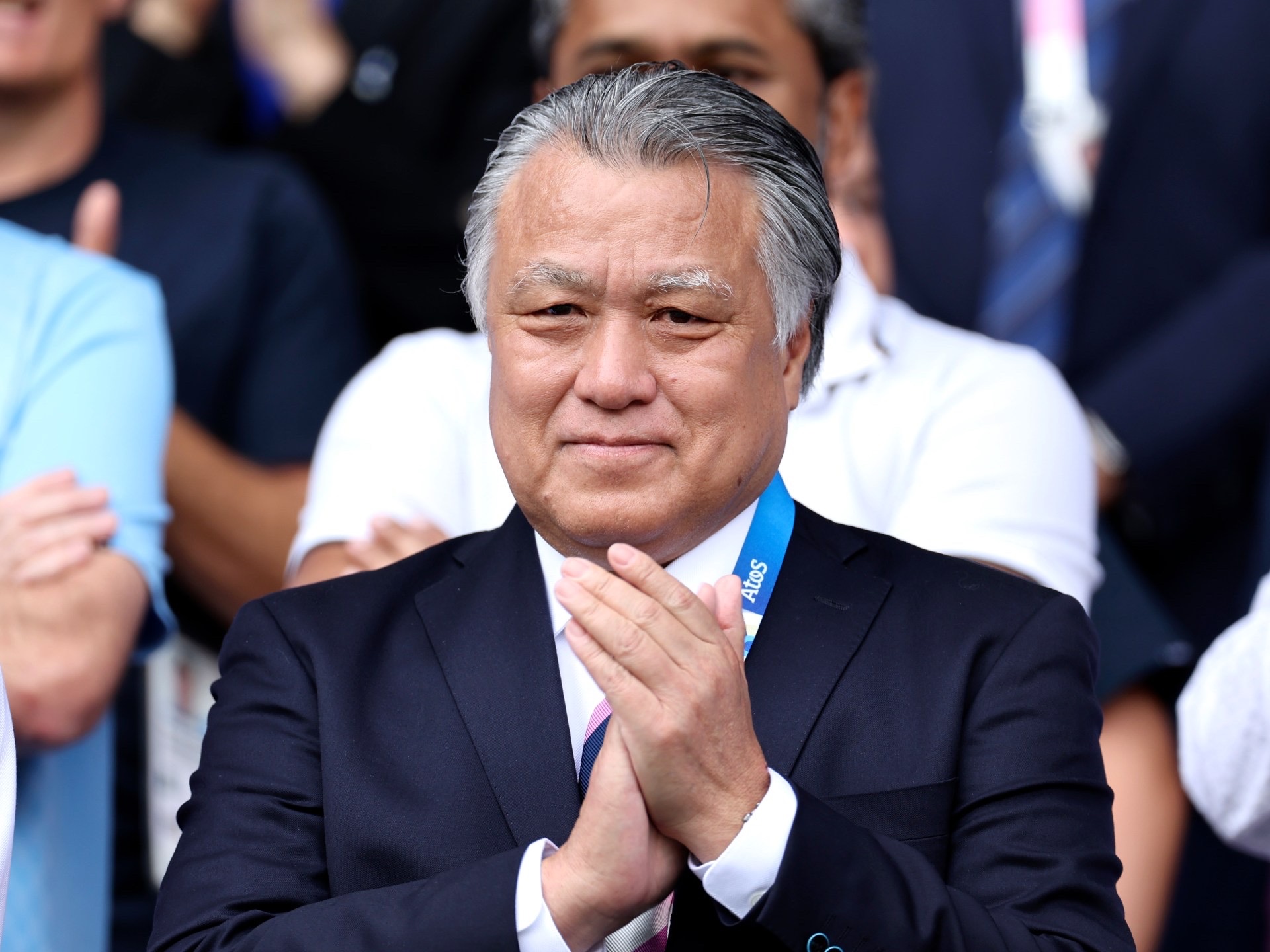
Japanese football administrator Kozo Tashima has revealed that FIFA’s controversial decision to suspend Folarin Balogun’s automatic one-match ban at the 2026 FIFA World Cup was the incident that convinced him to challenge Gianni Infantino for the organisation’s presidency.
Tashima said the handling of the United States forward’s red-card case exposed serious concerns about FIFA’s governance and accountability, arguing that the organisation had failed to provide a satisfactory explanation for the decision.
Speaking at a press conference in Japan on Friday, November 20, the Japan Football Association (JFA) honorary president said he was particularly angered by the disciplinary reversal and believed a change in leadership offered the best opportunity to restore confidence in world football’s governing body.
“I have worked in football, especially as a player and coach. As such, I cannot accept Balogun’s red card in any way. On top of that, no explanation has been given even now. I felt very indignant about this, and that is why I decided to stand here,” Tashima said.
The controversy dates back to July 1, when Balogun was sent off during the United States’ round-of-32 encounter against Bosnia and Herzegovina at the World Cup. The dismissal initially ruled him out of the Americans’ subsequent round-of-16 meeting with Belgium.
However, FIFA’s disciplinary committee later suspended the automatic one-match ban, allowing the striker to feature against Belgium on July 5. The committee maintained that it had the authority to make the decision and operated independently.
The reversal attracted criticism after United States President Donald Trump acknowledged personally asking Infantino to review Balogun’s suspension. Infantino subsequently faced questions over the circumstances surrounding the decision and whether political considerations had influenced the disciplinary process.
FIFA announced in October that it would amend the provision in its disciplinary code that allowed the automatic suspension to be reversed.
Tashima, who previously served as JFA president between 2016 and 2024, compared the current concerns to the circumstances surrounding Infantino’s election in 2016, when he took over following a major corruption scandal that had damaged FIFA’s reputation.
He acknowledged that Infantino had achieved positive developments during his leadership but argued that events in 2026 had raised fresh questions about the organisation’s commitment to good governance.
The 68-year-old also questioned FIFA’s leadership approach, saying he would prefer a less prominent role if elected, with players, teams and officials receiving greater attention.
Tashima is among three candidates whose nominations FIFA received ahead of the March 18, 2027 presidential election in Rabat, Morocco. Infantino and French Football Federation president Philippe Diallo are the other contenders.
However, the nominations are still subject to examination by FIFA’s electoral committee, with the final list of admitted candidates expected by February 18, 2027.
Infantino, who has led FIFA since 2016, is seeking another term after being re-elected unopposed in 2019 and 2023. His current campaign has faced opposition following criticism of a failed proposal to introduce private investment into a FIFA commercial entity holding rights linked to major competitions.
Diallo has the backing of UEFA, while Infantino enjoys support from the Asian Football Confederation and the Confederation of African Football.
Tashima has secured nominations from five national football associations, including Japan, but acknowledged that he lacks the backing of a continental confederation, putting him at a disadvantage in the contest.
He has nevertheless indicated that he is open to working with Diallo to avoid dividing voters seeking a change in FIFA leadership, although he has not announced plans to withdraw from the race.
The election will therefore present Infantino with his first contested presidential race since taking office, as Tashima seeks to make governance and accountability central issues in the battle for control of world football.