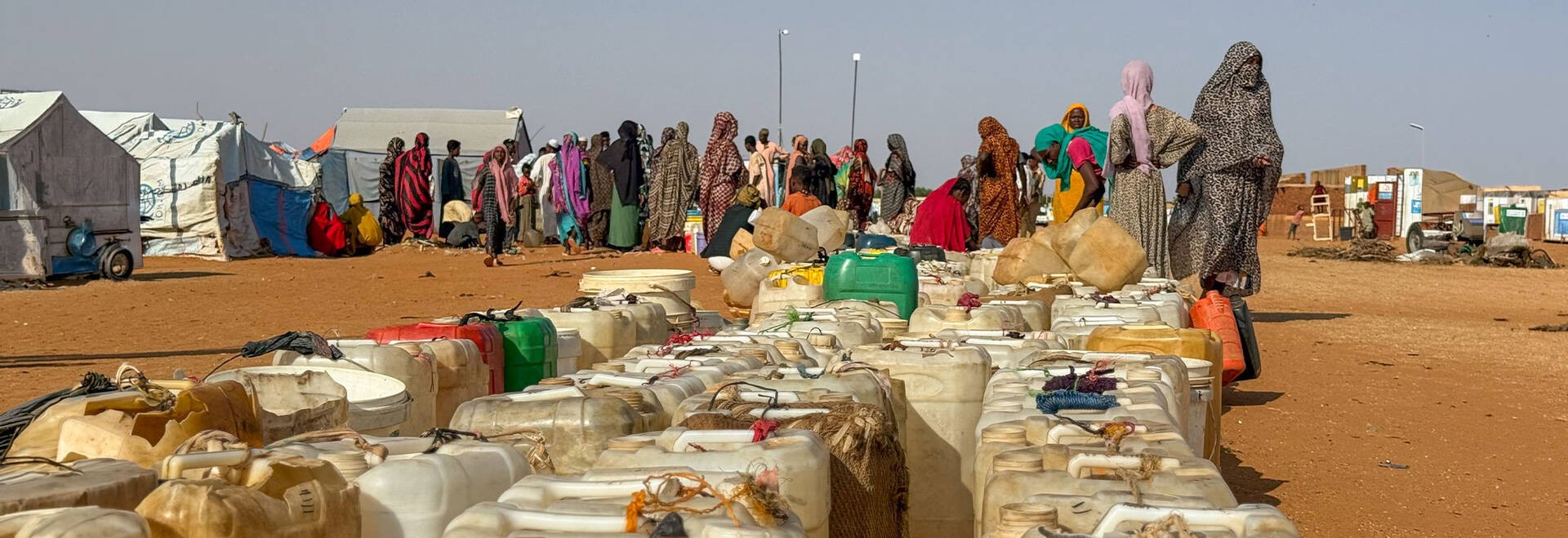
Sudan’s humanitarian crisis is worsening as conflict, mass displacement and an El Niño-driven drought push millions deeper into hunger, with famine reported in two displacement camps and critical levels of acute malnutrition recorded across much of Greater Darfur.
The World Health Organisation (WHO) has warned that the situation is becoming increasingly alarming, as rising humanitarian needs outpace available resources and insecurity restricts access to vulnerable communities.
WHO Director-General Dr Tedros Adhanom Ghebreyesus issued the warning in response to a new alert by the Integrated Food Security Phase Classification (IPC), which reported a sharp increase in severe acute malnutrition admissions in parts of South and North Darfur.
The IPC said nutrition surveys conducted since January 2026 had recorded critical levels of acute malnutrition across much of Greater Darfur.
Across Greater Kordofan, continued fighting, mass displacement, poor rainfall and limited livelihood opportunities are further undermining food security and reducing prospects for a successful harvest.
The crisis is being compounded by severe drought conditions linked to El Niño, affecting more than half of Sudan.
The resulting crop failures, water shortages, declining household incomes and rising cereal prices are placing additional pressure on families already struggling to access food.
Famine and malnutrition are related but distinct.
Famine is a classification of an extreme food crisis in a defined area, based on evidence of severe food shortages, acute malnutrition and deaths.
Acute malnutrition occurs when a person becomes dangerously undernourished over a relatively short period, often because of inadequate food intake or illness.
It can affect children even where famine has not been formally declared.
The IPC warning of famine in two displacement camps therefore does not mean famine has been declared across all of Sudan.
However, the critical malnutrition levels reported across Greater Darfur point to a broader emergency requiring urgent intervention.
Tedros said WHO supports all 161 operational nutrition stabilisation centres in Sudan.
Between January and August 2026, services supported by the agency treated more than 26,000 children suffering from severe acute malnutrition and medical complications.
He warned that malnourished children are more vulnerable to deadly diseases, including cholera and measles, which are also affecting the country.
The health emergency is being aggravated by funding shortfalls, insecurity and restrictions on humanitarian access, particularly in Greater Kordofan.
The IPC cautioned that without an immediate and substantial increase in assistance, food insecurity, acute malnutrition and excess deaths are likely to intensify.
WHO has called for an end to hostilities, safe and sustained humanitarian access, and increased funding to deliver life-saving food, nutrition and health services.
Tedros stressed that hunger in Sudan is not simply a food crisis but a health emergency, underscoring the urgent need for peace and sustained humanitarian support.