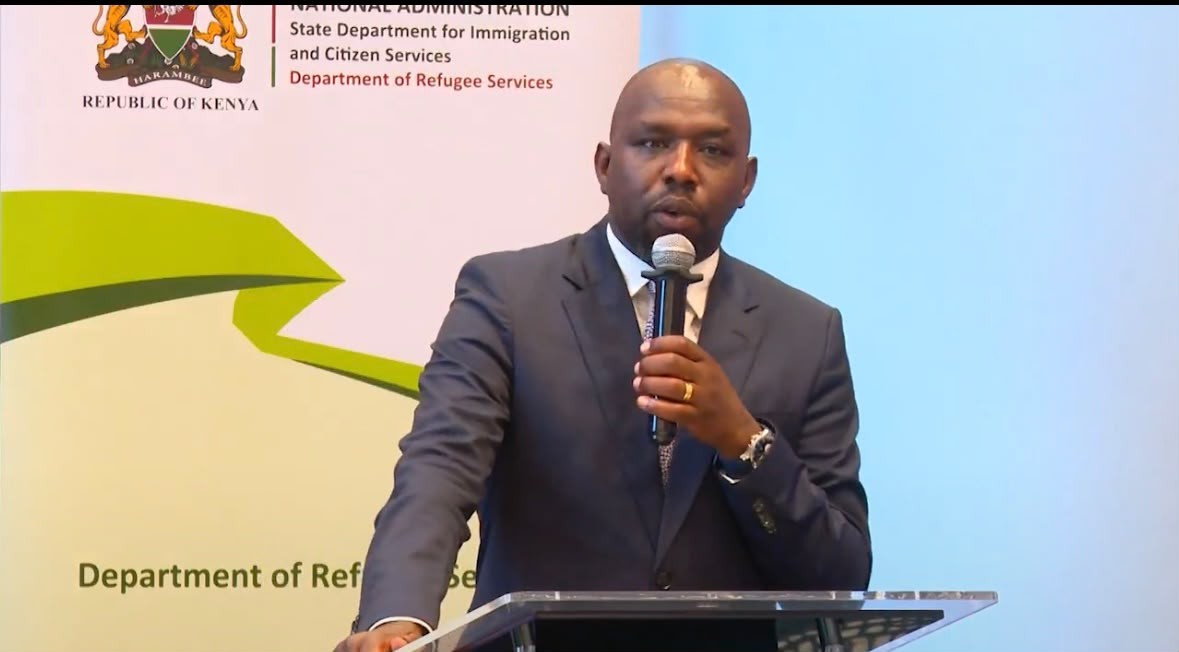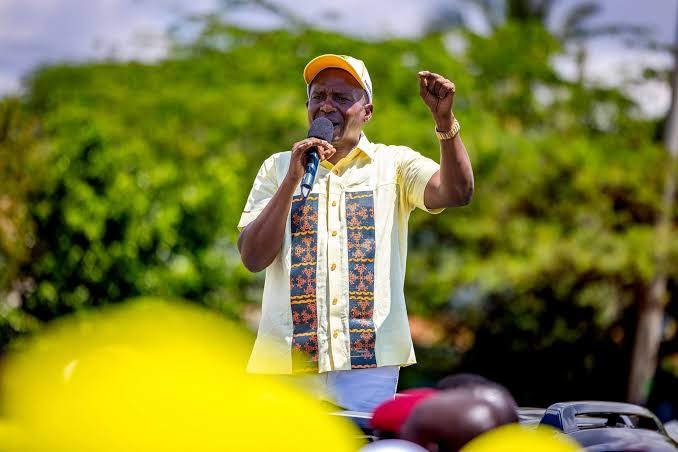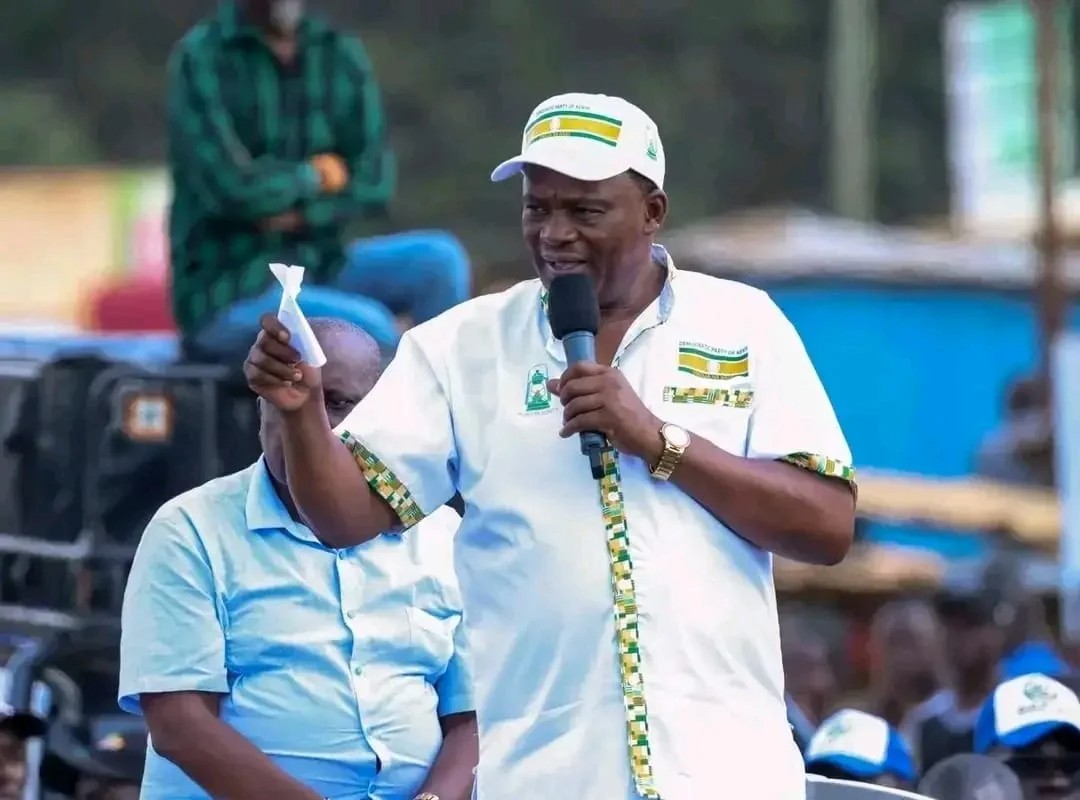
Democratic Party of Kenya leader Justin Muturi has demanded answers from Professor Makau Mutua's Panel of Experts on Compensation of Victims of Human Rights Violations after it verified only one fatality claim among 157 cases approved under the latest phase of the compensation programme.
Muturi questioned how the panel arrived at the figure, arguing that it raises serious concerns about the recognition of families whose relatives were killed during demonstrations and public protests.
In a press statement issued on Monday, November 9, Muturi said the findings must be reconciled with independent investigations that documented deaths, enforced disappearances and other human rights violations during the June and July 2024 anti-Finance Bill protests.
The panel announced on November 5 that it had processed 157 verified claims worth KSh96.95 million under Phase VII of the government compensation programme.
The claims cover civilians and uniformed officers who suffered different forms of harm, including fatalities, aggravated injuries, severe, moderate and minor injuries, as well as economic losses.
The breakdown shows that one fatality claim was verified, attracting KSh3 million for the deceased person's family. Five aggravated injury claims were allocated KSh9 million, while 47 severe injury claims accounted for KSh47 million.
Another 74 claims involving moderate injuries were valued at KSh37 million, while 19 minor injury claims attracted KSh950,000. Eleven claims involving economic losses were allocated KSh550,000.
The panel's announcement, however, does not mean that only one person died during the protests or that the entire compensation programme has recognised only one fatality.
Muturi said the latest figures must be examined against records from the Kenya National Commission on Human Rights (KNCHR), which documented 60 deaths during the June–July 2024 demonstrations.
The commission's reporting was later cited by Human Rights Watch, which also documented unlawful killings, enforced disappearances and the discovery of bodies in different locations.
He argued that the documented deaths could not be disregarded in an administrative exercise intended to compensate victims of human rights violations.
The party leader challenged Professor Mutua and his team to explain how their verification process reconciles with findings by KNCHR, Human Rights Watch and Amnesty International.
He also demanded clarification on the number of families registered, verified or excluded from the compensation exercise, as well as the criteria used to determine eligibility.
Among the questions he raised was whether hospital records, mortuary records, post-mortem reports and records held by the Independent Policing Oversight Authority (IPOA) had been examined when assessing fatality claims.
Muturi called for the immediate publication of the panel's methodology and complete findings, alongside an independently verifiable reconciliation of all reported deaths.
The latest phase forms part of a wider compensation programme that has already paid KSh1.014 billion to 1,083 verified protest victims and 100 affected uniformed officers under the general compensation categories, according to figures reported following the panel's November 5 update.
The programme has also faced a separate legal dispute involving KSh105 million reserved for victims of abductions and enforced disappearances. The funds remain ring-fenced following a court intervention, allowing other compensation payments to proceed without affecting the disputed allocation.
The panel has urged victims and families who have not submitted applications to do so before November 14, 2026, when it will stop receiving new compensation claims. It has maintained that all applications must undergo verification and authentication before decisions are made.
Muturi, however, maintained that financial compensation should not be treated as a substitute for investigations and prosecution of those responsible for human rights violations.
He called for the full implementation of the Victim Protection Act, 2014, insisting that families deserve answers about the circumstances surrounding their relatives' deaths, investigations into disappearances and accountability for unlawful killings.
"Compensation is not justice and reconciliation cannot be built on the erasure of human lives," Muturi said.
He maintained that every reported death must be accounted for and that the compensation process should not be used to diminish the suffering of victims or shield perpetrators from accountability.