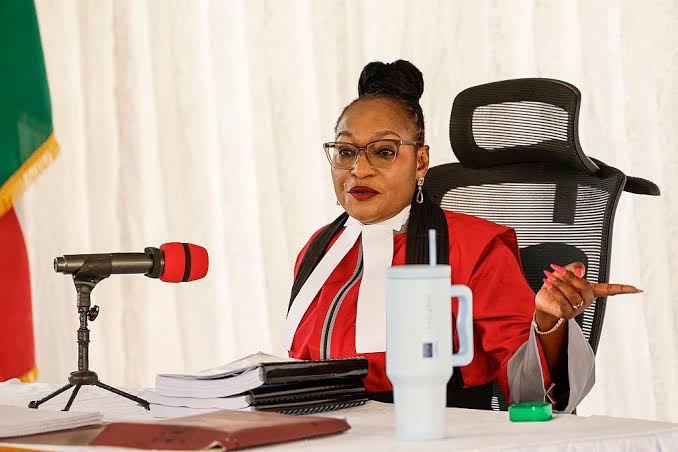
Lady Justice Diana Rachel Kavedza-Mochache has come into the national spotlight following her landmark sentencing of controversial preacher Paul Nthenge Mackenzie to 200 years in prison over the Shakahola massacre.
However, the High Court judge's career in Kenya's justice system spans more than three decades, with experience in criminal justice, counter-terrorism proceedings and judicial administration.
Justice Kavedza-Mochache joined the Judiciary in 1993 as a District Magistrate II (Professional). She steadily rose through the ranks to become a Chief Magistrate before her appointment as a High Court judge in 2022.
She holds a Bachelor of Laws (LLB) and a Master of Laws (LLM) from the University of Nairobi, as well as a postgraduate diploma from the Kenya School of Law. She was admitted to the Bar in 1991.
Before her elevation to the High Court, Kavedza-Mochache served as the head of station at the Shanzu and Kahawa Counter-Terrorism Courts.
Her work in the specialised courts exposed her to complex cases involving terrorism and national security.
One of the notable cases associated with her judicial career involved two men accused of facilitating the January 2019 DusitD2 terrorist attack in Nairobi.
The two, Hussein Mohamed Abdille Ali and Mohamed Abdi Ali, were eventually convicted of aiding the terrorists and sentenced to 30 years in prison.
Her most prominent assignment so far has been the Shakahola massacre trial, involving Mackenzie and members of his Good News International Ministries.
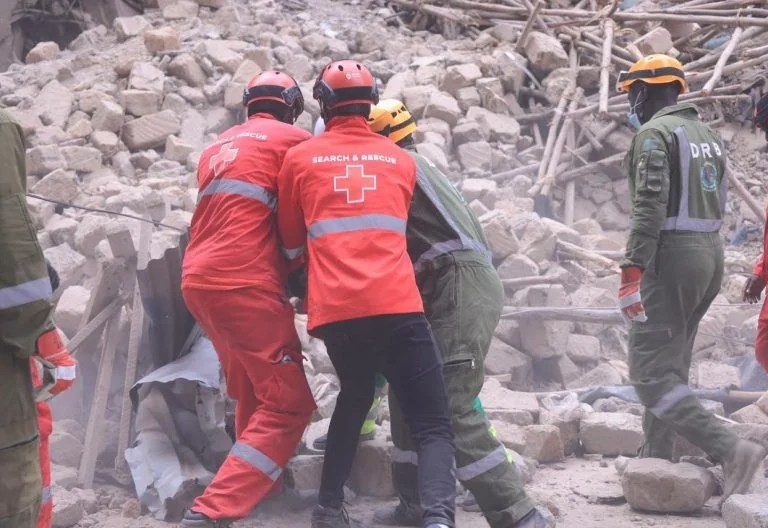
On October 19, 2026, Justice Kavedza-Mochache convicted Mackenzie and 28 co-accused of murdering 191 people, including 190 children, whose deaths were linked to a deadly fasting regime in Shakahola Forest, Kilifi County.
On November 6, 2026, she sentenced Mackenzie to 200 years in prison.
He received 100 years for 183 counts of murder by starvation and another 100 years for eight counts of direct homicide, with the sentences running consecutively.
In explaining her decision, the judge noted that a death sentence could be interpreted by Mackenzie and his followers as a form of martyrdom, given their religious beliefs.
She also highlighted the importance of keeping him alive to potentially help establish the whereabouts of missing victims and their remains.
Justice Kavedza-Mochache is also presiding over the Utumishi Girls Academy case at the Kibera High Court.
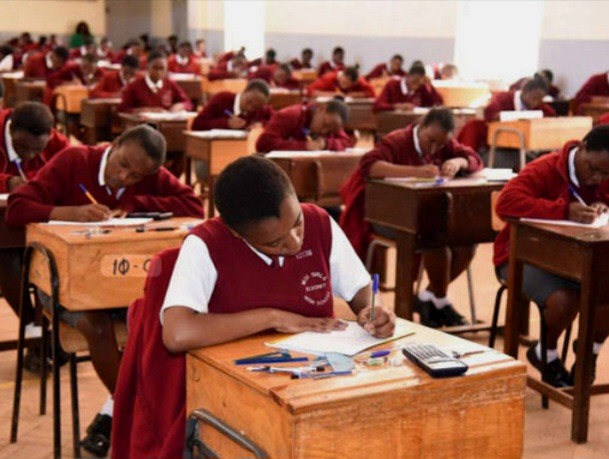
The case involves eight students charged with the murder of 16 fellow students who died in a dormitory fire at the school in Gilgil, Nakuru County, in June 2026.
During the proceedings, she directed that a comprehensive pre-bail report be prepared, taking into account the views of the families of the deceased, the school administration, the investigating officer and the accused students.
She also emphasized the need to protect the identities of the minors, warning the media against exposing them.
The court further ordered counselling for the accused students amid concerns about trauma and online harassment.
Beyond the courtroom, Justice Kavedza-Mochache has served as chairperson of the National Community Service Orders Committee and chaired the Business Premises Rent Tribunal.
She has also served in the Milimani High Court Criminal Division and the Kibera High Court.
Her career reflects extensive experience in criminal justice, from terrorism-related proceedings to cases involving mass deaths and the protection of children.
Her recent involvement in the Shakahola and Utumishi Girls cases has brought renewed attention to her work and the responsibility of the courts in handling some of Kenya's most sensitive criminal proceedings.