Ugandan President Yoweri Museveni has told traditional leaders to stay out of partisan politics, insisting that their responsibility is to preserve cultural heritage and guide communities rather than interfere in government affairs.
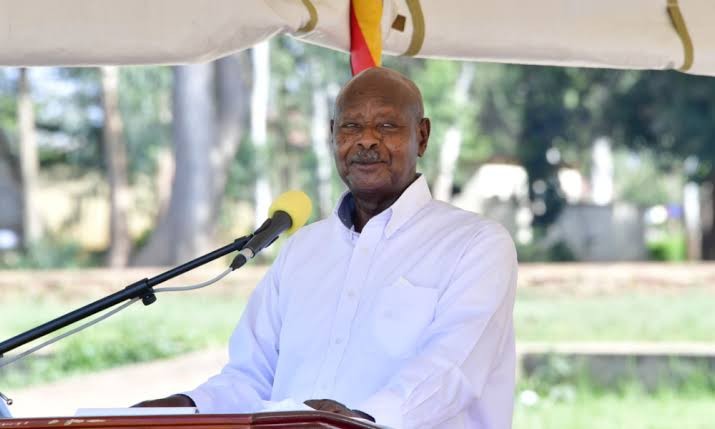
Museveni made the remarks on Wednesday, November 4, while addressing kings and other cultural leaders at State House in Entebbe, where he opened a two-day conference on the role of traditional institutions in national development.
The President argued that cultural leaders should allow elected officials to handle political and administrative responsibilities, noting that unlike traditional rulers, political leaders are accountable to voters and can be removed from office through elections.
"No traditional leader should meddle in politics. As a cultural leader, you're a parent to grown-up children, the voters. Let them run their affairs," Museveni said.
He used his relationship with his adult children to explain why traditional leaders should not interfere in the affairs of those they lead, drawing a comparison with his son, General Muhoozi Kainerugaba, who serves as Uganda's Chief of Defence Forces.
"I don't run Muhoozi's affairs or my daughters' homes," he said, maintaining that raising children does not give parents the authority to dictate how they manage their adult lives.
The remarks come as discussions about Uganda's political succession continue to attract attention, particularly over the possibility of Muhoozi eventually succeeding his father.
Museveni has governed Uganda since 1986, while Muhoozi's growing public profile has placed him at the centre of conversations about the country's future leadership. However, Museveni's comments at the conference were directed at the responsibilities of cultural institutions and did not constitute an announcement on his succession plans.
Beyond the political warning, Museveni urged traditional leaders to concentrate on safeguarding Uganda's cultural identity, including indigenous languages, traditional knowledge and practices that have been passed down through generations.
He also called on the institutions to help communities preserve traditional skills in areas such as agriculture, livestock keeping, blacksmithing, carpentry and pottery, arguing that indigenous knowledge could contribute to economic development.
Museveni maintained that cultural institutions should complement elected government structures by promoting unity and supporting community development without taking over responsibilities constitutionally assigned to political and professional institutions.
The conference brought together traditional rulers and representatives of cultural institutions from across Uganda to discuss heritage preservation, national unity and their contribution to development.