South Africans are counting votes following Wednesday's local government elections, which are expected to test the ruling African National Congress (ANC) amid growing public frustration over unemployment, poor service delivery and failing infrastructure.
A record 29.2 million people registered to vote in the elections covering 257 municipal councils, with control of major cities including Johannesburg, Cape Town and Durban at stake.
The Electoral Commission reported that more than 3.5 million voters had cast their ballots by 10 AM, while approximately 1.4 million of the 2.6 million people who qualified for early voting had participated.
The elections have been dominated by concerns over persistent water shortages, unreliable electricity supply, deteriorating roads and unemployment, which remains above 30 per cent.
The ANC, which has governed South Africa since the end of apartheid in 1994, is facing further losses after its support dropped to just over 40 per cent in the 2024 general election, forcing it into a coalition government with nine other parties.
The party previously secured about 70 per cent of the vote in the 2004 general election, highlighting its declining electoral support over the past two decades.
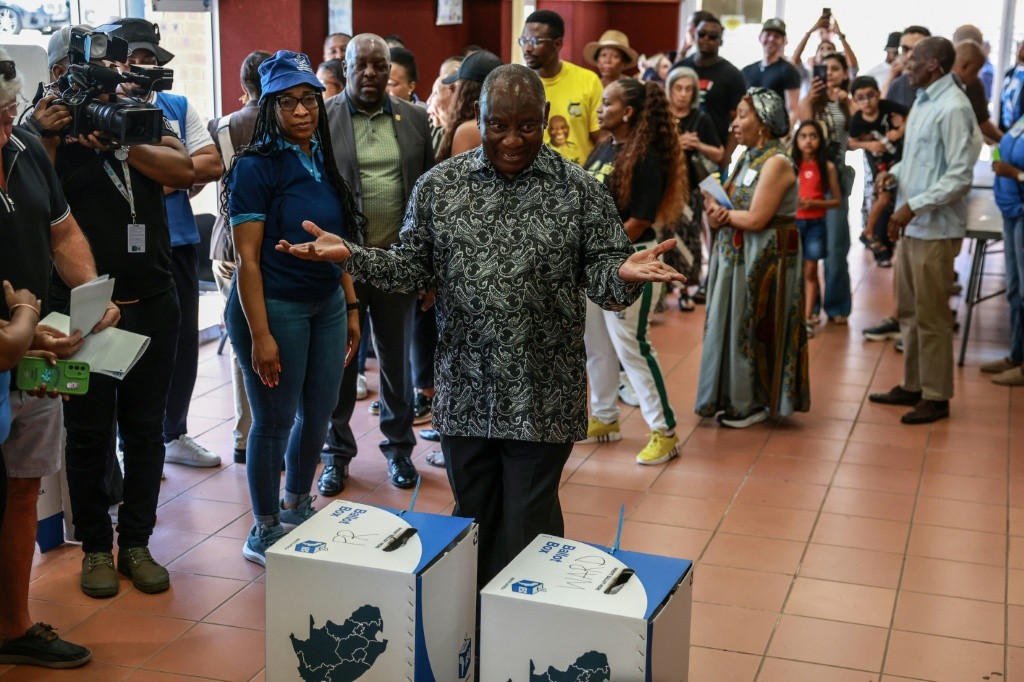
President Cyril Ramaphosa, who voted on Wednesday, maintained that South Africa's democracy remained strong and pledged to rebuild local government structures to improve service delivery.
Meanwhile, the opposition Democratic Alliance is seeking to retain control of Cape Town while challenging the ANC in Johannesburg. Former president Jacob Zuma's uMkhonto weSizwe party is also mounting a strong challenge in Durban.
With no single party expected to secure outright majorities in several major cities, coalition negotiations are likely to shape the next phase of municipal governance.
Counting began immediately after polling stations closed, with final results expected by Sunday.
The outcome will determine how political parties share power at the municipal level and influence the delivery of essential services.
Analysts say the results could also provide an indication of voter sentiment ahead of South Africa's 2029 general elections.