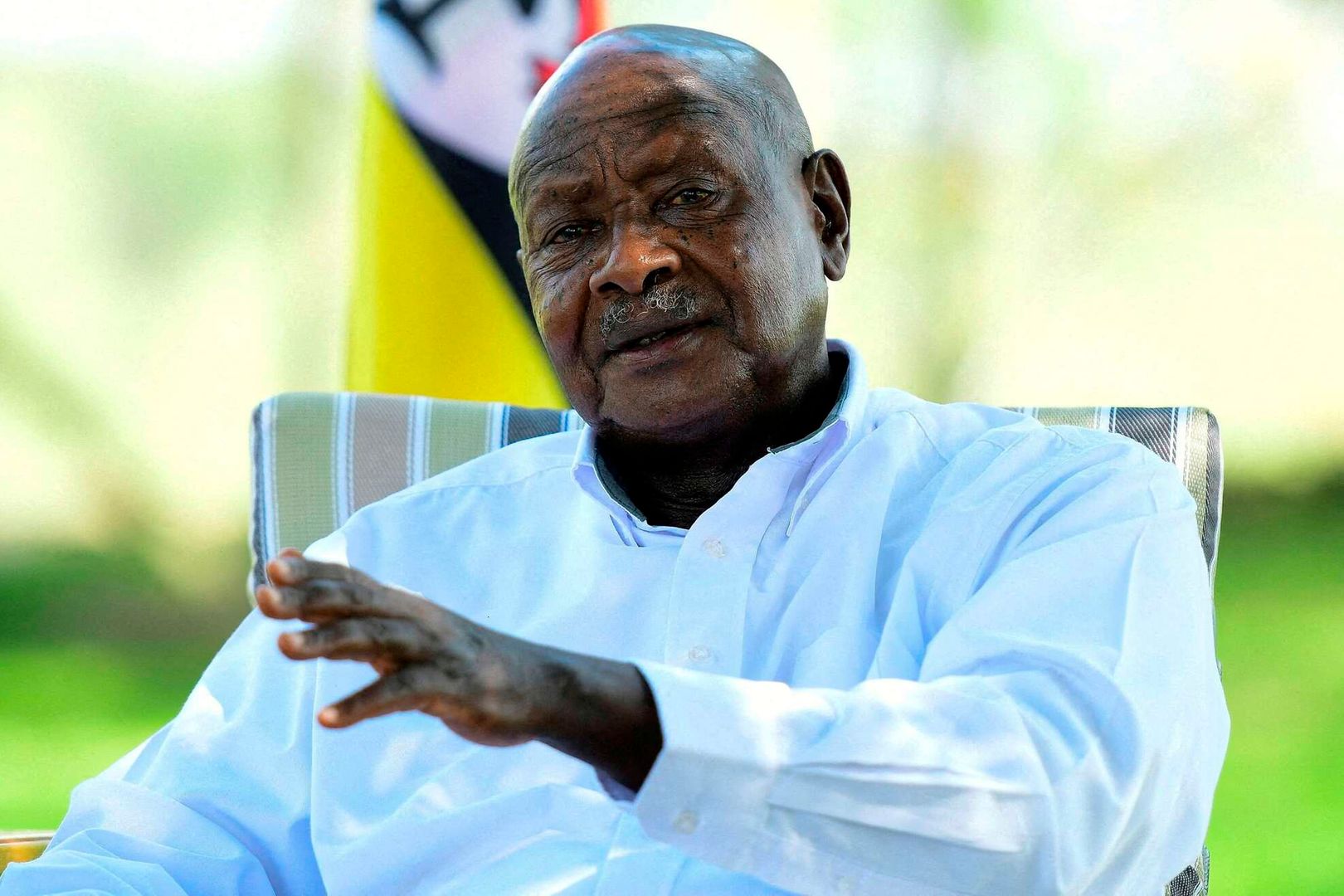
Ugandan President Yoweri Museveni has revealed that a Kenyan senator alerted him that Uganda was procuring petroleum products through middlemen in Kenya, prompting him to intervene and eventually end the arrangement.
Museveni said he was unaware that Uganda was sourcing petroleum products through Kenyan intermediaries until the senator brought the matter to his attention.
“The Republic of Uganda was buying petroleum products through middlemen in Kenya. Can you imagine that? And the person who woke me up first was a senator from Kenya,” Museveni said.
He made the remarks on Thursday, September 17, 2026, during the groundbreaking ceremony for a 320-million-litre petroleum storage terminal in Mpigi District, Uganda.
Museveni said the revelation prompted him to question Ugandan officials responsible for petroleum procurement and explore alternative ways of sourcing fuel directly from bulk suppliers.
He criticised government technocrats for failing to identify what he described as an unnecessarily costly procurement arrangement.
Figures presented during the ceremony showed that Uganda had been paying a premium of $118 per metric tonne for diesel under the previous arrangement, compared with $83 under its current arrangement involving Vitol and the Uganda National Oil Company (UNOC).
For petrol, the premium fell from $97.50 to $61.50 per metric tonne, while the premium for aviation fuel dropped from $114.25 to $79.25, according to figures cited by Museveni and Uganda’s Permanent Secretary for Energy, Irene Batebe.
Museveni said the cost differences convinced him that the arrangement had to be terminated.
“So that's when I had to come in and say, this must end. And it ended,” he said.
Uganda subsequently moved to give UNOC a greater role in directly importing petroleum products.
In 2024, Uganda sought to end its reliance on Kenyan oil marketing companies and allow UNOC to directly import fuel through Kenya. The move initially triggered a dispute over licensing and access to Kenya’s petroleum infrastructure.
Kenya and Uganda later reached an agreement allowing UNOC to import petroleum products through Kenya and use the country’s infrastructure, including the Port of Mombasa and the Kenya Pipeline network.
Museveni did not identify the Kenyan senator whom he said alerted him to the use of middlemen.
Kenya’s government-to-government (G-to-G) petroleum framework, introduced in 2023, was designed to secure petroleum supplies through government-owned suppliers in the Gulf.