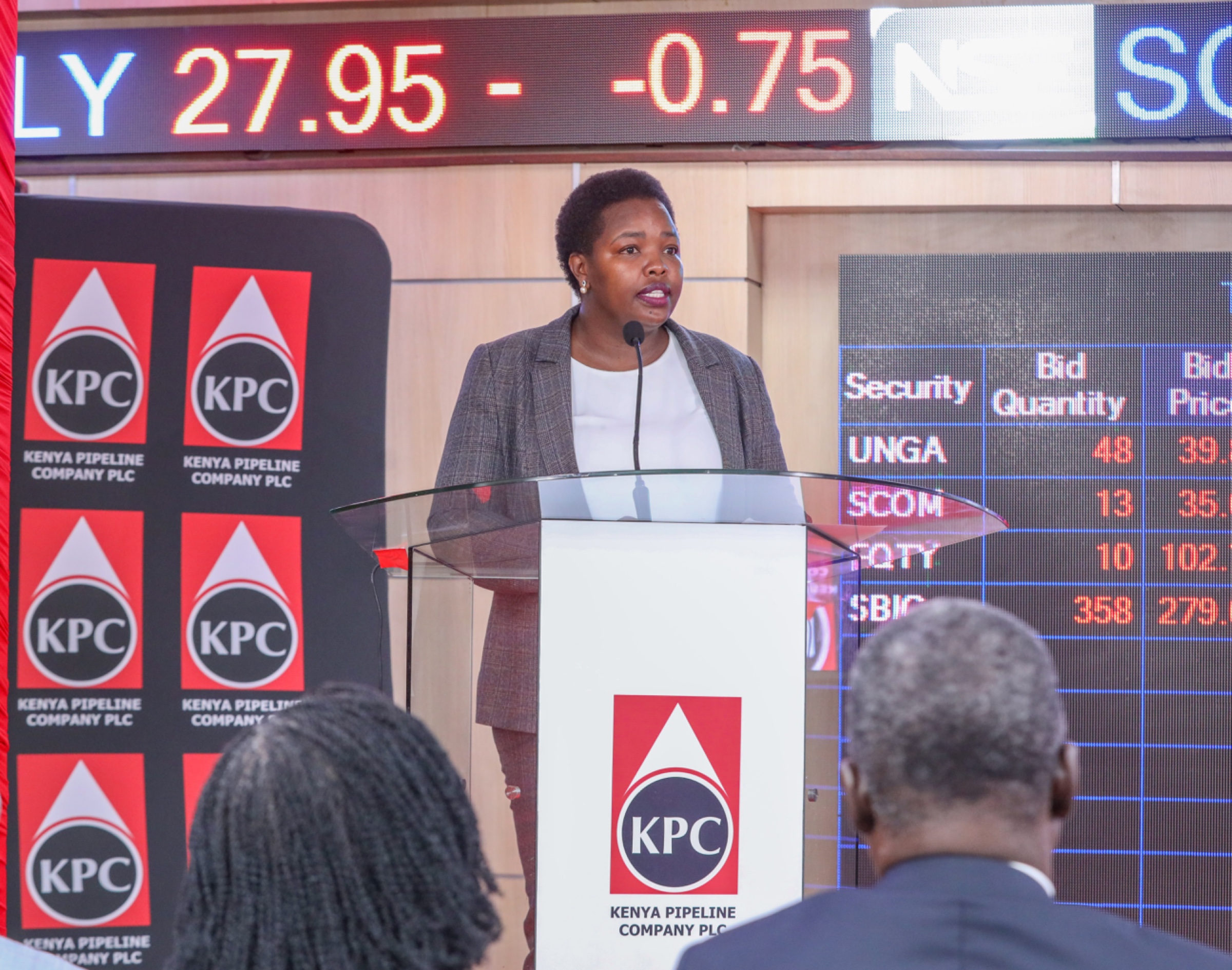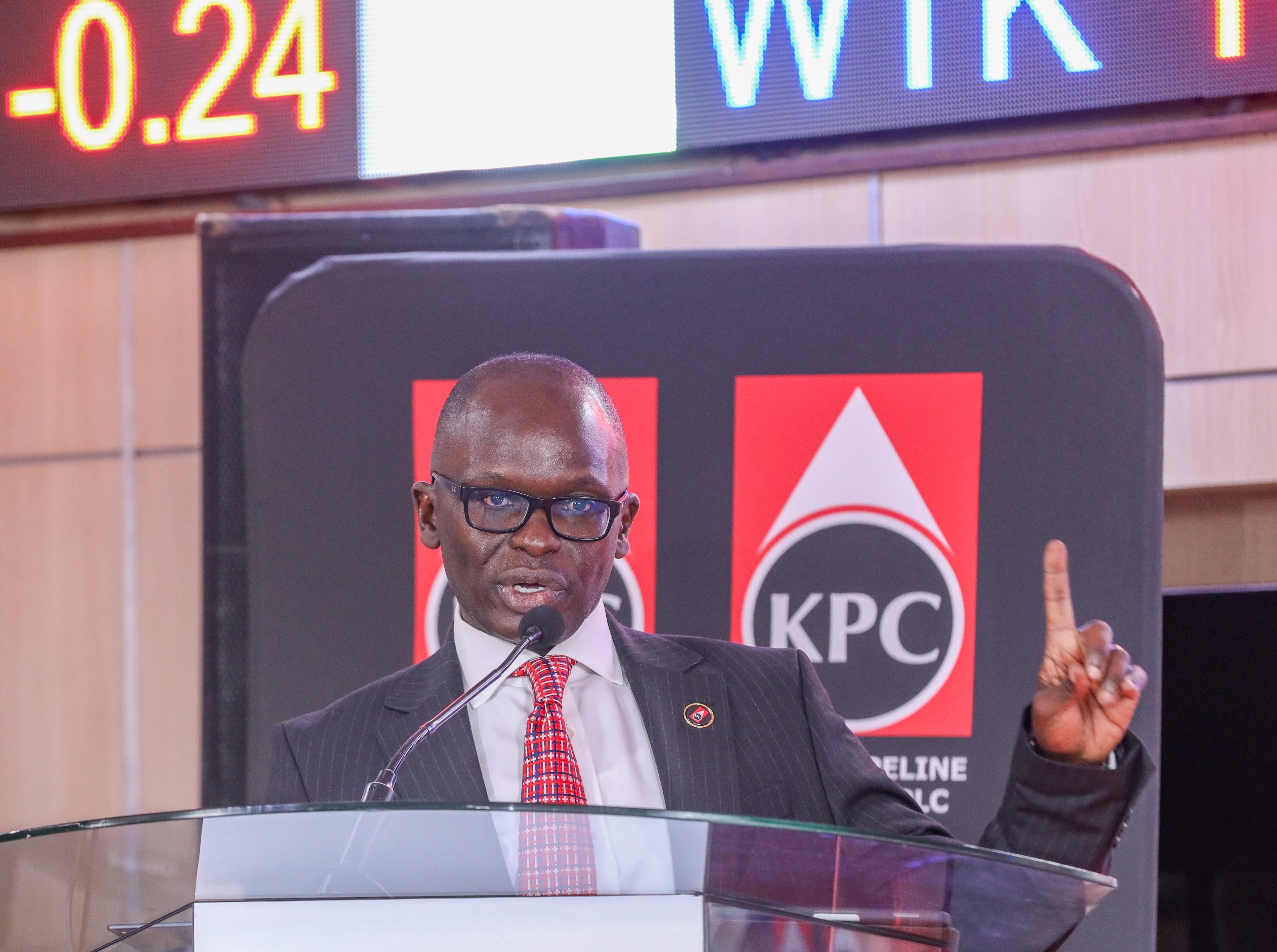
Kenya Pipeline Company Plc (KPC) plans to grow annual revenue from about Sh43 billion today to Sh68 billion by the 2030 financial year by expanding beyond fuel transport into trading, storage and other energy services, acting Managing Director Pius Mwendwa said on Wednesday, October 14, as the company unveiled its first results since listing and confirmed plans for a petroleum trading hub in Kipevu, Mombasa.
By our calculation, the target implies revenue growth of about 12% a year, compared with the 9% KPC achieved in the year to June 2026. Mwendwa acknowledged that fossil fuel storage and transport will remain the core business even after the expansion.
The centrepiece is an integrated trading hub at the Kenya Petroleum Refineries Ltd (KPRL) site at Kipevu, a wholly owned KPC subsidiary. Board Chairperson Faith Bett-Boinett said the hub will offer transhipment, bulk breaking, bunkering and re-export services for the regional market. KPC also wants to diversify into storage, re-export, liquefied petroleum gas (LPG), liquefied natural gas (LNG), biofuels, power generation and support for third-party petroleum trading.
Expansion plans for revenue growth
The company says the timing suits new projects in the region, including the Dangote East Africa Petroleum Refinery and Petrochemicals Special Economic Zone and Gulf Energy's South Lokichar oil project. KPRL is also party to a Sh93.68 billion crude oil storage agreement with Gulf Energy, which the Consumer Federation of Kenya has challenged in court, so the hub's development will draw scrutiny.
KPC is also looking beyond Kenya. The board plans to extend the pipeline from Eldoret to Kampala and then Kigali, and the launch of Uganda's 320 million-litre Kampala Storage Terminal is expected to accelerate regional growth.
Regional and international projects
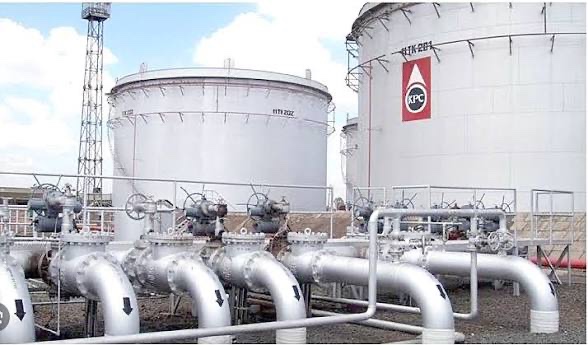
KPC's network of about 1,342 kilometres of pipeline, with storage, pumping and loading facilities, has a combined capacity of about 14 billion litres a year. The plan rests on a stronger balance sheet. KPC reported an 8% rise in profit before tax to Sh17.54 billion, cash of Sh20.54 billion and borrowings of just Sh442.9 million, which gives it room to invest or borrow for expansion. Its investing outflows already rose to Sh4.48 billion in the year as it spent on capacity and asset replacement.
Financial outlook and challenges
Still, the plan carries risks. Revenue targets four years out are projections and the results do not give a budget for the hub, a timeline for the pipeline extension or details of how it will be financed. The company will need approvals, partners and customers for new products such as LNG and bunkering.