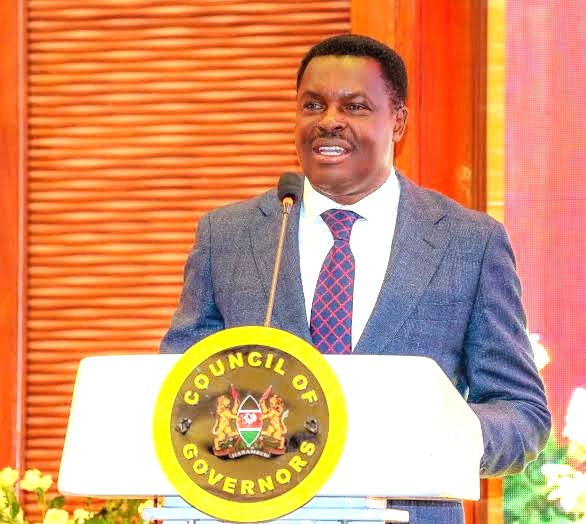
Deputy President Kithure Kindiki has defended the government’s development agenda, saying Kenya is following the path taken by developed nations as they built their economies.
Speaking on Monday, October 12, during a visit to Othaya Constituency in Nyeri County, Kindiki inspected the Gathunguri-Waihara-Kabebero Road and launched the Kihuro-Kirio-Kianjogu Last Mile Electrification Project.
“That is how nations are built. Every country is built just like that, project here, project there, project there,” Kindiki said, explaining the government’s approach to infrastructure development.
The Deputy President said the government had identified 775 kilometres of roads in Nyeri County for tarmacking at an estimated cost of Sh45 billion.
“We want to complete 775 kilometres of tarmac at a cost of 45 billion shillings. We have the funds and we will build, one by one, kilometre by kilometre, project by project,” he said.
Kindiki also announced that the last-mile electricity projects in Nyeri were worth Sh650 million and would connect 12,000 households that currently lack electricity.
The initiative is intended to expand electricity access across the county, while the road programme is expected to improve connectivity between communities and facilitate the movement of people and goods.
During the visit, local leaders praised the government’s development projects, with one leader describing the Gathunguri-Waihara-Kabebero Road as a long-standing campaign issue.
The leader said the road had featured in political promises for more than 25 years before its completion, adding that it served a large number of residents.
Kindiki was accompanied by Energy Principal Secretary Alex Wachira, East African Community Principal Secretary Dr Carol Karugu, Nyeri Senator Wahome Wamatinga and Othaya MP Wambugu Wainaina, among other leaders.
The Deputy President also called on Kenyans to support the government’s campaign against illicit alcohol, warning that adulterated drinks containing harmful chemicals were endangering lives.
“Alcohol adulterated with harmful chemicals that endanger health will not be tolerated,” Kindiki said, warning those involved in selling dangerous brews that the government would take action against them.
He described the campaign as a public protection measure rather than a political undertaking, urging communities to help protect young people from alcohol and drug abuse.
Kindiki further urged political leaders to focus on development issues and avoid using political competition to incite violence.
“When someone stands up here, they should discuss development issues—what they have accomplished, what they have brought, and what they plan to do moving forward,” he said.
He cautioned leaders against provoking confrontations among citizens in pursuit of votes, insisting that political competition should take place peacefully.
“Someone pretends it is politics, yet it is criminal activity. We do not want chaos, we want peace,” Kindiki said.
He urged Kenyans to assess leaders on their development records and plans rather than allowing political differences to divide communities.