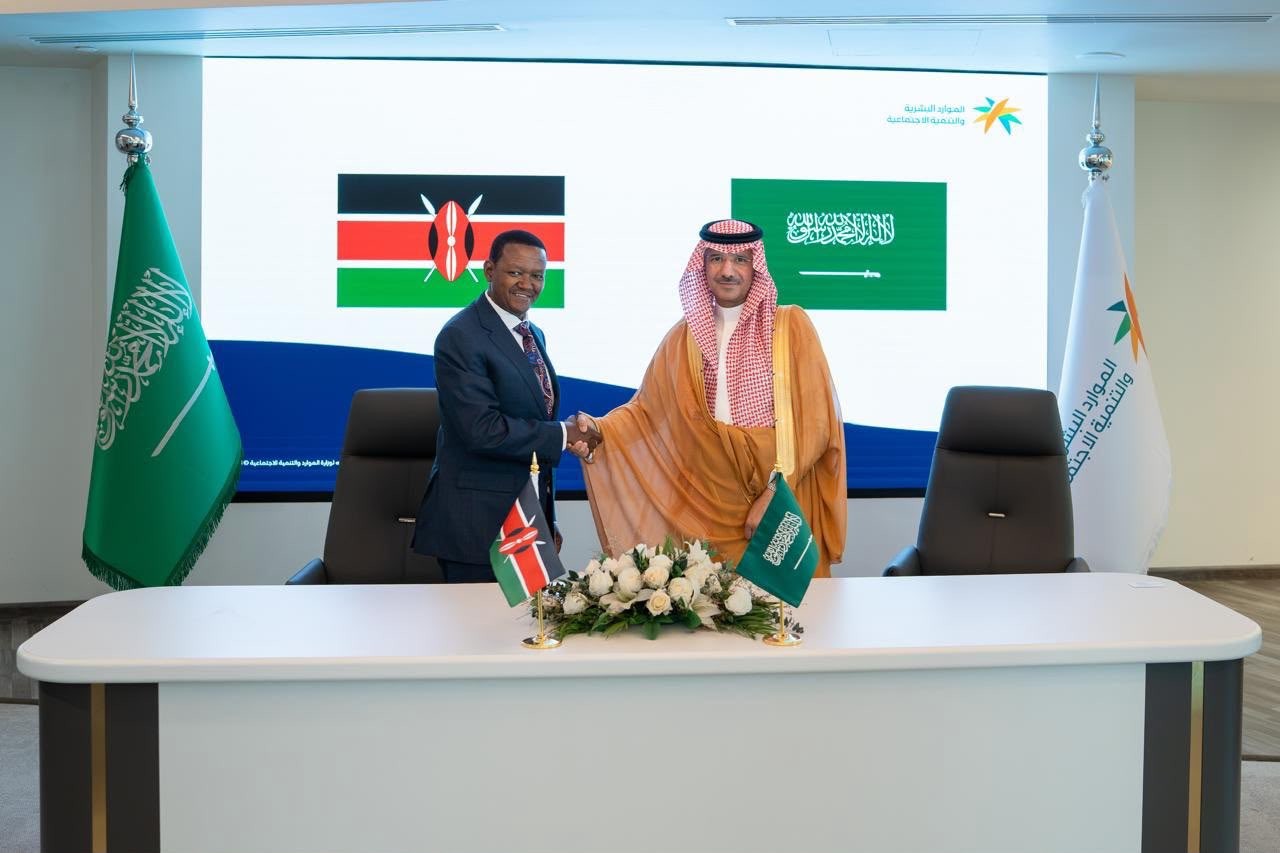
Kenya has secured commitments for 293,600 job opportunities in Saudi Arabia following bilateral labour negotiations aimed at expanding employment opportunities for Kenyans and improving the welfare of workers in the Gulf nation.
Labour and Social Protection Cabinet Secretary Dr Alfred Mutua announced the development after holding talks with Saudi Arabia's Vice Minister for Labour, Dr Abdullah bin Nasser Abuthnain, in Riyadh.
Mutua said the commitments were made by employment agencies operating in Saudi Arabia following engagements with the Kenyan delegation, covering opportunities across various professional, technical and general employment sectors.
The jobs include positions for drivers, caregivers, teachers, nurses, doctors, laboratory technicians, construction workers, heavy machinery operators, chefs, waiters, housekeepers, cleaners, factory workers and hospitality personnel, among other occupations.
The Cabinet Secretary described the development as a significant milestone in the government's Kazi Majuu programme, which seeks to expand access to international employment opportunities.
During the meeting, attended by Kenya's Ambassador to Saudi Arabia Joseph Masila and senior government officials from both countries, the two sides discussed measures to strengthen labour cooperation and improve the conditions of Kenyan workers.
Among the key issues was the reopening of Saudi Arabia's labour market to Kenyan workers following restrictions imposed after reports of Ebola cases in Kenya.
Mutua said the government had engaged its Saudi counterparts on lifting the restrictions, noting that Kenya had contained the reported cases and was seeking the full restoration of access for its workers.
The two countries also agreed that technical teams would finalise a skilled workers recruitment agreement within one month to facilitate the placement of more Kenyan professionals in the Saudi labour market.
On workers' welfare, Mutua said the discussions focused on improving remuneration, working conditions, recruitment standards and the general treatment of Kenyans employed in the Kingdom.
The two sides also agreed on the need to strengthen pre-departure training and qualification programmes to prepare workers for their assignments, workplace expectations and cultural environments.
An important outcome of the talks was the signing of a technical annex to the bilateral agreement on the recruitment of domestic workers, initially signed on July 5, 2026.
According to Mutua, the annex provides for streamlined recruitment procedures, reduced recruitment costs and improved technical processes while strengthening safeguards for both employers and domestic workers.
The two countries also signed a letter of intent establishing a three-month pilot programme on voluntary recruitment fees for domestic workers, an arrangement intended to improve Kenya's competitiveness in the Saudi labour market.
Mutua called on Kenyan recruitment agencies to participate in the pilot programme, saying it would provide an opportunity to improve their competitiveness and secure a greater share of employment opportunities in the Kingdom.
He said the government would move to implement the commitments reached during the negotiations while ensuring Kenyans seeking employment abroad were properly trained, fairly remunerated and protected through enforceable contractual arrangements.
Saudi Arabia recruits an average of 2.5 million new workers annually, according to Mutua, who said the strengthened partnership would position Kenya to access a larger share of the country's employment market.
The Cabinet Secretary maintained that the government's responsibility extended beyond securing overseas jobs to ensuring that Kenyans working abroad were treated with dignity and had access to safe and transparent employment arrangements.