Kenya’s National Treasury has proposed increasing the education budget by Sh72.9 billion to Sh857.4 billion in the 2027/28 financial year, even as concerns grow over public borrowing, debt servicing and the government’s ability to fund essential services.
The proposal, contained in the November 2026 Budget Policy Statement, comes as the Institute of Public Finance (IPF) warns that the country could face a Sh1.35 trillion deficit and public debt equivalent to about 71 per cent of gross domestic product (GDP).
The proposed education allocation represents a 9.3 per cent increase from the Sh784.5 billion allocated in the current financial year. It covers basic education, technical and vocational training, higher education, research and innovation, and teacher management.
The Treasury says the additional funding will support improvements in learning outcomes, teacher availability, school infrastructure, digital learning and the implementation of competency-based education. The government also plans to recruit and develop an additional 116,000 teachers over the medium term while expanding access to technical training and higher education.
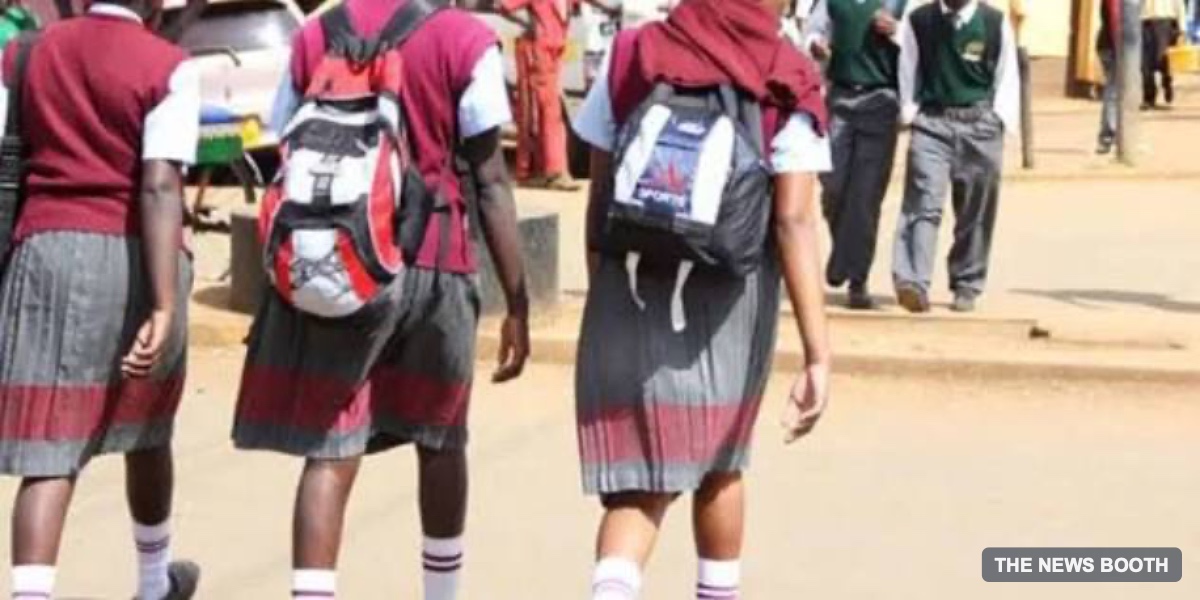
However, the larger sector allocation does not necessarily mean schools will receive enough money to meet their operating needs. The State Department for Basic Education has identified a Sh44.23 billion shortfall in funding required to meet capitation obligations for primary, junior and senior schools in 2027/28.
Junior schools account for the largest gap at Sh23.51 billion, while senior schools face a Sh17.75 billion shortfall and primary schools Sh2.96 billion. The department has also identified a Sh5.59 billion funding gap for the school meals programme, which targets approximately 2.7 million vulnerable learners.
The wider fiscal outlook presents another challenge. In its National Shadow Budget launched on November 25, IPF projected government expenditure of Sh5.415 trillion against revenue of Sh4.003 trillion, leaving a deficit of approximately Sh1.35 trillion. It warned that interest payments could consume 45 per cent of ordinary revenue, reducing the resources available for other public services.
The Treasury’s latest Budget Policy Statement, however, projects a lower deficit of Sh1.229 trillion for 2027/28, equivalent to 5.4 per cent of GDP. It plans to finance the shortfall through Sh658.9 billion in domestic borrowing and Sh570 billion in external borrowing.
The two deficit estimates reflect different fiscal assessments and should not be treated as the same official projection. The IPF debt estimate also highlights the risks associated with continued borrowing and the cost of servicing existing obligations.
The proposed budget will undergo further parliamentary scrutiny before final approval, with the government expected to conclude the budget process by March 2027. The central question will be whether the higher education allocation translates into adequate funding for schools while the government manages mounting fiscal pressures.