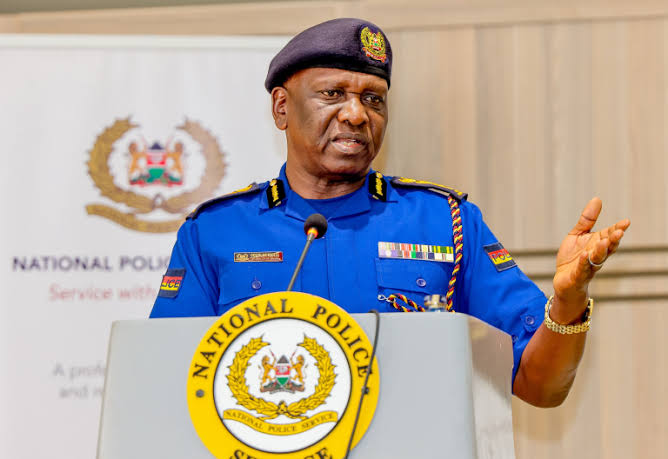
Inspector General of Police Douglas Kanja has been ordered to appear before the High Court on September 28, 2026, for mitigation and sentencing after being found in contempt of a court order over the barricading of roads leading into Nairobi’s Central Business District.
Justice Patricia Nyaundi found the Inspector General personally responsible for failing to ensure that officers of the National Police Service complied with a court order requiring prior public notice before roads could be barricaded or checkpoints erected during the commemoration of the June 2024 Finance Bill protests.
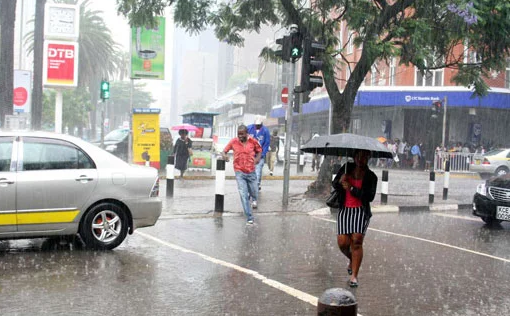
The court found that police erected roadblocks and restricted access to the CBD on June 25, 2026, without issuing the advisory required under the order.
Justice Nyaundi rejected the argument that the checkpoints did not unlawfully interfere with freedom of movement, holding that the failure to issue prior notice was itself significant.
“Citizens cannot meaningfully exercise their movement when confronted with sudden unexplained barriers,” the judge observed.
The court held that the order imposed a positive obligation on the Inspector General to ensure that members of the public were informed whenever road closures or checkpoints were contemplated.
Justice Nyaundi further ruled that operational procedures could not override a valid court order and that the Inspector General could not shift responsibility for compliance to subordinate officers.
According to the ruling, Kanja was expected to demonstrate the measures he had taken to ensure compliance with the court’s directions, particularly given his knowledge of the restrictions on movement.
The judge also faulted the Inspector General for failing to personally address the allegations of non-compliance, saying his failure to explain the steps taken to comply with the order pointed to more than an administrative lapse.
Justice Nyaundi linked the obligation to comply with the court order to Articles 10 and 244 of the Constitution, which provide for respect for the rule of law, human rights, transparency and accountability within the National Police Service.
She stressed that contempt proceedings are not meant to protect the personal authority of a judge, but to safeguard the rule of law and ensure compliance with court orders.
The court also referred to Article 24 of the Constitution, which requires limitations on constitutional rights to be reasonable, justifiable and procedurally fair.
Justice Nyaundi said indiscriminate restrictions on access to the CBD without the notice contemplated by the court order could not be reconciled with those constitutional requirements.
The court noted that Kanja had been present at a press conference where assurances were reportedly given that the following day would be a normal day for schoolchildren and business people. Despite the assurances, roadblocks were later mounted around the CBD.
Justice Nyaundi consequently found the Inspector General in contempt of the court order issued in July 2025, citing the failure to issue a public advisory before the roads were barricaded.
Kanja is required to appear before the court on September 28 to make submissions in mitigation, after which the court will determine the appropriate sentence.