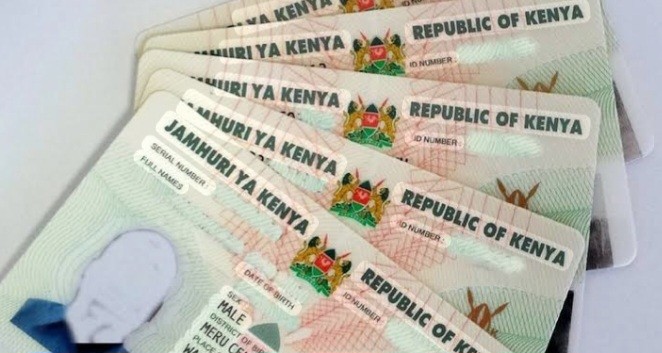
The government has enlisted chiefs and assistant chiefs to help trace more than 557,000 uncollected national identity cards as it steps up efforts to ensure eligible Kenyans are registered to vote ahead of the 2027 General Election.
Principal Secretary for Immigration and Citizen Services Dr Belio Kipsang told the National Assembly Departmental Committee on Administration and Internal Security on Thursday, November 5, 2026, that the government was working to clear the backlog before voter registration begins in January 2027.
The backlog includes nearly 400,000 identity cards that have remained uncollected at registration offices for more than 10 years.
Kipsang said the government was determined to ensure that eligible citizens obtain their identification documents in time to participate in the next general election.
Under the new arrangement, chiefs and assistant chiefs will receive information on uncollected identity cards in their respective areas and help locate the people whose documents are ready.
The National Government Administration Officers will work with registration offices to identify card owners and facilitate the collection process at the grassroots.
The department is also considering allowing registration officers to release identity cards to parents, guardians and other authorised persons, provided the necessary verification procedures are followed.
Kipsang said the government had also abolished fees previously charged for obtaining and replacing identity cards to remove financial barriers.
He said Kenyans would no longer be required to pay the Sh300 previously charged for new identity cards or the Sh1,000 replacement fee.
The department is also finalising an electronic notification system through the e-Citizen platform that will alert applicants through SMS once their identity cards are ready for collection.
“We are finalising the system to ensure that applicants are notified through SMS when their IDs are ready. This will help us fast-track the collection of these documents,” he said.
The PS added that the government had invested in live-capture equipment to improve registration and processing while reducing the risk of identity documents being issued to the wrong individuals.
However, he acknowledged that dealing with cards that had remained uncollected for more than a decade presented legal and administrative challenges.
He cited Section 17 of the Registration of Persons Act, which provides for the Cabinet Secretary to invalidate identity cards, but said the government would exercise caution before taking such action because of the personal nature of the documents.
During the session, Teso South MP Uku Kaunya raised concerns over delays in the delivery of processed identity cards, particularly in Amagoro, where he said more than 5,000 cards had reportedly taken between two and three months to reach the registration stations.
Kaunya questioned why applicants continued to wait for extended periods despite the introduction of modern registration technology.
He urged the department to work with village elders to trace applicants and ensure that processed identity cards reach their rightful owners.
Saku MP Dido Raso, who is the committee's vice-chairperson, said the government had improved access to registration services, particularly for residents of pastoralist communities who previously faced difficulties obtaining identity cards because of demanding documentation requirements.
However, he urged the department to introduce an SMS notification system similar to the one used for passport collection, arguing that some applicants failed to collect their cards because they were not informed when the documents arrived.
Raso also raised concerns over expiry dates appearing on new-generation identity cards, warning that some citizens could mistakenly interpret them as meaning their citizenship would end when the cards expired.
Sotik MP Francis Sigei also questioned delays in delivering processed cards, saying applicants should not have to wait for long periods when modern technology was available.
He further raised concerns over delays in issuing identity cards to people married to Kenyan citizens across the country's borders, particularly those from Uganda and South Sudan.
In response, Kipsang said the department had the capacity to print up to 20,000 identity cards daily and was working towards ensuring that applications were processed and delivered within seven to 10 days.
He cited Busia County, where 11,000 cards had been processed over the preceding 30 days and were at different stages of completion. In Kericho County, he said 17,000 cards were being processed and were expected to reach applicants within seven to 10 days.
Committee chairman Gabriel Tongoyo directed the PS to investigate the delays raised by MPs and establish why some areas continued to experience challenges despite improvements in the national registration system.
Kipsang pledged to provide Kaunya with a detailed update on applications in Amagoro and the wider Busia County.
On identity card expiry dates, the PS clarified that the dates relate to the validity of the technology and information stored in the identification chip, rather than the citizenship of the holder.
He said Kenyans would be notified in advance when their cards required replacement to update the information stored in the chips.
The PS also dismissed concerns over shortages of passport printing materials, saying the department had adequate supplies as it transitions to the third generation of passports. He said more than one million booklets from the previous generation were available as the old system is phased out.
Kipsang further announced that the government was working to harmonise national registration and civil registration services, which have traditionally operated through separate offices, to allow Kenyans to access both services at a single point.
“We are harmonising these offices so that Kenyans can get both civil registration and national registration services at one point,” he said.
The government says the measures are intended to improve access to identification documents and ensure that eligible citizens are not locked out of the electoral process because of delays in collecting their national identity cards.