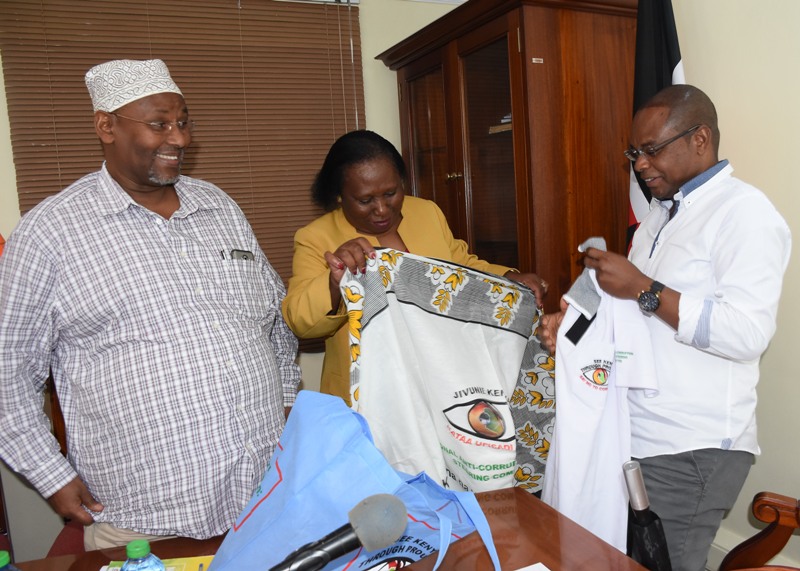
The national government has been urged to allocate more resources to the National Anti-Corruption Campaign Steering Committee to bolster its efforts in combating graft through attitude and behavioural change. Kilifi Governor Amason Kingi, during a meeting in his boardroom on June 19, 2019, emphasized the critical role of transforming the behavioural aspects of Kenyans in the fight against corruption. He expressed concern that the current allocation of resources to the committee, which is tasked with sensitizing the public on the detrimental effects of corruption, is insufficient to achieve meaningful impact.
Governor Kingi highlighted that the committee operates on an annual budget of Kshs110 million, which is spread across all 47 counties. He argued that this amount is inadequate for a nationwide campaign aimed at changing public attitudes towards corruption. "The war against corruption will be won through behavior change, which requires a campaign that reaches every corner of the country," he stated. The governor stressed the need for the government to focus more on preventive measures in the fight against corruption, suggesting that a comprehensive campaign involving all Kenyans, regardless of their social standing, is essential.
During the meeting, Governor Kingi was joined by Dr. Al-hajji Adan Wachu, the chairperson of the National Anti-Corruption Campaign Steering Committee, who paid a courtesy call at his Kilifi office. The governor shared his plans for the county, revealing that a team of anti-corruption officers has been trained to spearhead the campaign across all departments and sections of his government. This initiative aims to instill a culture of integrity and transparency within the county's operations.
Acting director of the committee, David Gathii, expressed the committee's readiness to collaborate closely with the Kilifi County government in their efforts to raise awareness and educate the public about the vice of corruption. He emphasized that empowering citizens to recognize and combat corruption at various levels of society is crucial for the campaign's success.
The call for increased funding and a more robust approach to anti-corruption efforts comes at a time when Kenya continues to grapple with high-profile corruption cases that have eroded public trust in government institutions. By focusing on behavioural change and preventive strategies, the government aims to foster a culture of accountability and integrity that could significantly reduce corruption in the long term.