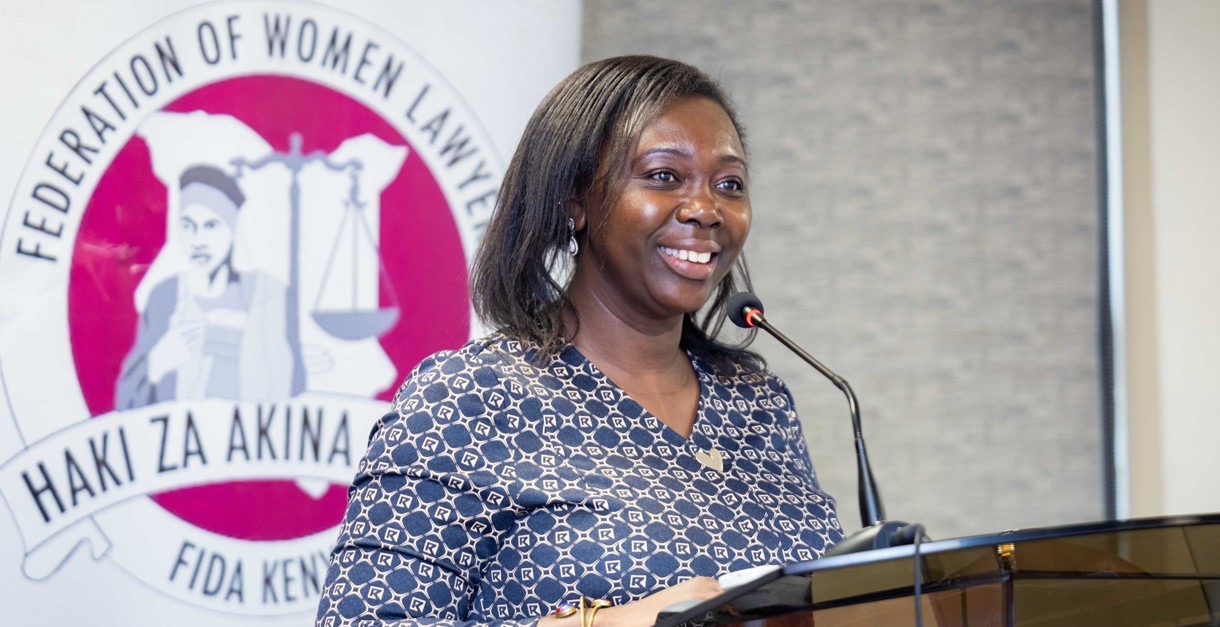
The Federation of Women Lawyers in Kenya (FIDA-Kenya) has called for stronger protection of victims, improved witness protection and faster prosecution of gender-based killings following the sentencing of former Migori Governor Zacharia Okoth Obado and two co-accused over the murder of university student Sharon Otieno.
In a statement issued on Friday, November 27, 2026, FIDA-Kenya welcomed the High Court’s decision to sentence Obado and his former personal assistant, Michael Juma Oyamo, to 25 years in prison each, while former Migori County employee Caspal Ojiwang Obiero received an 18-year sentence.
The sentences were delivered by Justice Cecilia Githua at the Milimani High Court in Nairobi, nearly eight years after Sharon was murdered in September 2018.
FIDA-Kenya, which watched brief for Sharon’s family throughout much of the trial, described the judgment as an important milestone in securing accountability and reaffirming the principles of due process and equality before the law.
The organisation’s chairperson, Christine Kungu, said the case demonstrated the importance of victims and their families having legal representation, timely information and meaningful participation in criminal proceedings.
FIDA-Kenya noted that the court had heard 42 prosecution witnesses and considered 81 exhibits while examining extensive documentary, forensic, medical, digital and circumstantial evidence. It said the court’s detailed consideration of the evidence reflected the judicial rigour required in complex cases that attract significant public interest.
In its judgment delivered on July 23, 2026, the court found that the prosecution had proved beyond reasonable doubt that Sharon’s death was unlawful and that the three accused, acting jointly with other individuals who were not before the court, were responsible for her murder.
The court established that the three men played different roles in the killing, with Obado identified as the principal architect of the criminal plan, having provided the motive, instigation and financial resources. Oyamo was found to have played a central role in coordinating the execution of the plan, while Obiero provided logistical assistance.
During sentencing, Justice Githua rejected requests for non-custodial sentences, ruling that the aggravating circumstances surrounding the murder outweighed the mitigating factors presented by the convicts. The court also directed that the prison terms account for the respective periods they had spent in lawful custody.
Sharon, a 26-year-old Rongo University student, was seven months pregnant when she was murdered in September 2018. Her body and that of her unborn child were later discovered in Homa Bay County.
Her murder attracted national attention because of her relationship with Obado, who was the Migori Governor at the time, and the circumstances surrounding her death. The lengthy trial examined the roles of the three men and involved extensive witness testimony and documentary and forensic evidence.
FIDA-Kenya acknowledged the suffering Sharon’s family endured throughout the proceedings, noting that although the sentences marked an important step towards accountability, no court decision could restore the lives lost or fully heal the family’s grief.
The organisation also recognised the witnesses who testified, investigators, the Office of the Director of Public Prosecutions, defence lawyers, the legal team representing Sharon’s family and the Judiciary for their respective roles in the proceedings.
With the sentencing coinciding with the annual 16 Days of Activism Against Gender-Based Violence, which runs from November 25 to December 10, FIDA-Kenya urged the Government, criminal justice agencies and other relevant institutions to strengthen efforts to address violence against women and girls.
It called for timely investigations and prosecutions of gender-based killings, stronger witness protection mechanisms and improved access to legal, psychosocial and other support services for survivors and bereaved families.
The organisation further emphasised the need for continued investment in investigative capacity, particularly the preservation and management of forensic and digital evidence, which it said was critical to effective prosecutions.
FIDA-Kenya reaffirmed its commitment to advancing access to justice for women and girls through legal aid, strategic litigation and advocacy, saying the case demonstrated the importance of ensuring victims’ voices are heard throughout judicial proceedings.
It maintained that justice must extend beyond convictions and sentences to include stronger institutions, respect for the rule of law and sustained efforts to prevent violence and protect victims’ rights.