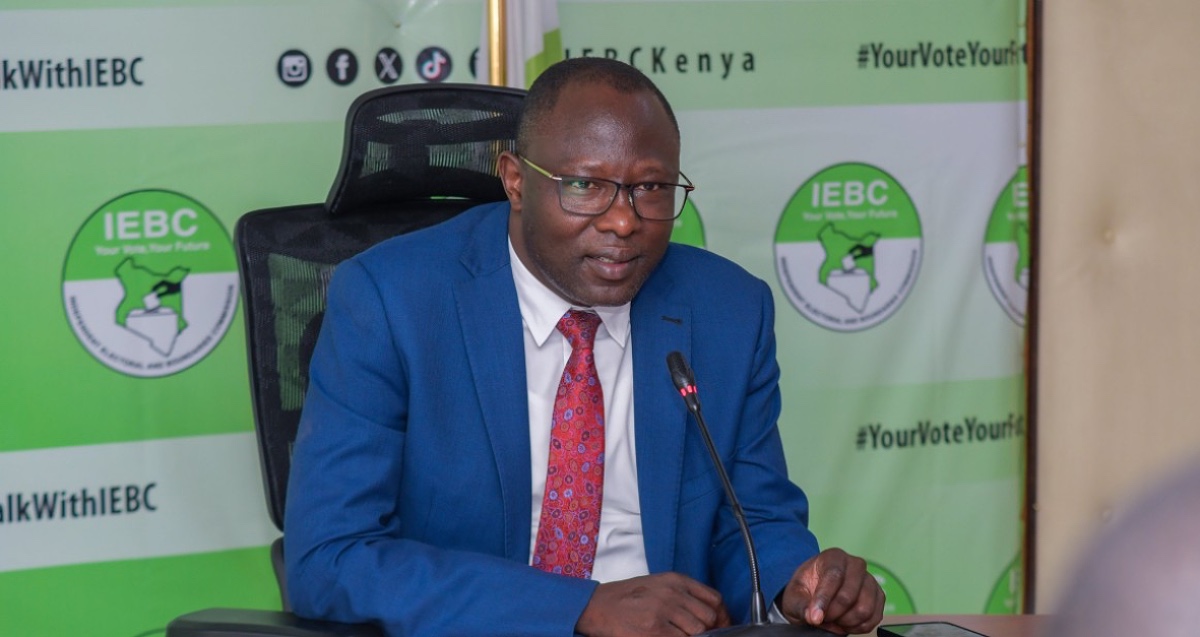
Independent Electoral and Boundaries Commission (IEBC) Chairperson Erastus Ethekon has reaffirmed that election results declared at polling stations and verified through legally established tallying procedures must be respected, urging journalists to help protect the integrity of the electoral process and safeguard national peace ahead of the 2027 General Election.
Ethekon said the commission remained committed to conducting transparent elections in accordance with the Constitution and electoral laws, stressing that the declaration and verification of results must follow established legal procedures.
Addressing concerns over differences between electronically transmitted results and physical result forms delivered from polling stations, the IEBC chairperson pointed to court decisions establishing the authority of results recorded and declared at polling stations.
He maintained that where discrepancies arise, the original physical records reflecting the results accurately tallied and declared at the respective polling stations take precedence over conflicting electronically transmitted figures.
The issue has previously been the subject of legal disputes, particularly over the role of the National Tallying Centre and the extent of the commission’s authority in handling presidential election results.
In a ruling delivered on September 22, 2026, High Court Judge Gregory Mutai addressed the relationship between polling-station results, constituency declarations and national tallying.
The court held that where electronically transmitted results differ from physically delivered records, the accurate record of what was counted, verified and declared at the respective polling station must prevail.
Justice Mutai also clarified that the IEBC’s national tallying exercise does not give the commission powers to change certified constituency results. Such results can only be altered through an order of a court with jurisdiction.
The ruling nevertheless recognised the importance of national tallying in determining whether a presidential candidate meets the constitutional requirements for election, including securing more than half of the votes cast nationally and at least 25 per cent of the votes in more than half of Kenya’s counties.
Beyond the technical management of election results, Ethekon called on journalists to exercise responsibility in their coverage of electoral matters, warning against the spread of misinformation, propaganda and hate speech.
He urged media practitioners to verify information before publishing or broadcasting it, noting that misleading reports and politically charged narratives could heighten tensions, deepen divisions and threaten national cohesion.
Ethekon emphasised that the media plays an important role in ensuring citizens receive accurate information, particularly during politically sensitive periods when public confidence in electoral institutions is essential.
He challenged journalists to actively debunk false claims rather than amplify misleading narratives, stressing that responsible reporting and fact-checking were necessary to protect public trust in the electoral process.
The remarks come as Kenya prepares for the General Election scheduled for August 10, 2027, with the IEBC undertaking preparations and engaging political parties and other stakeholders on electoral reforms and readiness.
The commission has repeatedly called for cooperation among political leaders, media organisations, civil society and other institutions to support peaceful elections and strengthen confidence in the country’s democratic processes.