The Directorate of Criminal Investigations (DCI) and the Anti-Doping Agency of Kenya (ADAK) have entered into a partnership to strengthen investigations into doping-related offences, targeting networks involved in the supply and administration of prohibited substances in sport.
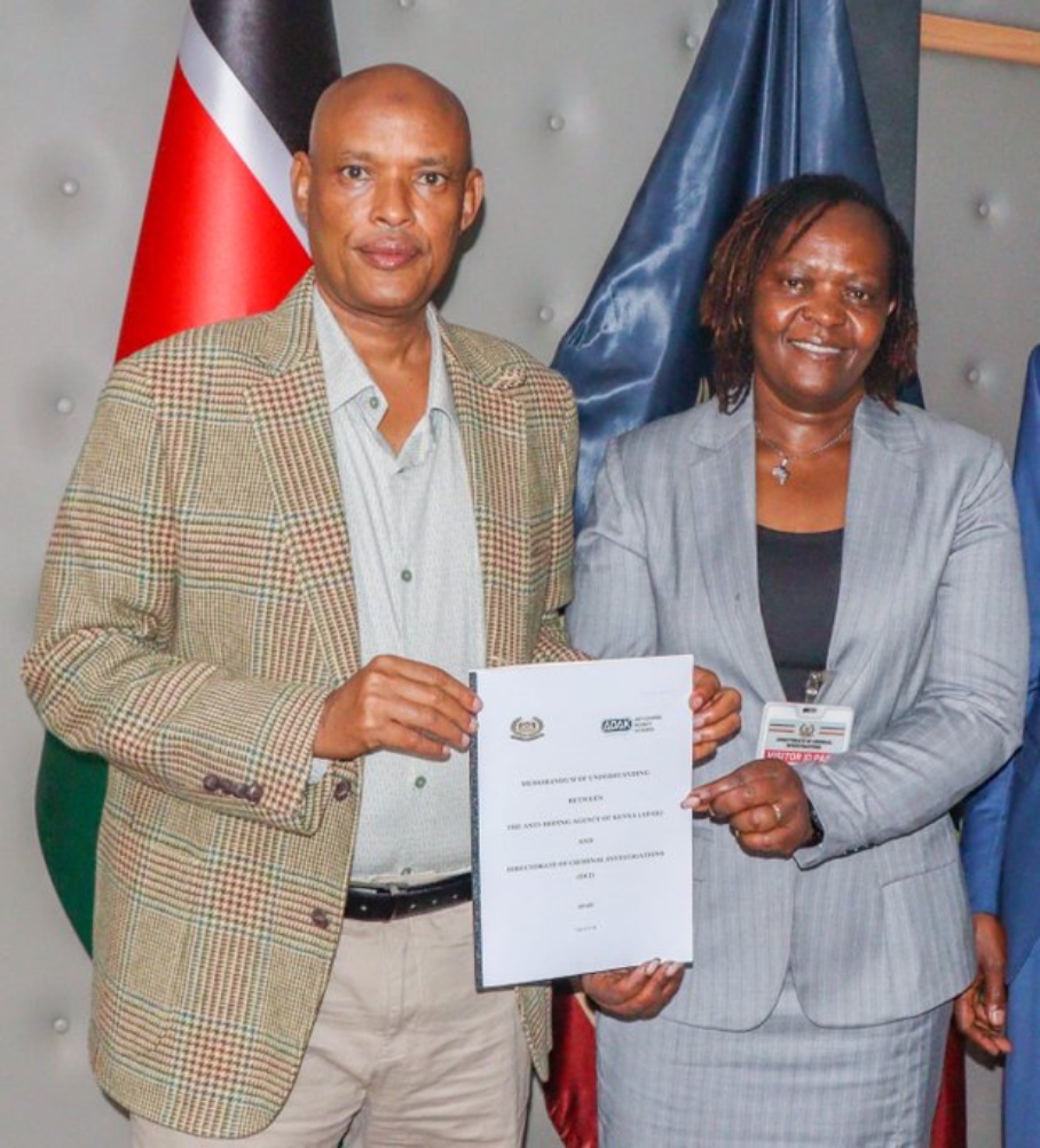
The two institutions signed a Memorandum of Understanding (MoU) on Friday, November 27, 2026, at DCI Headquarters in Nairobi, establishing a framework for intelligence sharing, investigations and coordinated action against doping.
The agreement was signed by DCI Director Mohamed I. Amin and ADAK Chief Executive Officer Peninah Wahome in a ceremony attended by ADAK Chairperson, retired Major General Aphaxard Muthuri Kiugu.
According to the DCI, the partnership will enable the agencies to work together to identify and dismantle doping networks, protect athletes from exploitation and strengthen efforts to prevent, detect and prosecute doping-related offences.
Speaking during the signing, Amin said the DCI would deploy its investigative expertise and intelligence capabilities to support ADAK’s mandate of promoting clean sport. He maintained that sporting success should be founded on talent, discipline and integrity rather than prohibited substances and unfair competitive advantages.
Wahome welcomed the agreement, saying closer cooperation with law enforcement agencies would strengthen ADAK’s capacity to investigate doping offences, improve intelligence sharing and enhance enforcement. She also emphasised the importance of protecting athletes who compete fairly and preserving the credibility of Kenyan sport.
The partnership comes amid renewed scrutiny of doping in Kenyan athletics following a series of international sanctions against prominent athletes.
On November 19, the Athletics Integrity Unit (AIU) announced bans against marathon world champion Peres Jepchirchir, Veronica Loleo and Ronald Kipkoech Korir. Jepchirchir and Loleo received three-year bans for violations involving erythropoietin (EPO), while Korir was handed a six-year suspension following abnormalities in his Athlete Biological Passport.
The three sanctions amount to 12 years of ineligibility, adding to concerns about the continued presence of doping violations in a country internationally recognised for its distance-running achievements.
The challenge extends beyond individual athletes. Kenya’s Anti-Doping Act provides for criminal penalties against people involved in the unlawful transportation, distribution and administration of prohibited substances. Under Section 42, offenders convicted of such activities face a minimum fine of KSh3 million, imprisonment for at least three years, or both. Medical professionals found guilty of facilitating doping also face criminal penalties and possible revocation of their professional licences.
The agreement also builds on wider government efforts to strengthen coordination in the fight against doping. Kenya’s 2026 report on the implementation of its international obligations identifies the DCI among several national institutions working with anti-doping authorities, alongside the Office of the Director of Public Prosecutions, National Police Service, Pharmacy and Poisons Board and other regulatory bodies.
The report also records 62 cases handled by the National Anti-Doping Organisation before the Sports Disputes Tribunal, with 18 concluded and 44 still ongoing.
The DCI–ADAK partnership therefore introduces a more structured investigative framework to complement existing testing, athlete education and disciplinary processes. Its effectiveness will depend on how intelligence is translated into investigations, prosecutions and action against those supplying or administering prohibited substances.
For Kenya, the wider objective is to protect clean athletes, restore confidence in its sporting achievements and safeguard its reputation in international competition.