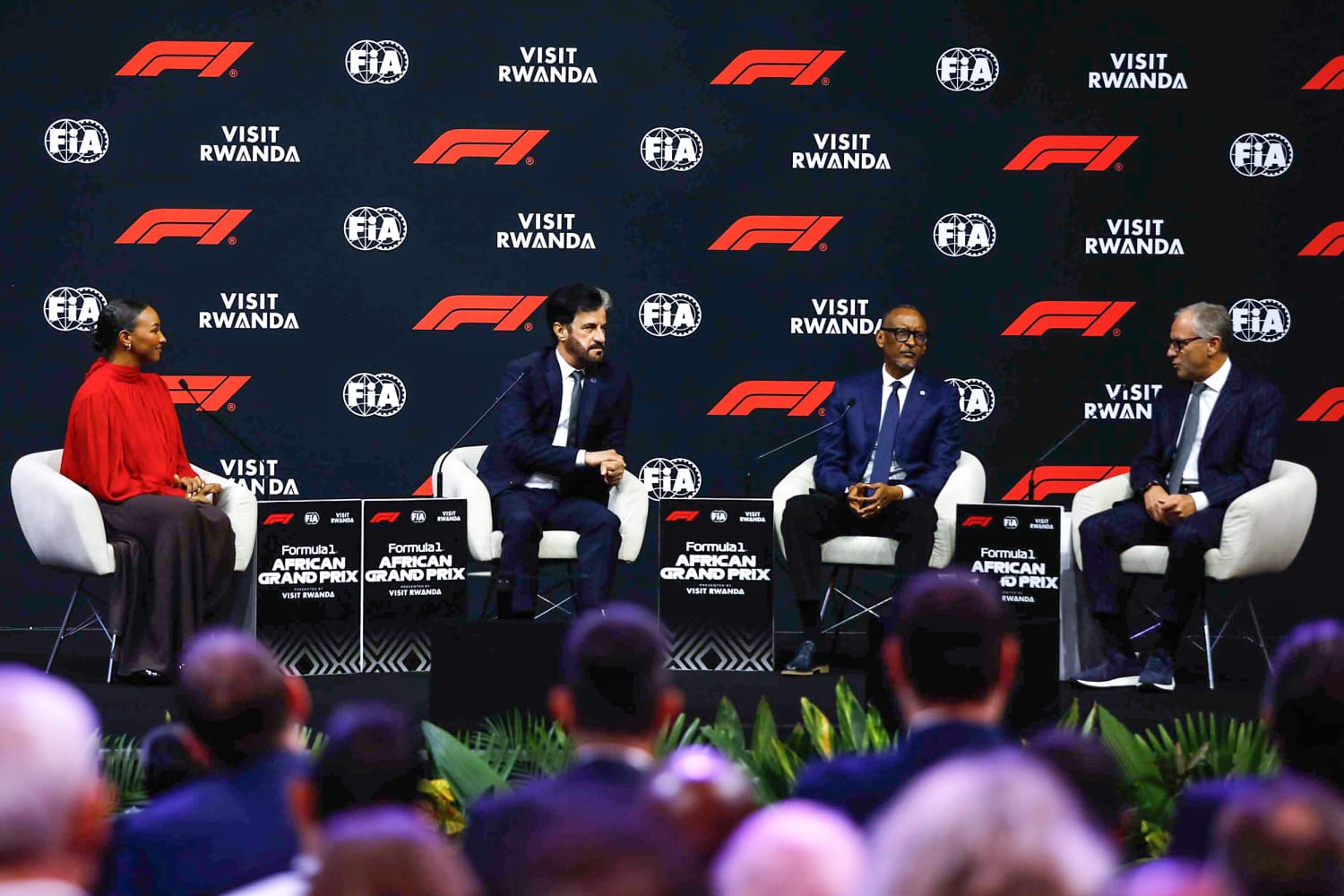
The African Union Commission (AUC) has welcomed Rwanda’s agreement to host Formula 1, describing the development as a significant milestone for African sport and an opportunity to strengthen the continent’s position in the global sporting industry.
In a press release dated Friday, October 23, 2026, AUC Chairperson Mahmoud Ali Youssouf commended the Rwandan government for securing the agreement, highlighting the potential of major international sporting events to attract investment, promote tourism, develop local expertise and expand opportunities for young people.
The announcement follows a 10-year agreement between Rwanda and Formula 1, confirmed on October 13, which will bring the championship back to Africa for the first time since 1993.
The proposed African Grand Prix is expected to join the Formula 1 calendar in the early 2030s, subject to the completion of a purpose-built circuit in Bugesera, approximately 40 kilometres south of Kigali.
Youssouf emphasised the role of sport in supporting sustainable economic growth, creating jobs, empowering young people and strengthening regional integration. He also called for greater use of public-private partnerships to expand Africa’s participation in the global sports economy.
The AU Commission said the initiative aligns with the African Union’s Agenda 2063, which seeks to build an integrated, prosperous and peaceful continent driven by its citizens and playing a greater role in global affairs.
The commission further encouraged cooperation among AU member states, the private sector and other stakeholders to harness sport’s potential to advance Africa’s development, integration and international standing.
Formula 1’s agreement with Rwanda marks a major step in the championship’s return to a continent it has not visited since the 1993 South African Grand Prix at Kyalami. Rwanda will become the latest African country to host a round of the championship, following South Africa and Morocco, which staged a race in 1958.
The planned circuit in Bugesera will be developed to meet FIA Grade 1 standards, the certification required to host Formula 1 races. The project forms part of a wider sports, tourism, infrastructure and commercial development programme led by the Rwanda Development Board.
Formula 1 chief executive Stefano Domenicali has presented the agreement as an opportunity to generate lasting economic and social benefits through tourism, investment, skills development and local business growth.
The championship has also highlighted its following across Africa, estimating that more than 100 million fans on the continent follow the sport.
For Rwanda, the deal is part of a broader strategy to establish the country as a destination for major international sporting events and attract visitors and investment. However, the projected benefits will depend on the delivery of the required infrastructure and the event’s eventual implementation.
The agreement has also attracted scrutiny. In reporting published on October 13, Amnesty International criticised the deal over Rwanda’s human rights record, raising concerns about the use of major sporting events to improve a country’s international image.
The AU Commission’s endorsement places the proposed Grand Prix within a broader continental development agenda, with Youssouf urging African governments and private-sector partners to work together to ensure sport contributes to economic opportunity, youth empowerment and regional cooperation.
The inaugural race date remains unconfirmed as Rwanda prepares for the construction of the circuit and other infrastructure required to host the championship.