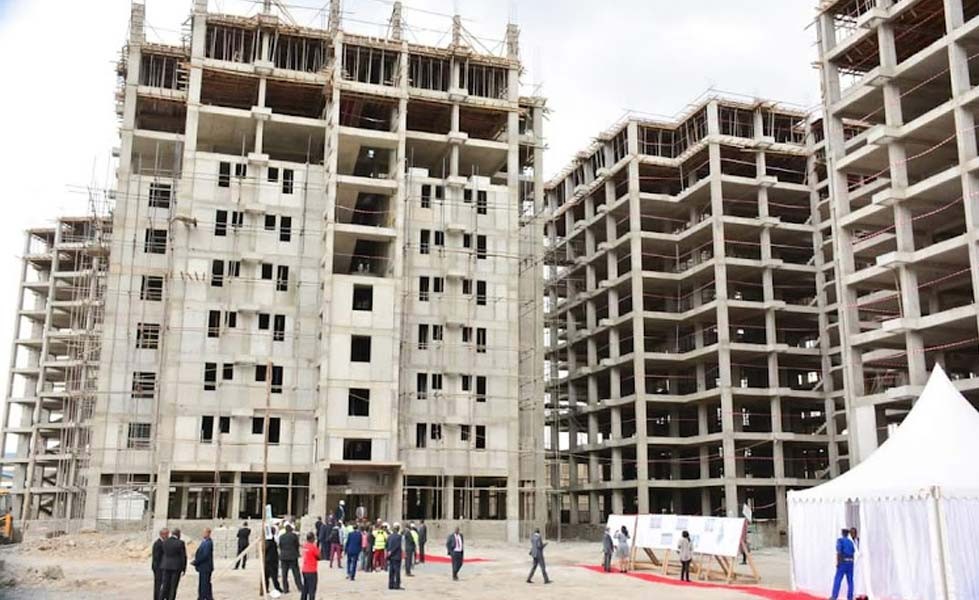
The Court of Appeal has confirmed the legality of the Affordable Housing Act, rejecting an appeal that sought to contest the law and the deductions associated with the housing levy.
In a ruling issued in Nairobi on September 25, 2026, the judges found the appeal to lack merit and upheld the High Court's findings on most of the issues presented by the petitioners.
“We have considered the submissions made and we agree with the respondents that since section 5 of the Kenya Revenue Authority Act, as amended, provides that the Kenya Revenue Authority is an agent of the government for purposes of the collection and receipt of all revenue and section 11 of the said Act,” the judgment stated.
Nonetheless, the three-judge panel criticized the legislative process that led to the enactment of the law, indicating that the Commission on Revenue Allocation (CRA) should have been afforded the chance to review the Bill and provide recommendations prior to its debate and passage in Parliament.
The court highlighted that the Affordable Housing Act allows for the collection of funds via the Affordable Housing Fund, with provisions for part of the fund to be allocated to county governments.
“Since the Constitution, in Article 205, mandates that when a Bill includes any financial implications for county governments, the Commission on Revenue Allocation must review those provisions and may offer recommendations,” the judges noted.
The court concluded that the CRA should have had the opportunity to assess the Bill and advise the National Assembly and Senate before both Houses cast their votes.
Furthermore, the judges dismissed the High Court's interpretation that the CRA's involvement would only be relevant during the law's implementation.
According to the appellate judges, Article 205 necessitates CRA’s engagement prior to parliamentary discussions on the Bill, not post-enactment.
However, the court observed that the CRA had not been included as a party in the proceedings, complicating the determination of whether it had indeed been denied the chance to review the Bill.
“The CRA was never made a party to the proceedings and hence its position as to whether or not this opportunity was afforded was not clearly brought out,” the court remarked.
The Court of Appeal also affirmed the retrospective application of the Affordable Housing Act.
The judges determined that Section 60 of the Act was intended by Parliament to apply retrospectively, preserving transactions that occurred under Section 84 of the Finance Act 2023 prior to the High Court’s decision in Petition 181 of 2023.
The court stated the petitioners failed to show that the retrospective application would undermine contractual obligations, infringe on existing rights, or violate any constitutional prohibitions.
Thus, the judges concurred with the High Court that Parliament intended Section 60 to have a retrospective effect.
Additionally, the court upheld the appointment of the Commissioner General of the Kenya Revenue Authority as the collector of the housing levy.
It referenced the Kenya Revenue Authority Act, which designates the Authority as the government's agent for revenue collection and receipt.
The court further pointed to the responsibilities of the Commissioner General, which include managing the Authority’s funds, property, and affairs.
Consequently, the judges concluded that the appointment of the Commissioner General to oversee the levy collection was valid.
In its final ruling, the Court of Appeal dismissed the appeal, asserting it lacked merit.