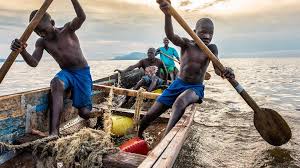
With the recent publication of the syllabus for the training of fishermen, there is a pressing need for the government to establish a Special Task Force dedicated to the fishing industry. This initiative is crucial in addressing the myriad challenges that have plagued the sector for decades. The task force would be instrumental in identifying the root causes of these issues and formulating strategic measures to prevent the recurrence of past mistakes.
One of the primary concerns that the task force should investigate is the cessation of operations of vessels FV UCHUMI and FV UFUNGUO. These vessels were once pivotal to the Kenya Fisheries Industry (KFI), and their discontinuation has been linked to the industry's poor performance since the 1990s. Additionally, the collapse of the KFI's training institute for fishermen at Liwatoni is another critical issue that requires thorough examination. Understanding the factors that led to these setbacks is essential for devising effective solutions.
Furthermore, the task force should delve into the shortcomings of the fisheries program initiated by the Kenya Commercial Bank and the training programs for fishermen at the Bandari Maritime Academy. Despite numerous attempts to enhance training for fishermen, these initiatives have repeatedly failed to yield the desired results. A comprehensive evaluation of the existing training infrastructure is necessary to develop a robust framework for reviving the fishery sector.
To ensure a holistic approach, the task force should comprise representatives from key stakeholders, including Kenya Fisheries Services, the Association of Maritime Practitioners, the Association of Deep-Sea Fishing, and the Seafarers Union of Kenya, among others. This diverse representation will provide a broad spectrum of insights and expertise, facilitating the development of well-rounded strategies.
Benchmarking with successful institutions such as the Berbera Maritime and Fisheries Academy, Korea Institute of Maritime and Fisheries Technology, Seychelles Maritime Academy, Namibian Maritime and Fisheries Institute, and Mbegani Fisheries Institute could offer valuable lessons and best practices. These institutions have demonstrated success in their respective regions and could provide a blueprint for revitalizing Kenya's fishing industry.
In conclusion, if the government and stakeholders are genuinely committed to the future of the fisheries sector, the establishment of a Special Task Force is an indispensable first step. By addressing the historical and systemic challenges, the task force can pave the way for a sustainable and prosperous fishing industry in Kenya.