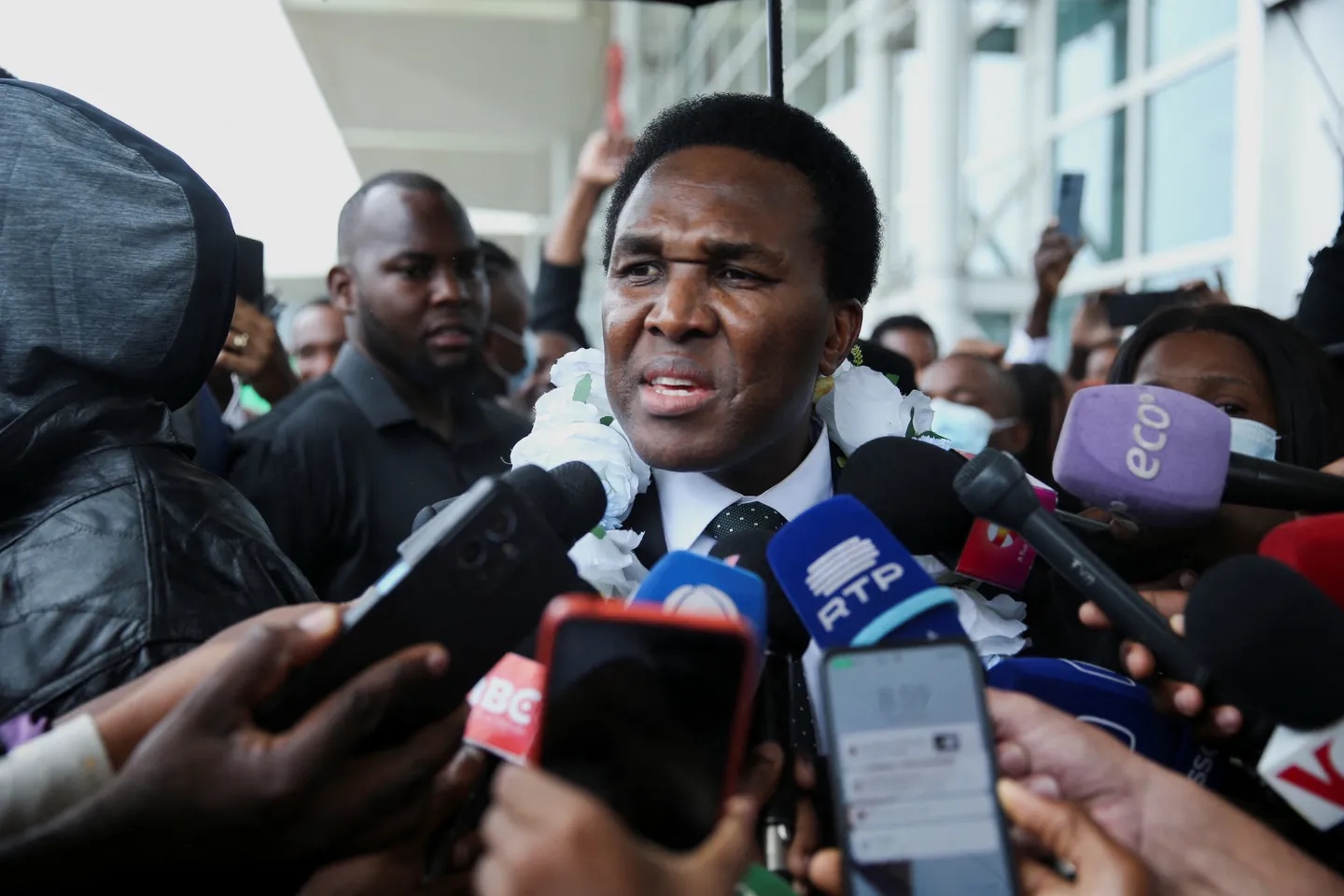
Mozambican opposition leader Venâncio Mondlane has gone on trial over his alleged role in the deadly protests that followed the country’s disputed 2024 general election, facing five criminal charges stemming from his calls for demonstrations.
The proceedings opened on Tuesday, November 17, before the Supreme Court in Maputo, nearly two years after demonstrations erupted over the declaration of Daniel Chapo of the ruling Mozambique Liberation Front (Frelimo) as the winner of the presidential election.
Mondlane, who finished second in the October 2024 vote, rejected the results and alleged widespread electoral fraud. He called for protests, strikes and work boycotts to demand electoral transparency.
Background of the protests
Prosecutors accuse him of using social media broadcasts to mobilise demonstrations and encourage actions that disrupted public services, blocked roads, damaged property and threatened public security. The indictment cites videos, intercepted telephone calls, phone traffic records, banking information and mobile wallet transactions as evidence.
The five charges are public glorification of crime, incitement to collective disobedience, public incitement to commit a crime, incitement to terrorism and provocation of terrorism. Mozambican legal expert Vítor da Fonseca told the Associated Press that the most serious charge carries a possible sentence of up to 24 years.
Mondlane has denied wrongdoing, saying his calls were intended to demand answers over the election results and not to encourage violence.
Charges against Mondlane
Demonstrations, strikes and road blockades continued for months after the vote, with rights groups accusing security forces of using excessive force against protesters. Amnesty International, citing local civil society groups, said more than 300 people were killed during the unrest. Human Rights Watch separately alleged that security forces used live ammunition against demonstrators.
The European Union Election Observation Mission reported irregularities in the counting and tabulation of votes, raising concerns about the credibility of the October 2024 election. Chapo was sworn in as president in January 2025.
Mondlane’s political movement, the National Alliance for a Free and Autonomous Mozambique (Anamola), has described the prosecution as politically motivated. The president of the Supreme Court has denied political interference and said the case will be decided according to the law.
Political implications of the trial
The trial is being heard by five Supreme Court judges. Prosecutors are expected to call 12 witnesses, while the defence has listed 20. Four witnesses for the assisting party, Revimo, and two experts from mobile network operators are also expected to participate.
The proceedings are using an audio and video recording system with automatic transcription, the first of its kind in a trial in Mozambique. The courtroom has a capacity of 45 people, with 12 media organisations receiving permanently allocated seats and additional places rotating among other outlets.
Police have increased their presence around the court and parts of Maputo as the hearings begin. The case is being closely watched in a country still dealing with the political divisions left by the disputed election.