The United States has challenged Sudan and South Sudan to deliver measurable progress towards resolving the security and political challenges in the disputed Abyei region, warning that 15 years of commitments must now translate into concrete action.
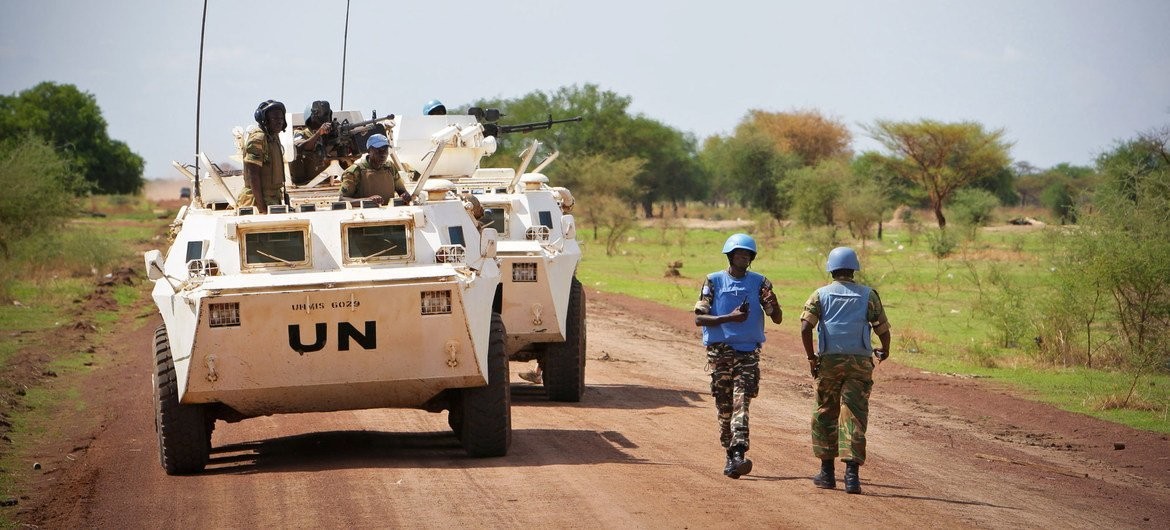
Washington issued the demand after the United Nations Security Council extended the mandate of the United Nations Interim Security Force for Abyei (UNISFA) for another year, until November 15, 2027.
In an explanation of vote delivered on November 13, US Representative for UN Management and Reform Ambassador Jeffrey Bartos said the renewed mandate had strengthened the benchmarks against which the two countries would be assessed.
The Security Council adopted Resolution 2838 (2026) with 13 members voting in favour and China and Russia abstaining.
US demands for Abyei region
The United States outlined several measures it expects the two countries to implement, including the withdrawal of unauthorised armed forces, establishment of the Abyei Police Service and renewed negotiations on the region's final status.
South Sudan must honour its commitment to withdraw its forces from southern Abyei within a defined timeline, while Sudan must ensure its armed forces refrain from military operations in the area.
Washington also demanded the complete withdrawal of the Rapid Support Forces (RSF), insisting that the paramilitary group has no political or administrative legitimacy in Abyei.
On the political front, Sudan and South Sudan have been urged to hold regular, results-oriented negotiations on Abyei's final status and document the outcomes of their discussions.
Political negotiations urged
Bartos cited the August 10 meeting of the Joint Political and Security Mechanism as an initial step but insisted that both countries needed to move beyond discussions and deliver tangible results.
The two governments have also been asked to accelerate the establishment of the Abyei Police Service and expedite visas for all 640 authorised UN police personnel.
The United Nations, meanwhile, is expected to deploy the first Formed Police Unit within six months and appoint a civilian Deputy Head of Mission within three months.
Washington argued that an operational police presence would help reduce crime, while the withdrawal of unauthorised forces would promote stability and limit weapons proliferation in the demilitarised area.
Concerns over Security Council's stance
The vote also exposed disagreements within the Security Council over linking UNISFA's future to progress on the political and security benchmarks.
China abstained, arguing that future decisions on the mission's mandate should not be tied to political progress by Sudan and South Sudan. Its representative called for respect for the sovereignty and ownership of the two countries, while urging patience with their efforts to resolve the dispute.
Russia also abstained, arguing that the resolution maintained a rigid link between the mission's continuation and the fulfilment of the benchmarks. Its representative also questioned some of the implementation timelines.
Bartos separately criticised China's position, arguing that Beijing should honour its commitment to deploy a Formed Police Unit within 60 days of notification under the UN's rapid deployment readiness arrangements. He questioned why the resolution allowed six months for the deployment.
UNISFA was established in June 2011 following violence in Abyei and an agreement between Sudan and South Sudan to withdraw their forces from the area.
However, the two countries have made limited progress towards resolving Abyei's final status, establishing its police service and putting permanent administrative and security arrangements in place.
The United States said it would judge both countries by the results they deliver, insisting that the latest commitments could no longer be delayed or implemented through half-measures.