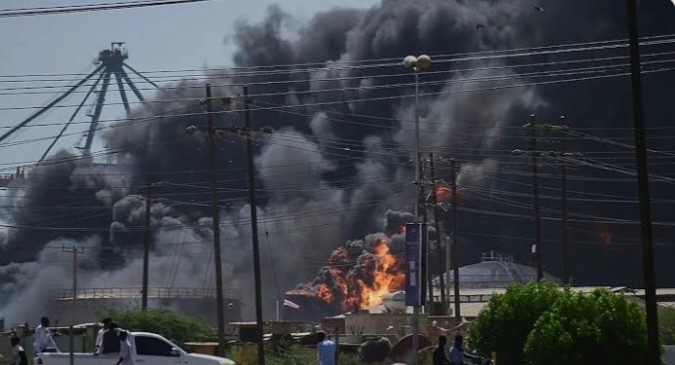
The United Nations and the United States have condemned fresh drone attacks in Sudan's capital, Khartoum, which damaged civilian neighbourhoods and United Nations premises, raising fresh concerns over the safety of civilians and humanitarian workers amid the country's ongoing conflict.
In a statement issued on Sunday, November 22, 2026, United Nations Resident and Humanitarian Coordinator in Sudan Denise Brown said the attacks occurred early in the morning in a civilian neighbourhood, with UN personnel inside the affected premises at the time.
Brown warned that civilians and humanitarian workers continue to face serious risks more than three and a half years after the conflict began.
She stressed that humanitarian personnel are in Sudan to provide assistance to people across the country and should not be exposed to attacks while carrying out their duties.
She further noted that international humanitarian law protects humanitarian workers and their assets, adding that civilians should never be considered legitimate targets during armed conflict.
According to Brown, drone strikes across Sudan have continued to cause civilian deaths and widespread suffering while disrupting humanitarian operations in areas where assistance is urgently needed.
The attacks have also raised concerns about the ability of humanitarian organisations to safely reach communities affected by the conflict.
Meanwhile, US Senior Advisor for Arab and African Affairs Massad Boulos condemned the continued use of drones in Sudan, warning that the supply of foreign weapons was contributing to the destruction and prolonging the fighting.
Boulos said drone attacks reportedly launched by the Rapid Support Forces (RSF) had caused significant damage to civilian neighbourhoods and UN facilities in Khartoum.
He noted that civilians and humanitarian workers continued to bear the consequences of the conflict more than three and a half years after the war began.
The US adviser also raised concerns over the continued flow of foreign-supplied weapons, particularly drones, which have increasingly been used in attacks across the country.
Boulos called for an end to the supply of weapons fuelling the conflict, arguing that continued military support was contributing to deaths, destruction and prolonged instability.
He further urged the warring parties to reach a swift agreement on a humanitarian truce that would allow aid organisations to operate safely and deliver assistance to affected communities.
According to Boulos, such a truce should pave the way for a lasting end to the fighting and ensure sustainable humanitarian access across Sudan.
Sudan's conflict began in April 2023 between the Sudanese Armed Forces and the RSF following a power struggle between the two military factions.
The fighting has triggered a major humanitarian crisis, leaving millions of people displaced and in need of emergency assistance.
The latest condemnation highlights growing international concerns over attacks affecting civilians and humanitarian facilities, as calls for an end to the violence and increased humanitarian access continue.