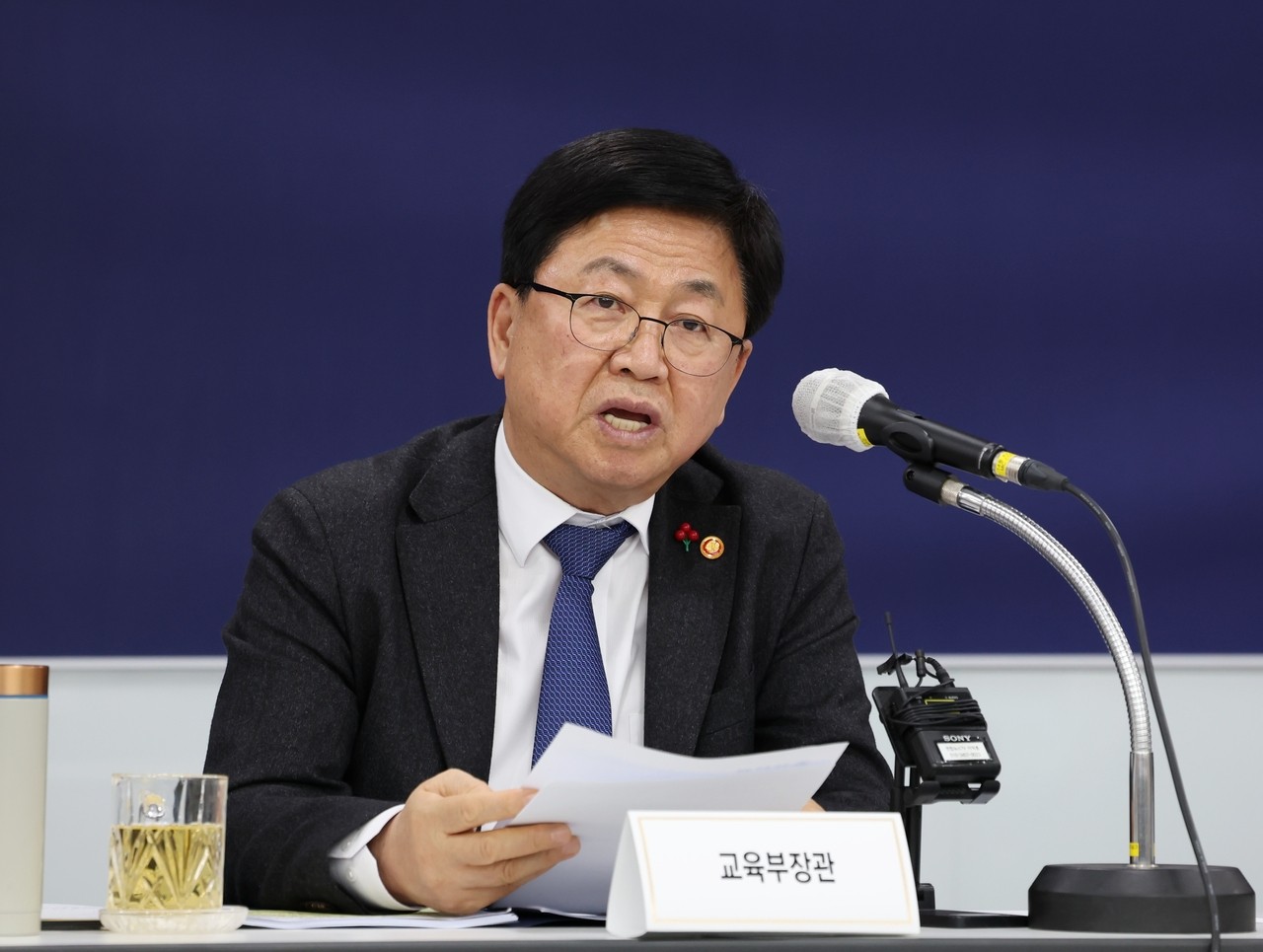
South Korea’s Education Minister Choi Kyo-jin has resigned after taking responsibility for confusion caused by last-minute measures to prevent artificial intelligence-assisted cheating during the country’s annual university entrance examination.
President Lee Jae Myung accepted Choi’s resignation on Sunday, November 22, following criticism over the Education Ministry’s handling of security preparations for the College Scholastic Ability Test, commonly known as Suneung.
Choi said changes introduced shortly before the examination had inconvenienced candidates and members of the public, acknowledging that authorities had failed to prepare adequately in advance.
“As the minister in charge, I believe I cannot escape criticism that we failed to prepare in advance,” Choi said in a statement released by the ministry.
“Now that the exam has concluded, I feel a deep sense of responsibility and am offering my resignation.”
The resignation followed mounting criticism of the ministry’s repeated revisions to anti-cheating rules in the days leading up to Thursday’s examination, which was taken by hundreds of thousands of candidates seeking university admission.
Authorities introduced additional restrictions after concerns emerged that increasingly sophisticated devices could allow candidates to use artificial intelligence during examinations.
The changes included limiting candidates to permitted writing materials, covering clothing buttons with stickers to prevent the concealment of miniature cameras and inspecting eyewear for hidden electronic devices.
The ministry also introduced nationwide emergency phone alerts to identify candidates who had failed to surrender their mobile phones before entering examination rooms.
Three alerts were sent during the examination on November 19, causing phones across South Korea to sound even when placed on silent mode, provided they remained switched on.
The alerts were part of an unprecedented use of the country’s emergency disaster notification system to detect suspected examination violations.
The Education Ministry reported 111 suspected cases involving electronic devices during the examination. The figure covered device-related violations and did not establish that every candidate involved had used artificial intelligence to cheat.
The crackdown was triggered by a separate cheating scandal involving Han Won-seok, 34, who topped South Korea’s certified tax accountant examination earlier this year.
Han admitted using a miniature camera to photograph examination questions before sending the images to generative artificial intelligence. He then checked the answers on a smartphone, enabling him to obtain an exceptionally high score.
His confession on November 15 intensified concerns about the security of national examinations and prompted officials to broaden their preparations ahead of Suneung, which was held just four days later.
Choi had also faced criticism over remarks made during a parliamentary hearing on November 16, when he was questioned about whether authorities could detect every instance of AI-assisted cheating.
Asked whether he was completely confident that such cheating could be detected, the 72-year-old minister reportedly replied that he could not be certain, citing his age.
The response drew public and political criticism, adding to pressure over the ministry’s handling of the examination.
Suneung is one of South Korea’s most consequential national examinations, with university admission often influencing students’ future employment and career prospects.
The examination typically lasts about nine hours, placing candidates under intense pressure as they compete for places at leading universities.
Following Choi’s resignation, the presidential office said the process of appointing a successor would proceed in accordance with established procedures.
The government is now expected to address concerns over examination security and the handling of future tests as authorities seek to protect the fairness of the admissions system.