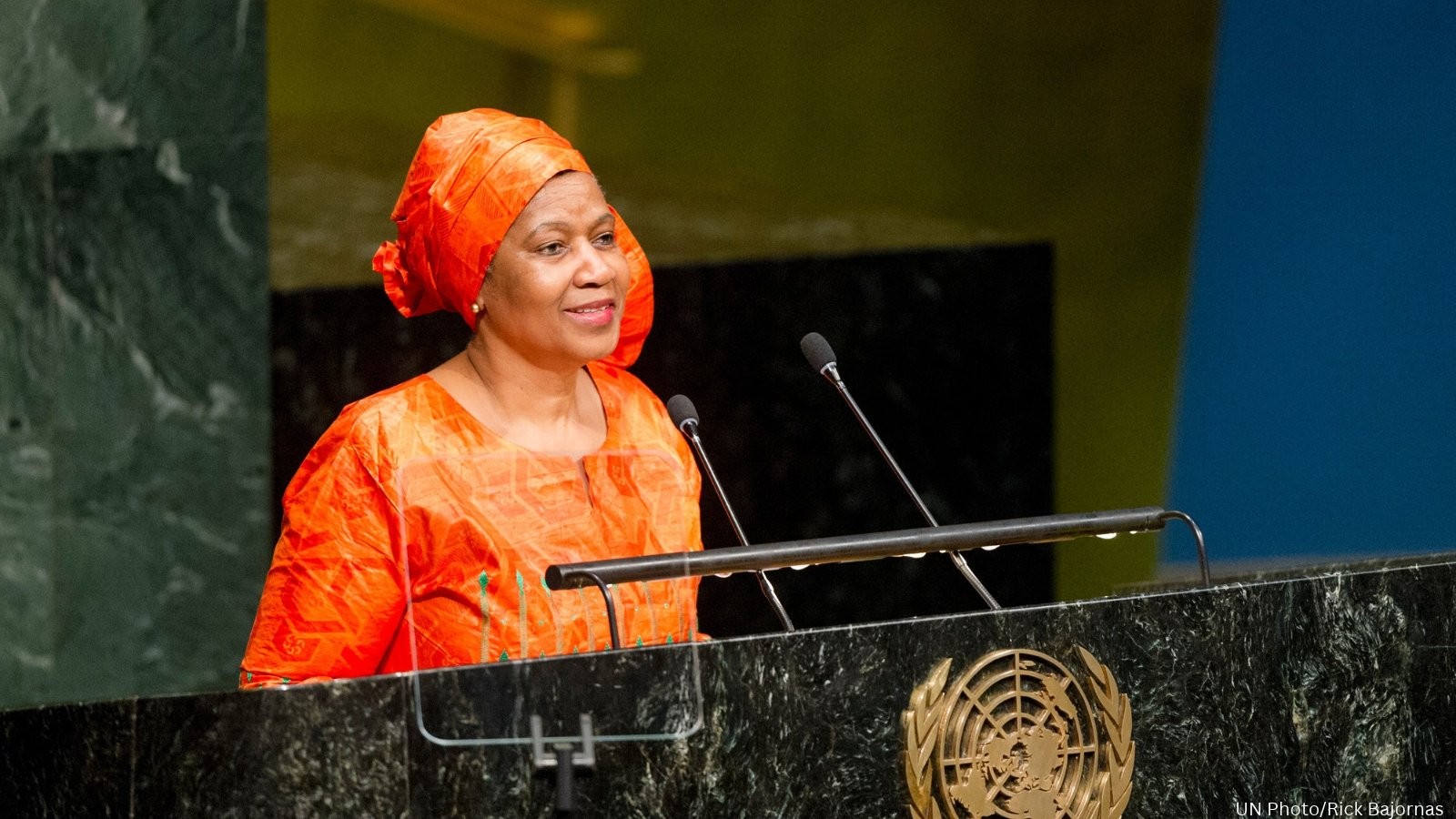
South Africa is mourning the death of its first female Deputy President, Phumzile Mlambo-Ngcuka, who has died aged 71.
Her death was announced Friday, November 20, 2026, by Acting President Paul Mashatile, who conveyed condolences to her family on behalf of President Cyril Ramaphosa, the government and the people of South Africa.
Mlambo-Ngcuka served as Deputy President from June 2005 to September 2008 under former President Thabo Mbeki, making history as the first woman to occupy the country's second-highest political office.
Phumzile Mlambo-Ngcuka's political career
She later served as the United Nations Under-Secretary-General and Executive Director of UN Women between 2013 and 2021, where she championed gender equality and the empowerment of women and girls globally.
Born in Clermont, KwaZulu-Natal, Mlambo-Ngcuka began her career as a teacher and anti-apartheid activist, working with young people and community development initiatives.
She pursued higher education, earning a Bachelor of Arts in Social Science and Education from the National University of Lesotho in 1980, followed by a Master of Philosophy in Educational Planning and Policy from the University of Cape Town in 2003.
In 2013, she earned a Doctorate in Education and Technology from the University of Warwick in the United Kingdom.
Between 1984 and 1989, she worked in Geneva as a coordinator for the World YWCA, where she established a global programme for young women, further cementing her commitment to women's empowerment and youth advocacy.
Following South Africa's first democratic elections in 1994, Mlambo-Ngcuka entered Parliament and subsequently held several senior government positions.
She served as Deputy Minister of Trade and Industry between 1996 and 1999, focusing on economic policy and empowerment during the country's post-apartheid transition.
In 1999, she was appointed Minister of Minerals and Energy, a position she held until 2005, during which she championed broad-based black economic empowerment initiatives within the mining and energy sectors.
Her appointment as Deputy President in 2005 marked a historic milestone for South Africa, with her leadership focused on combating poverty and connecting marginalised communities, particularly women, to economic opportunities.
Legacy and international impact
After leaving government, she continued her international advocacy for gender equality through UN Women, where she served two terms as Executive Director, launching initiatives including the HeForShe solidarity movement, which encouraged men and boys to support gender equality.
She also founded the Umlambo Foundation in 2008 to support leadership and educational development in under-resourced schools in South Africa.
Mlambo-Ngcuka served as Chancellor of the Tshwane University of Technology between 2007 and 2015 and was appointed Chancellor of the University of Johannesburg in 2022.
Her death has triggered tributes from leaders across South Africa and the international community, with many remembering her as a trailblazer who dedicated her life to advancing women's rights and leadership.
Tributes from global leaders
UN Deputy Secretary-General Amina Mohammed described her as one of Africa's finest daughters, a close friend and a champion who amplified the voices of women and girls across the world.
Mohammed said Mlambo-Ngcuka fought for women's leadership throughout her life, including advocating for the election of a woman as United Nations Secretary-General.
UN Secretary-General António Guterres also joined leaders in honouring her legacy, remembering her as a fearless champion for women and girls worldwide.
The Presidency says further details surrounding her death will be communicated following consultations with her family, who have requested privacy as they mourn.
Her legacy is expected to be remembered for breaking barriers in South African politics and championing the rights, empowerment and representation of women on the global stage.