The government has given foreign nationals conducting business in Kenya 90 days to regularise their immigration status and business operations, with the exercise to be coordinated by relevant government agencies in consultation with foreign embassies.
Government's commitment to fair administration
The government said the requirements will be administered fairly, consistently and without discrimination during the 90-day window.
Once the period expires, immigration, work-permit, business registration and licensing requirements will be enforced strictly and in accordance with due process.
Background on President Ruto's directive
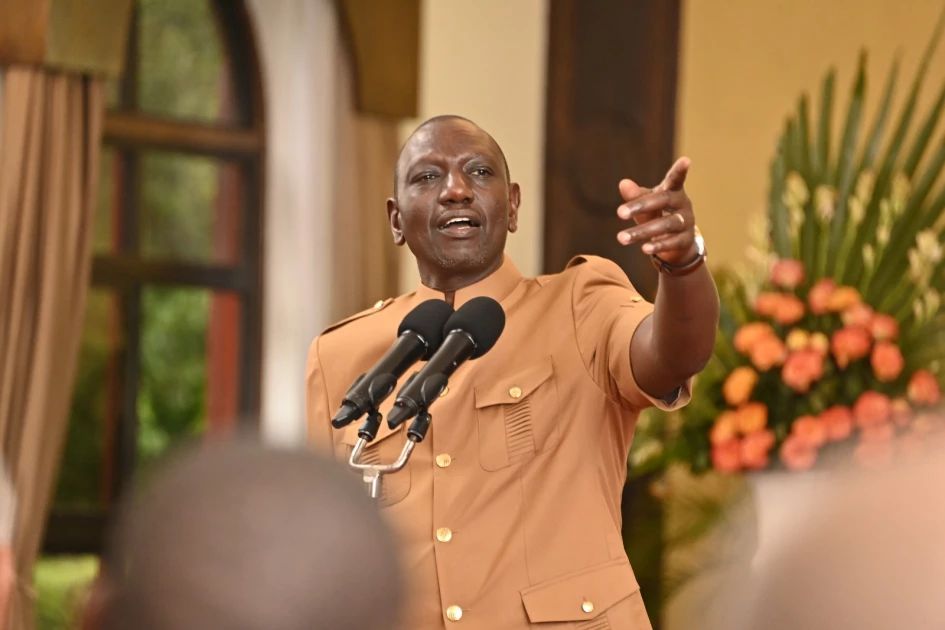
The announcement comes amid heightened uncertainty among foreign traders following President William Ruto’s directive to address the participation of foreign nationals in Kenya’s small-scale trade and informal business sector.
Ruto has directed that the proposed Local Content Bill, 2025, currently before Parliament, be expanded to establish a framework governing participation in small-scale trade and enterprise.
In a statement issued on Tuesday, State House Spokesperson Hussein Mohamed said the directive followed an engagement with Kenyan traders last week, during which they raised concerns over the growing participation of foreign nationals in small businesses and its impact on Kenyans who depend on the sector for their livelihoods.
Ruto reaffirmed the government’s responsibility to protect and expand economic opportunities for Kenyan citizens, particularly within the micro and small enterprise sector, while also stressing that foreign nationals who are lawfully resident, employed, investing or conducting business in Kenya must have their rights protected.
Details of the expanded Local Content Bill
The expanded Bill is expected to identify categories of economic activity that could be reserved for Kenyan citizens while providing legal certainty for foreign nationals who have the necessary approvals to work, invest or operate businesses in the country.
The government said the move does not alter Kenya’s commitment to regional integration, including the East African Community and the African Continental Free Trade Area.
It maintained that the country would continue facilitating the movement of people, labour, services and capital in line with applicable legal frameworks.
The 90-day regularisation period is therefore expected to provide affected foreign nationals with an opportunity to resolve documentation and licensing issues before stricter enforcement begins.
Concerns from the Kenya National Commission on Human Rights
The announcement comes as the Kenya National Commission on Human Rights (KNCHR) raises concerns over the potential for human rights violations during the ongoing enforcement exercise.
KNCHR said it has received complaints from refugee and migrant communities in several counties alleging threats, intimidation, discriminatory treatment and online attacks targeting foreign nationals.
The Commission acknowledged the government’s mandate to regulate immigration, employment, trade and investment but cautioned that enforcement must comply with the Constitution and Kenya’s regional and international obligations.
It urged authorities to focus on individual violations rather than collectively targeting migrants, refugees or foreign nationals and called for clear mechanisms through which affected people can verify their status, obtain information and regularise their documentation where legally possible.
KNCHR also called for special protection for refugees, asylum seekers, victims of trafficking, migrant workers and children, while urging the government to monitor enforcement operations and investigate allegations of abuse.
The Commission further warned members of the public against taking matters into their own hands, saying concerns over competition for economic opportunities should not result in harassment, violence or discrimination against foreign nationals.
The latest government announcement follows growing anxiety among foreign traders, particularly East African nationals, over Ruto’s earlier remarks on restricting foreigners from engaging in certain forms of small-scale trade.