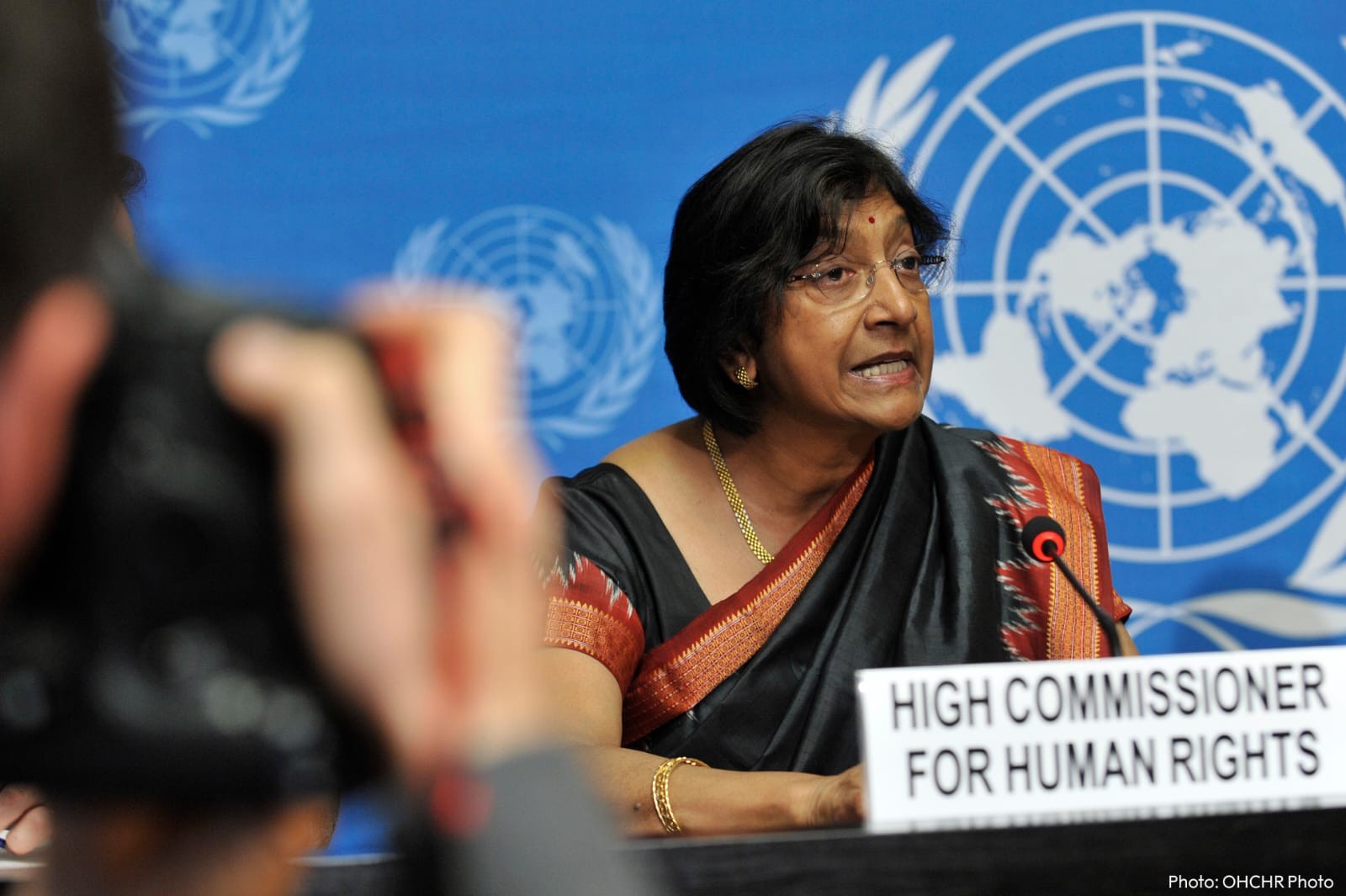
Navi Pillay, this year’s peace laureate, has dedicated her award to survivors of international crimes, recognising victims of war, genocide and crimes against humanity who continue to seek justice.
Pillay’s career has been marked by a strong commitment to human rights, equality and the rule of law. Through her work as a lawyer, judge and international human rights official, she has played an important role in efforts to hold governments and political leaders accountable for serious crimes.
Born into a family of Indian Tamil heritage, Pillay grew up in South Africa during the apartheid era, a period when racial segregation and discrimination shaped almost every aspect of life. Her early experiences of injustice influenced her decision to pursue law and defend people whose rights were being violated.
In 1967, Pillay became one of only three women admitted as attorneys in her professional circle. She also became the first non-white woman to establish her own legal practice in Natal, now part of KwaZulu-Natal.
Her entry into the legal profession was not easy. Pillay recalled that law firms refused to employ her because they did not want white employees taking instructions from a non-white lawyer. She was also barred from entering judges’ chambers because of her race.
Despite these barriers, she continued practising law and defending people affected by apartheid. Her work included representing Nelson Mandela and other anti-apartheid activists, laying the foundation for a career dedicated to challenging injustice and protecting fundamental rights.
Pillay later served as a judge of the High Court of South Africa, the International Criminal Tribunal for Rwanda and the International Criminal Court. Her work at the Rwanda tribunal was particularly significant in advancing the recognition of rape and sexual violence as crimes that could constitute crimes against humanity and acts of genocide.
The development marked an important step in international justice by strengthening the legal recognition of sexual violence committed during armed conflicts and mass atrocities.
She also served as the United Nations High Commissioner for Human Rights, a position that placed her at the centre of international efforts to promote and protect fundamental freedoms.
Until recently, Pillay chaired the UN Independent International Commission of Inquiry on the Occupied Palestinian Territory. She is also serving as a judge at the International Court of Justice in proceedings concerning allegations that Myanmar committed genocide against the Rohingya people.
The recognition of Pillay through this year’s peace prize highlights the importance of independent courts and international legal institutions in preventing violence and resolving disputes.
The Norwegian Nobel Committee has emphasised that respect for the rule of law is essential to maintaining international peace and ensuring that conflicts can be addressed without violence.
History has repeatedly shown the consequences of systems in which those in power operate without accountability. Where legal protections are ignored, injustice can become widespread, while victims are left without meaningful avenues for redress.
Judges and international courts play a critical role in upholding justice, protecting vulnerable communities and ensuring that serious crimes do not go unpunished.
However, these institutions and the individuals serving within them face growing pressure, including attacks on their independence and sanctions targeting judicial bodies.
Pillay’s recognition therefore serves as a reminder of the importance of defending the rule of law and supporting those who seek justice for victims of international crimes.