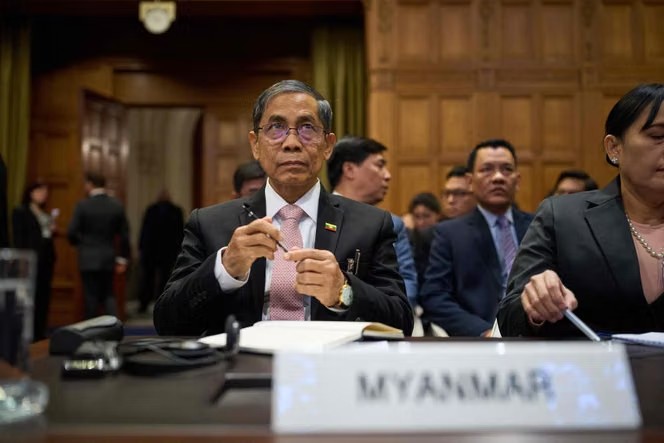
Myanmar is preparing for a landmark ruling by the International Court of Justice (ICJ) on November 19 over allegations that its military committed genocide against the Rohingya Muslim minority during operations in 2016 and 2017.
The judgment, to be delivered at the Peace Palace in The Hague, Netherlands, could mark the first time the United Nations' highest court finds a state directly responsible for committing genocide.
The case was brought by The Gambia in November 2019, accusing Myanmar of violating the 1948 Convention on the Prevention and Punishment of the Crime of Genocide through its treatment of the Rohingya.
The court confirmed on November 3 that it would deliver its judgment at 10am local time, bringing to a close proceedings that have examined allegations of mass killings, sexual violence, village destruction and the forced displacement of civilians.
Background of the Rohingya crisis
The case stems from Myanmar military operations in Rakhine State, which intensified in August 2017 following attacks by the Arakan Rohingya Salvation Army (ARSA) on security posts.
The subsequent military crackdown was accompanied by widespread reports of killings, rape, torture and the burning of entire Rohingya villages. More than 700,000 people fled across the border into neighbouring Bangladesh to escape the violence.
The Rohingya, a predominantly Muslim ethnic minority, have faced decades of discrimination in Myanmar, including restrictions on citizenship and movement. Many have been denied recognition as citizens despite generations of residence in the country.
The Gambia argues that the military operations were part of a systematic campaign intended to destroy the Rohingya, in whole or in part, and therefore constituted genocide under international law.
During the proceedings, the West African country relied on witness accounts, expert evidence, documentary material and reports detailing the violence against the community.
Myanmar, however, has rejected the genocide allegations, maintaining that its military operations were legitimate counterterrorism actions targeting armed insurgents following the ARSA attacks.
Its representatives challenged the evidence presented by The Gambia and disputed claims that the military acted with the specific intention of destroying the Rohingya as an ethnic and religious group.
The central question before the judges is whether the evidence establishes genocidal intent, a crucial requirement under the Genocide Convention. Proving that killings and other atrocities occurred is not sufficient on its own; the court must also establish the intention to destroy a protected group, entirely or partially.
Legal implications of the ruling
The ICJ previously ordered Myanmar in January 2020 to take measures to prevent acts of genocide against the Rohingya, preserve relevant evidence and submit reports on its compliance. In July 2022, the court rejected Myanmar's preliminary objections, allowing the case to proceed to a full examination of its merits.
Public hearings were held between January 12 and January 29, 2026, during which both countries presented their arguments and evidence before the judges. The court subsequently began deliberations.
The upcoming judgment is also attracting international attention because of its potential implications for other genocide proceedings, particularly the separate case brought by South Africa against Israel over its military operations in Gaza.
Although the two cases involve different circumstances and evidence, the Myanmar ruling could provide important legal guidance on how the court interprets genocidal intent and state responsibility under the convention.
Impact on the Rohingya community
The judgment will be final and without appeal. However, enforcing the court's decisions remains dependent on international mechanisms, including the United Nations Security Council.
For the Rohingya, many of whom remain displaced in Bangladesh, the ruling represents a significant moment in their long-running pursuit of international recognition and accountability over the violence that forced hundreds of thousands from their homes.